
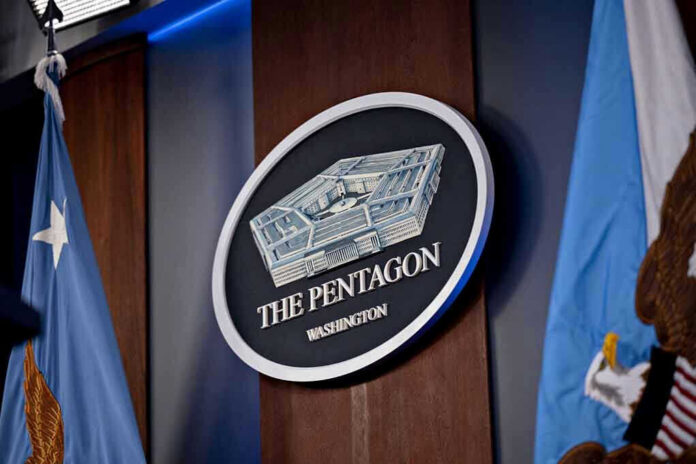
integritytimes.com — The Pentagon placed a man who pled guilty to storming the U.S. Capitol in a counterterrorism office that handles some of the most sensitive classified military operations in the world.
Story Snapshot
- Elias Irizarry, a convicted January 6 participant, was hired as a political appointee in the Pentagon’s Special Operations and Low Intensity Conflict office, assigned to its irregular warfare and counterterrorism section.
- The acting Pentagon press secretary publicly defended the hire, calling Irizarry “a qualified, patriotic young professional.”
- The Defense Department has not publicly released Irizarry’s job description, clearance level, or the vetting rationale behind the appointment.
- The core unresolved question is not whether the hire is politically awkward — it clearly is — but whether standard personnel security procedures were followed and what access, if any, Irizarry was granted to classified materials.
What the Pentagon Actually Put Him In Charge Of
Irizarry was not placed in a mailroom. He was assigned to the office of the Assistant Secretary of Defense for Special Operations and Low Intensity Conflict, specifically its irregular warfare and counterterrorism section. [1] That office coordinates global special operations missions, supports classified planning for irregular warfare, and interfaces with the intelligence community on counterterrorism priorities. The sensitivity of that portfolio is not debatable. What remains unknown is whether Irizarry had actual access to classified systems, planning documents, or mission-sensitive meetings — and the Pentagon has not said.
The acting Pentagon press secretary, Joel Valdez, went on record calling Irizarry “a qualified, patriotic young professional” and said the Department was “proud to have him as a political appointee.” [5] That defense is thin on specifics. It does not address what vetting was conducted, whether his conviction triggered a formal suitability review, or what access controls were placed on his role. Calling someone patriotic is not a security adjudication. It is a press statement, and there is a meaningful difference between the two.
The Conviction and What It Means for Security Clearance Standards
Irizarry pled guilty to participating in the January 6 Capitol attack. [1] He was 19 at the time, and reporting notes he later expressed regret. Those facts matter for a sentencing judge. They matter less for a personnel security officer evaluating whether someone should sit inside one of the Pentagon’s most sensitive offices. Under standard federal suitability guidelines, a recent criminal conviction, especially one involving an assault on a government institution, is a significant adjudicative factor. The burden falls on the agency to document why that factor was outweighed — not on critics to prove it wasn’t.
The rehabilitation argument — that Irizarry was young, remorseful, and has since pursued a military education at The Citadel — is not without merit as a general proposition. People do change. The justice system accounts for that. But the national security personnel system exists precisely because remorse and good intentions are not substitutes for verified trustworthiness over time. A 23-year-old with a four-year-old conviction for breaching the Capitol is not someone whose reliability in a classified environment has been tested by anything resembling a rigorous track record.
The Vetting Transparency Problem Is the Real Story
The Defense Department has not released the appointment memorandum, the vacancy announcement, the suitability adjudication, or any documentation showing that Irizarry’s conviction was formally evaluated and cleared. [1] That opacity is the central problem. Without those records, the public cannot know whether this was a careful, documented decision that weighed the conviction against mitigating factors, or whether political appointee status was used to move someone into a sensitive office without the scrutiny a career employee would face. Those are very different situations, and right now no one outside the Pentagon can tell which one this is.
Washington Post: Elias Irizarry, a convicted Jan. 6 rioter, has been hired by the Trump administration to work in a Pentagon office that oversees highly classified military operations, according to four people familiar with the matter.
The hire has raised alarm among staff, who… pic.twitter.com/34zwHxwSi1
— Republicans against Trump (@RpsAgainstTrump) June 2, 2026
Political appointees across administrations of both parties have sometimes received expedited or modified vetting compared to career civil servants. That is a structural vulnerability in how the executive branch manages personnel security, and it predates this administration. But structural vulnerabilities do not excuse specific decisions. If the Defense Department under Secretary Pete Hegseth applied a lower standard here because of Irizarry’s political alignment with the January 6 narrative the current administration has sought to rehabilitate, that is a vetting failure regardless of how the hire is publicly framed. The facts as reported are enough to demand a documented answer. They are not yet enough to prove one was never sought.
What Would Actually Settle This
The questions that matter are straightforward: What was Irizarry’s exact position title and grade? What clearance level, if any, was requested or granted? Did a suitability officer formally review his conviction, and what was the documented outcome? Was any waiver or exception granted? Did he attend classified briefings or access restricted networks? None of those answers are currently public. [1] Until they are, the story sits in an uncomfortable middle ground — serious enough to warrant scrutiny, underdocumented enough to resist a final verdict. The Pentagon’s silence on those specifics is itself a data point worth remembering.
Sources:
[1] Web – Pentagon hires convicted Jan. 6 rioter for sensitive counterterror …
[5] Web – Trump’s Pentagon hires Jan 6 rioter for highly sensitive …
© integritytimes.com 2026. All rights reserved.