The blast outside 26 Federal Plaza was loud, fiery, and political, but also a textbook case of how “small” street violence can still hit a big national nerve.
Story Snapshot
- A man set off a makeshift incendiary device outside 26 Federal Plaza, home to key immigration agencies and the Federal Bureau of Investigation (FBI).
- The device appears to have used fireworks and flammable liquid, creating a trash-can explosion and a fire, not a high-grade bomb.
- The suspect, reportedly with a history of anti-immigration enforcement activism, was quickly tackled and taken into custody.
- The FBI’s Joint Terrorism Task Force is treating the case as a terrorism investigation, even though injuries were minor.
Fire, smoke, and a fast takedown outside America’s immigration nerve center
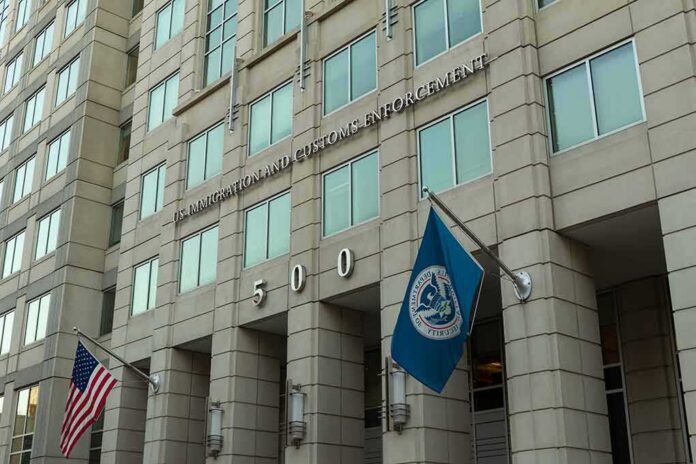
On a normal Monday morning in Lower Manhattan, 8:30 a.m. turned violent outside 26 Federal Plaza, the fortress-like federal complex that houses immigration courts, Immigration and Customs Enforcement (ICE), and the FBI’s New York offices. Video and witness reports show a man pouring liquid, deploying some form of device, and triggering an explosion and blaze that sent smoke pouring across the sidewalk as people ran for cover. Officers rushed out with weapons drawn and took him down within seconds.
The FBI put it in stark, simple language: an individual “deployed an incendiary device outside of 26 Federal Plaza” and was taken into custody while the FBI New York Joint Terrorism Task Force launched an investigation. Senior security sources and follow-up reports add key detail: the blast came from fireworks placed in or near a trash can, apparently boosted by a flammable liquid, which together produced a sharp explosion and heavy smoke rather than a large bomb crater. This was disruption and fear more than battlefield-level firepower.
What kind of device, what kind of injuries, and what kind of suspect?
Early reports from federal and city officials line up on the basics: fireworks plus some kind of accelerant, likely in a trash can, caused the explosion and fire. Firefighters reported several people with minor, non-life-threatening injuries, with at least one person taken to a local hospital. Other outlets quoted officials saying there were no serious injuries at all, underscoring how chaotic information is in the first hours of a major incident. In any case, this was not Oklahoma City, but it was not a prank either.
Authorities have not publicly named the suspect yet, but several outlets, citing law enforcement sources, report he has a history of anti-ICE activism and prior protests against immigration enforcement. Some reports describe what appeared to be a “smoke grenade” style effect and note a firearm was recovered in connection with the incident, though officials stopped short of saying the gun was fired or even definitively on his person at the time. That mix—anti-ICE politics, a weapon, and fire as a weapon—sits right on the line between protest and terrorism.
Why this location matters: symbolism, immigration, and soft power attacks
Choosing 26 Federal Plaza was no accident. The building houses immigration courts and offices that handle deportation, detention, and asylum decisions every day. For activists who see immigration enforcement as cruel or illegitimate, it represents what they hate about federal power. For many law-abiding citizens worried about border chaos, it represents one of the last lines of defense. When someone lights a firebomb-style device outside that doorway, the message is about far more than a single case docket.
Explosion outside NYC's 26 Federal Plaza sparked a fire Monday morning, prompting an emergency response. https://t.co/pxRrNDDLmd
— Newsweek (@Newsweek) July 20, 2026
This incident also fits into a wider pattern that security professionals have watched grow: low-yield, homemade incendiary or explosive devices used around political protests and symbolic government targets. Recent New York cases include smoke-producing or explosive devices tossed during protests outside the mayor’s residence, where some devices contained real high explosives like triacetone triperoxide (TATP) and packed nuts and bolts to act as shrapnel. Compared with those, the Federal Plaza device appears cruder and less lethal, but the intent to intimidate and disrupt is on the same spectrum.
Terrorism label, conservative common sense, and where this goes next
The FBI’s Joint Terrorism Task Force does not attach its name to a case by accident. Classifying an incident as a terrorism investigation gives federal agents broader tools and signals that they see at least the potential for ideological violence, not just random crime. From a common-sense, conservative view, that makes sense here: a politically charged federal target, a suspect linked to anti-ICE agitation, and a deliberate use of fire and blast near crowds and officers all cross a red line.
At the same time, details matter. This was not a military-grade improvised explosive device packed with ball bearings. It was a fireworks-based, trash-can device that produced smoke and flames more than mass casualties. That difference matters not to excuse the act, but to keep the legal and political response rooted in facts, not fear. Conservatives who care about equal justice and law and order should want both things at once: full-throated condemnation and prosecution of violent attacks on federal property, and a sober, precise accounting of what the device was and was not.
Sources:
redstate.com, nypost.com, telegraph.co.uk, newsweek.com, youtube.com, townhall.com, thegatewaypundit.com, nytimes.com, the-sun.com, wsbtv.com, patch.com, abc7ny.com, cbsnews.com, independent.co.uk
© integritytimes.com 2026. All rights reserved.