
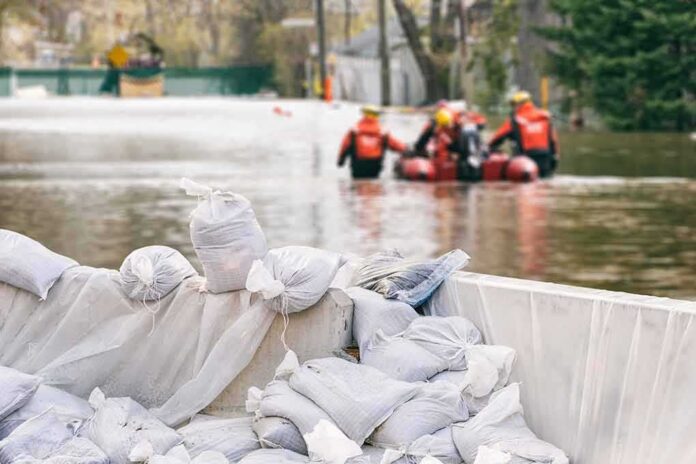
South-central Texas is underwater again, and this time the National Weather Service used its most severe designation possible to say so: a Flash Flood Emergency, reserved only for floods that pose an immediate threat to human life.
Story Snapshot
- The National Weather Service issued a rare Flash Flood Emergency for Kerr and Uvalde counties on July 16, 2026, its highest threat level.
- Storms dumped up to 20 inches of rain across parts of south-central Texas, closing all roads in Uvalde and putting every highway underwater.
- At least two people died — a man swept away in an RV near Comfort and a woman killed while driving in Uvalde.
- More than 1,300 rescue personnel were deployed, with at least 70 people pulled from floodwaters by mid-morning.
What a Flash Flood Emergency Actually Means
Most people hear “flash flood warning” and think of wet roads. A Flash Flood Emergency is something else entirely. The National Weather Service (NWS) issues this designation only when flooding is already happening and lives are in immediate danger. On July 16, 2026, the NWS issued that rare alert for Kerr and Uvalde counties in south-central Texas, signaling that this was not a situation to monitor from home — it was a situation to flee.
By early morning, between 10 and 20 inches of rain had fallen across parts of Uvalde County. Every road in the city of Uvalde closed. Every highway went underwater. Emergency management reported flooding across the entire warned area before 1:00 a.m. — hours before most residents were awake.
Two Dead, Dozens Rescued, and the Rescues Still Coming
Texas Governor Greg Abbott confirmed at least two deaths by mid-morning. A man was swept away inside an RV near Comfort. A woman died after floodwaters overtook her vehicle in Uvalde. These are exactly the kinds of deaths that flood safety experts warn about most — people caught in vehicles, where moving water as shallow as two feet can sweep a car off the road instantly. The danger of driving into floodwater is not theoretical in Texas Hill Country. It is a documented, recurring cause of death.
Rescue crews pulled at least 70 people from floodwaters by the time Governor Abbott spoke publicly. More than 1,300 personnel were engaged in response operations across the region. In Uvalde County alone, at least 36 people had been rescued from floodwater in the days before July 16, as storms had been building for days. First responders were already stretched thin when the worst of it hit.
Why Texas Hill Country Floods So Fast and So Deadly
The Texas Hill Country is one of the most flood-prone landscapes in North America, and the reason is geology. The ground is rocky and largely unable to absorb water quickly. When heavy rain falls on dry, hard soil, water runs off almost immediately instead of soaking in. Rivers and creeks can rise eight meters or more in under an hour. That is not an exaggeration — it is a documented measurement from a prior Texas flood event. By the time a warning reaches a phone, the water is already moving.
LIFE-THREATENING FLASH FLOOD with floating debris in Sonora, Texas on Dry Devils River. The bridge on main street will soon be breached. Inundated homes and vehicles. Flash flood emergency continues#Dominator @meganjrenee @accuweather pic.twitter.com/1YdffbmzgP
— Reed Timmer, PhD (@ReedTimmerUSA) July 17, 2026
This event echoes the July 2025 Central Texas floods, which killed at least 119 people in the Kerr County area, including 27 girls and counselors at Camp Mystic along the Guadalupe River. The same counties, the same rivers, the same deadly mechanics. Rainfall rates of 2 to 4 inches per hour on impermeable terrain create what experts call a worst-case hydrological scenario. July 2026 delivered that scenario again, less than a year later.
Unanswered Questions About Warnings and Sirens
The emergency response was large and fast. But serious questions are already forming about whether warnings reached people in time. Residents in the region have reported not hearing sirens before evacuation orders came. Local emergency management has not publicly addressed whether warning systems were working. These are not small concerns — in a region where rivers rise this fast, a siren or a phone alert can be the difference between life and death. Accountability for those systems matters, and officials who dodge those questions do their communities no favors.
Texas lawmakers had opportunities earlier in 2026 to pass flood protection measures and did not. That failure looks different now, with rescue helicopters in the air over the same counties that flooded last summer. The argument that Texas flooding is simply “unpredictable and unmanageable” — as one state emergency official has suggested — strains credibility when the same geography floods catastrophically in back-to-back years. Nature sets the conditions. Policy choices determine how prepared communities are when those conditions arrive.
Sources:
youtube.com, facebook.com, ialert.com, abcnews.com, fox7austin.com
© integritytimes.com 2026. All rights reserved.