Trump’s America 250 celebration on the National Mall tried to fuse soaring patriotism with hard-edged politics, and the clash between those two impulses is exactly why it will be argued over for years to come.
Story Snapshot
- Trump used America’s 250th birthday to push a message of strength, faith in the nation, and a new “golden age.”
- The celebration honored heroes and veterans, yet crowd-size fights and media mockery battled for center stage.
- A storm evacuation, late-night fireworks, and walk-backs on entertainment turned “perfect optics” into a mixed picture.
- The event shows how today’s national rituals double as campaign rallies, culture war flashpoints, and media battlegrounds.
A milestone designed as a statement about American power
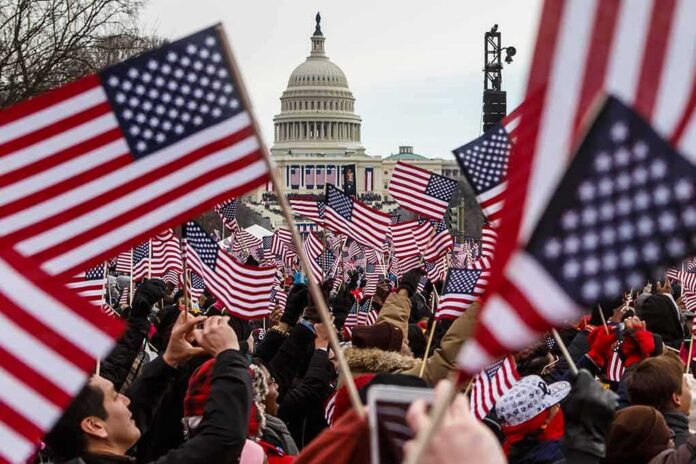
Trump’s America 250 concept was built to be more than a party. The White House Freedom 250 plan promised that more than a million people would pack the National Mall, capped by the largest fireworks show “in the history of the world.” That language was not accidental. It matched Trump’s long habit of tying national milestones to visible proof of strength and scale. Big crowds and big pyrotechnics were meant to signal a country that is not fading, but flexing.
The celebration did not stand alone. It sat on top of a multi-year push branded as Freedom 250 and the Great American State Fair, with state exhibits, military displays, air shows, and cultural events meant to stretch across 2026. Trump’s allies framed the semiquincentennial as a chance to re-center patriotism, revive pride in Western civilization, and launch what he called a “next great American century.” In that sense, July 4 on the Mall was the climax of a long, carefully staged build-up.
A keynote that mixed reverence with red meat politics
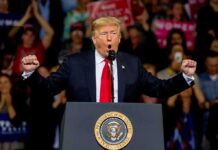
On July 4, Trump leaned hard into American exceptionalism, military valor, and national revival. Accounts of his remarks describe tributes to Medal of Honor heroes, veterans from World War II and the Cold War, and Gold Star families, echoing the style and themes of his 2019 “Salute to America” speech. This kind of content fits conservative instincts: honor sacrifice, spell out the costs of freedom, and say plainly that America is not just another country, but a unique force for good in the world.
Yet the speech did more than offer thanks. Trump reportedly declared America was “winning like never before,” tying that claim to record military recruitment and trillions invested in the nation’s future. He promoted a “Save America Act” built on voter identification and proof of citizenship as basic protections for elections, and he drew a bright line against communism, pledging that America would never embrace it. For many conservatives, that combination—patriotism plus secure borders and clean elections—sounds like common sense, not extremism.
Crowds, controversy, and the optics war
The picture on the ground did not match the grand promise. Reporters and photos from the Great American State Fair days leading up to July 4 showed sparse lines, open food booths, and wide stretches of grass with few people, far from the packed midway the branding suggested. Coverage from outlets like Forbes and CNN highlighted power glitches, early technical issues, and the embarrassing moment when a Confederate flag appeared at a North Carolina exhibit and had to be pulled down after a political outcry.
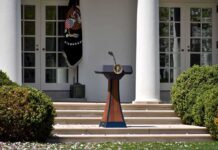
By the time Trump took the stage on the Fourth, a new problem had hit: weather. A National Public Radio report details how storms and lightning forced evacuations on the Mall, canceled a Friday parade, and pushed the main fireworks show to midnight, with Trump speaking close to 11:15 p.m. Local notices from the National Park Service confirm temporary closures and safety measures as part of the Salute to America and grand fireworks logistics. Those disruptions gave critics fresh ammunition to paint the event as poorly timed and badly executed.
The crowd-size fight and what it really reveals
Then came the numbers war. Trump and his team floated attendance figures that climbed into the hundreds of thousands, but major outlets and viral social posts pushed far lower estimates, backed by images of open space and easy movement around the Mall. For many observers, this felt familiar. Trump has spent years tying his legitimacy to crowd size, from the 2017 inauguration to campaign rallies, and media fact-checks have repeatedly pushed back on his biggest claims.
President Trump marked the nation’s 250th birthday with a late-night speech at the National Mall. He paid tribute to American history while warning against the influence of communism. https://t.co/XqHbDLywsb pic.twitter.com/7fcSBwQ5x9
— The Washington Times (@WashTimes) July 5, 2026
This is not just about one night. Research on crowd counting shows that estimating turnout is more art than exact science, often producing ranges rather than firm numbers and leaving room for spin from both politicians and critics. When a leader treats the high end of the range as proof of personal mandate, journalists and academics push back. That tug-of-war played out again at America 250, where conservative viewers saw a respectable turnout under rough weather, while anti-Trump voices saw a disappointing field of empty grass and said the emperor had no clothes.
Patriotism, partisanship, and the future of national rituals
The deeper story is how a national birthday became a stress test for American identity. Cultural coverage around America 250 described a split-screen country: on one coast, a Los Angeles concert with pop and rock acts celebrating a broad vision of America; in Washington, Trump promising a new golden age and casting himself as the man who restored strength after years of decline. To many conservatives, using the Mall for that message felt right. The president is the elected symbol of the nation; why should he hide his agenda on its birthday?
To many critics, the same choice looked like a takeover of shared civic space by one political brand. They pointed to performers who backed out of the fair, partisan lines in the speech, and Trump’s continued focus on loyalty tests and enemies lists. Yet the event also showed genuine emotion: veterans honored, families waving flags under late-night fireworks, and ordinary Americans choosing to mark a historic milestone in person rather than doomscroll at home. The fight over the frame does not erase those moments.
Sources:
townhall.com, thedailybeast.com, usatoday.com, facebook.com, yahoo.com, edition.cnn.com, nps.gov, nationalmall.org
© integritytimes.com 2026. All rights reserved.