TSA now charges $45 to even attempt boarding a domestic flight without REAL ID, but payment offers no guarantee you’ll actually fly.
Story Snapshot
- TSA enforces $45 ConfirmID fee starting February 1, 2026, for travelers lacking REAL ID-compliant ID.
- Fee covers 10-day travel window but clearance through security remains uncertain despite payment.
- Policy shifts costs from taxpayers to non-compliant travelers, accelerating REAL ID adoption.
- Low-income and rural populations face heightened barriers to air travel access.
- Alternatives like passports work, but ConfirmID monetizes verification for the unprepared.
ConfirmID Program Launches February 1, 2026
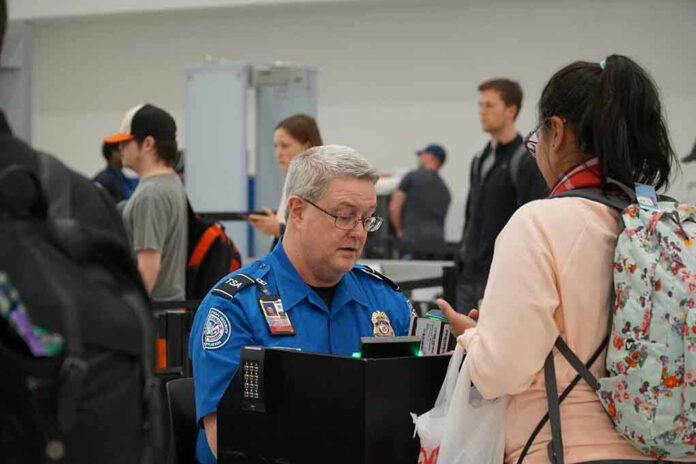
TSA implements the $45 ConfirmID fee on February 1, 2026, targeting domestic air travelers aged 18 and older without REAL ID-compliant identification or acceptable alternatives. Travelers pay at airport checkpoints or online. The fee grants a 10-day travel window covering departure and return flights if completed within that period. TSA Senior Official Adam Stahl states non-compliant travelers, not taxpayers, cover additional screening costs.
ConfirmID involves extra identity checks and screening, yet TSA warns clearance lacks guarantee. Travelers face potential delays or denial even after payment. TSA recommends arriving two hours early to account for processing time. This ends prior leniency where non-compliant passengers received free additional screening until January 2026.
REAL ID Act Roots Trace to Post-9/11 Security
Congress enacted the REAL ID Act in 2005 after September 11 attacks to set federal standards for state-issued driver’s licenses and IDs. Federal agencies reject non-compliant IDs for official purposes. Full domestic air travel enforcement began May 7, 2025, ending grace periods. TSA announced ConfirmID in December 2025 as the next enforcement phase.
State motor vehicle departments issue REAL ID-compliant cards, often during license renewal at no extra fee beyond standard costs. Acceptable alternatives include U.S. passports, passport cards, enhanced driver’s licenses, and select mobile IDs. Erie County Clerk urges proactive upgrades to avoid fees, delays, and missed flights.
Stakeholders Navigate Enforcement Shift
TSA enforces the policy under Homeland Security oversight, prioritizing security by verifying identities against threats like terrorists and criminals. Airlines manage checkpoint flow amid expected congestion from ConfirmID processing. State DMVs handle surging REAL ID demands, while travelers weigh compliance costs against repeated fees.
Unbanked and low-income groups bear disproportionate burdens, as $45 per trip adds up for frequent or essential travel. Rural residents struggle with DMV access. Undocumented individuals cannot obtain REAL ID, effectively grounding them from domestic flights. This aligns with conservative emphasis on self-reliance over taxpayer-funded accommodations.
Impacts Hit Vulnerable Travelers Hardest
Short-term, ConfirmID spurs REAL ID rushes but clogs airports with extended lines. Frequent flyers without compliant ID pay multiples annually. Long-term, policy generates TSA revenue while incentivizing compliance. Low-income travelers may shift to buses or trains, boosting alternative transport.
Equity issues arise for elderly with outdated IDs and those unable to afford fees. Facts support TSA’s fairness claim—non-compliers previously burdened general security without cost. Common sense dictates personal responsibility for federal standards, though rapid rollout leaves little adjustment time just weeks away.
Sources:
Erie County Clerk: TSA to Enforce $45 REAL ID Verification Fee Beginning February 1, 2026
Fox Business: No REAL ID? TSA to charge travelers at airports $45 beginning February
ABC News 4: TSA tightens REAL ID rules; $45 fee hits those unprepared for February deadline
KQED: No REAL ID? TSA fee, fine Feb. 1: How to pay, requirements, passport, California, SFO, OAK