
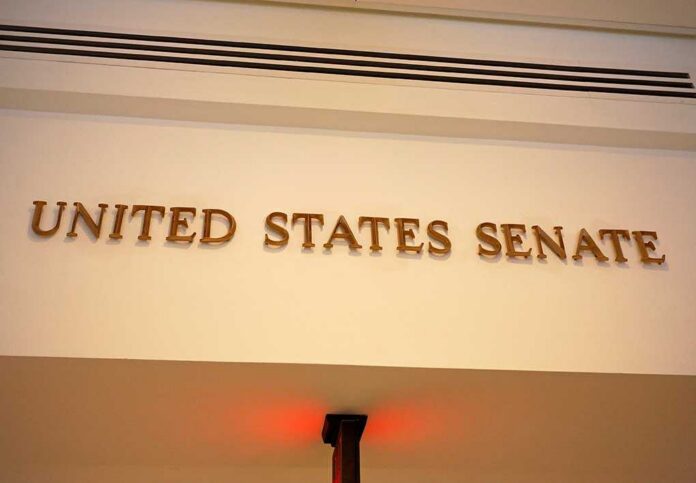
A national party chair just said the quiet part out loud: their platform now calls for abolishing the United States Senate.
Story Snapshot
- Democratic Socialists of America (DSA) leaders added Senate abolition to their platform
- Co-chair Ashik Siddique publicly defended the goal as reasonable, not fringe
- The June 2026 vote came from a 27-member leadership body, by a razor-thin margin
- Changing the Constitution faces steep odds; most amendment pushes go nowhere
What DSA’s Leadership Actually Did
The Democratic Socialists of America’s National Political Committee, a 27-member elected leadership board, approved platform language in June 2026 that calls for abolishing the United States Senate. The vote reportedly passed by a razor-thin margin, though no exact tally has been published. This was not a brand-new idea for the group. A draft of the 2021 platform also listed abolishing the Senate among medium-term goals, alongside scrapping the Electoral College. The new platform reboot, “Workers Deserve More!”, makes the push plain.
Co-chair Ashik Siddique backed the change in public comments and framed it as reasonable. He argued the Senate blocks major reform and serves elite interests, not working people. Conservative and center-right outlets highlighted the move as radical and anti-constitutional. They tied it to other DSA goals such as broad immigration amnesty, a weaker military posture, and restructuring top federal institutions. The clash shows two starkly different stories about what democracy should look like and who it should serve.
Why Abolishing the Senate Would Be So Hard
Eliminating the Senate would require a constitutional amendment. That path is steep. Since 1789, thousands of amendments have been proposed, yet only 27 have been ratified. Even ideas with big public support often die in Congress or in the state legislatures. The Senate also protects small-state power by design, which gives many states a strong reason to oppose any change that erases their equal seat at the federal table. That makes the math brutal for any abolition drive.
Reformers on the left argue the Senate is undemocratic because it gives Wyoming the same votes as California, despite huge population gaps. They say national policy stalls as a result. That claim has old roots, but its remedy has never cleared the constitutional bar. Past major changes, like direct election of senators in 1913, required broad national consensus. There is no sign today of a similar coalition for abolition. The proposal signals values and goals more than it maps a near-term path to law.
How This Fight Fits the Bigger Political Game
Media on the right frame the DSA platform as a threat to checks and balances and to core parts of American life. That framing energizes audiences who value the Constitution’s guardrails and the founders’ design. DSA’s leadership gains something too. Pushing sweeping reforms unites activists and earns attention, even if near-term odds are long. A platform is both a map and a megaphone. Bold planks can move a party’s center of gravity over time, or at least define contrast with rivals.
.@DemSocialists co-chair Ashik Siddique (@ahSHEEK) says the DSA would abolish the Senate: "We do believe that government should be proportional to the population…We just don't see the point of the Senate." pic.twitter.com/yO5djGXC5Q
— Washington Journal (@cspanwj) July 14, 2026
American conservatives will see a clear test here: preserve the system that balances states and slows hasty national change, or give way to majoritarian rule that can erase those brakes. The facts favor patience and prudence. The Senate forces debate, tempers swings, and protects local voices. Calls to blow it up should be judged by a simple standard: Show the country how your plan respects minority rights, secures liberty, and keeps power in check. If that case is thin, the country should pass.
What To Watch Next
Watch whether DSA members, not just leaders, ratify this stance in wider votes or conventions. Track whether elected officials who align with DSA adopt abolition language in bills or campaigns. Look for state-level pushes for resolutions calling for an amendment. Also watch for a pivot toward more achievable steps, like changing Senate rules or adding states, which face their own hurdles. Most big constitutional ideas start loud, then fade. A few evolve into broad coalitions. The next year will tell which path this takes.
Sources:
redstate.com, city-journal.org, civicintelligence.news, freedomlinedispatch.com, convention2021.dsausa.org, jdrucker.com, lawreview.law.ucdavis.edu
© integritytimes.com 2026. All rights reserved.