
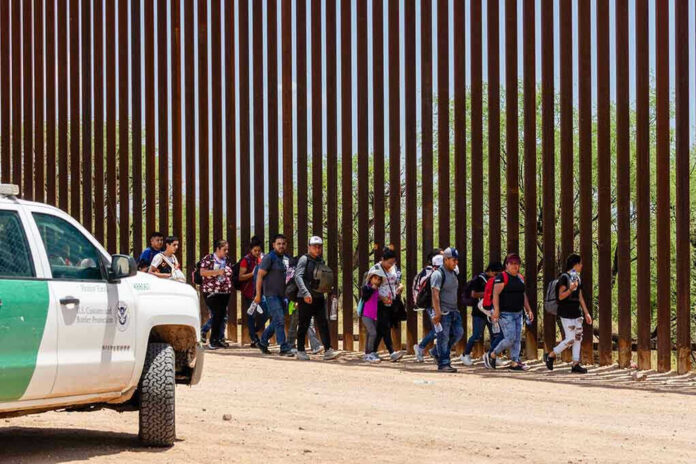
A new initiative to paint the U.S.-Mexico border wall black aims to fortify America’s borders, sparking both applause and debate.
Story Snapshot
- The border wall will be painted black to increase its heat and deter climbing.
- President Trump and DHS Secretary Kristi Noem are leading the initiative.
- The move is part of a broader strategy to enhance border security.
- Concerns arise about the long-term effectiveness and cost.
Trump’s Directive to Enhance Border Security
The Department of Homeland Security, under the leadership of Secretary Kristi Noem and President Donald Trump, has unveiled plans to paint the U.S.-Mexico border wall black. The rationale is straightforward: black paint absorbs more heat, making the wall hotter and, ideally, harder to climb. This initiative, announced on August 19, 2025, in Santa Teresa, New Mexico, is part of a broader strategy that includes technological upgrades such as cameras and sensors.
Historical precedents for this approach date back to 2020, when similar coatings were tested during Trump’s first term. The administration believes that increasing the wall’s heat will serve as an additional deterrent to illegal crossings, supplementing existing physical and technological barriers.
Stakeholders and Motivations
The key players in this initiative include President Trump, who is the originator of the directive, and Secretary Kristi Noem, who is tasked with its implementation. U.S. Customs and Border Protection (CBP) is responsible for the wall’s construction and maintenance. The motivations behind this directive are twofold: to enhance deterrence and to make a political statement reinforcing the administration’s commitment to border security.
While supporters see this as a necessary step to fortify national borders, critics, including advocacy groups and migration scholars, question the long-term efficacy of such physical deterrents. They argue that these measures do not address the root causes of migration and raise concerns about potential humanitarian impacts on migrants.
Implications and Future Considerations
In the short term, the increased surface temperature of the wall may indeed deter climbing attempts, offering enhanced visibility and psychological deterrence. However, the long-term implications, such as maintenance costs due to paint upkeep and heat-related wear, remain a topic of debate. The economic impact on border communities and the operational adjustments needed by CBP will also require careful consideration.
Politically, this move reinforces the Trump administration’s narrative of prioritizing border security. It highlights a commitment to physical deterrence measures, which may set a precedent for future infrastructure projects in the security sector.
As the painting begins immediately, covering the entire southern border wall, the administration will need to monitor its effectiveness and address any unforeseen consequences. The broader debate over immigration policy and border security tactics will continue to unfold, with this initiative likely to be a focal point of discussion.
Sources:
Axios: Trump Border Wall Black Paint Noem Immigration
DHS: US Customs and Border Protection
Fox News: Kristi Noem Reveals Striking New Layer Trump’s Border Wall Strategy