Trump told Senate Republicans to pass the SAVE America Act or watch him become the last Republican president.
Story Snapshot
- The bill would require proof of citizenship to register and photo ID to vote in federal elections.
- The Senate opened debate on the bill with a 51-48 vote, showing momentum but not victory.
- President Trump warned he will not endorse lawmakers who oppose the bill.
- Majority Leader John Thune says votes to break the filibuster are not there.
What The Bill Actually Does, In Plain Terms
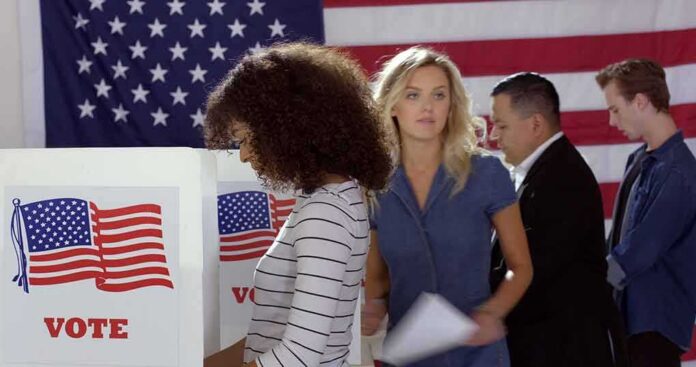
The Safeguard American Voter Eligibility Act, known as the SAVE America Act, changes how people get on the voter rolls and how they cast a ballot in federal elections. It requires documentary proof of United States citizenship when registering. It also requires a photo identification to vote. The House and Senate versions track the same core rules. Congress’s official summaries state these mandates directly, leaving little doubt about the policy aim. Supporters call this common sense and overdue.
Backers argue the bill speaks to trust. When citizens believe only citizens vote, they show up. The bill’s sponsors present it as a floor, not a ceiling, for election integrity. They say states can still offer free identification and help voters get papers. They frame the plan as like airport security: brief checks that protect the system for everyone. That message resonates with voters who think the status quo is loose and who want strong national rules that do not depend on county offices.
Where The Senate Fight Stands Right Now
The Senate voted 51-48 to begin debate on the bill. That shows most Republicans aligned to advance it, but it did not settle the outcome. Senator Lisa Murkowski voted no on that step and says she supports the goals but opposes the current text. She argues Alaska would face serious problems putting it in place, and that tribal identification would not qualify for registration under the bill’s rules. Those points spurred talks, but no final fix has landed.
President Trump turned up the heat. He warned he will not endorse any lawmaker who votes against the bill. He pressed the Senate to stay in session until it passes. He framed the stakes as the future of the party and said Republicans who block the bill risk losing the base. That message is clear and personal, and it raised pressure on holdouts ahead of more votes. The warning also drew new attention to the bill’s simple core: prove citizenship, show ID, then vote.
The Roadblock: Sixty Votes And A Clock
Majority Leader John Thune says the votes to scrap the legislative filibuster are not there. He also says Democrats do not plan to help reach sixty votes to end debate and move to final passage. That leaves Republicans trying to build enough bipartisan support or find a legal way around the rule. That is hard math in a tense election year. Thune’s quotes match the roll calls so far and reflect how the chamber works, not just how he wants it to work.
Meet Dottie.
She helped to deliver Pennsylvania for President Trump & wants Senate Majority Leader Thune
to pass the SAVE America Act.
Dottie, thank you for helping to secure our nation’s future. pic.twitter.com/gv4AtMG5T7
— John f Kennedy jr ⏰ (@JohnJohnjr37795) September 1, 2026
On policy, critics focus less on intent and more on impact. Senator Murkowski says remote communities in Alaska lack easy access to documents and registration sites. She warns the bill would burden Indigenous voters if tribal identification does not count for registration, even if it counts at polling places. Those are implementation claims, not attacks on the goals. They deserve a precise answer: a clear list of accepted documents, mobile teams to help, and firm timelines that fit rural life.
What Common Sense Looks Like In A Compromise
Conservatives value rules that are clear, the same for everyone, and easy to follow. The SAVE America Act meets the first two on paper. The third depends on how states help citizens get documents and identification in time. A tight fix would keep the proof rule, honor tribal and military records as registration documents, fund mobile units, and set a long runway for remote areas. That keeps the promise—citizens only—while removing the stated barriers. That is not retreat; that is craftsmanship.
Why The Warning Matters Beyond One Vote
Trump’s warning is about power, but also about priorities. He is telling Republicans that election rules are not a side fight. They are the ground on which every other fight stands. The Senate already signaled momentum with the 51-48 debate vote. The next steps are tighter. If Republicans align on a focused text and real help for hard-to-reach voters, they gain moral high ground and votes. If they stall, they hand their opponents both a talking point and the clock.
Sources:
congress.gov, rules.house.gov, theguardian.com, apnews.com, thune.senate.gov, newsmax.com
© integritytimes.com 2026. All rights reserved.