President Trump just told his own vice president to drop Iran and start digging into Democrat-run cities instead, and blue-state leaders should take that seriously.
Quick Take
- President Trump directed Vice President JD Vance on November 12, 2026, to stop working on Iran and focus on alleged corruption in Democrat-led cities and states.
- Trump said the United States does not need a nuclear deal with Iran because it already controls Iranian funds and the Strait of Hormuz.
- Trump claimed cracking down on Democrat corruption could quickly balance the federal budget, though no audit or dollar figure backs that claim up.
- The shift comes just days after Vance publicly blamed the Iran war for the Republican Party’s midterm losses.
What Trump Actually Said and When He Said It
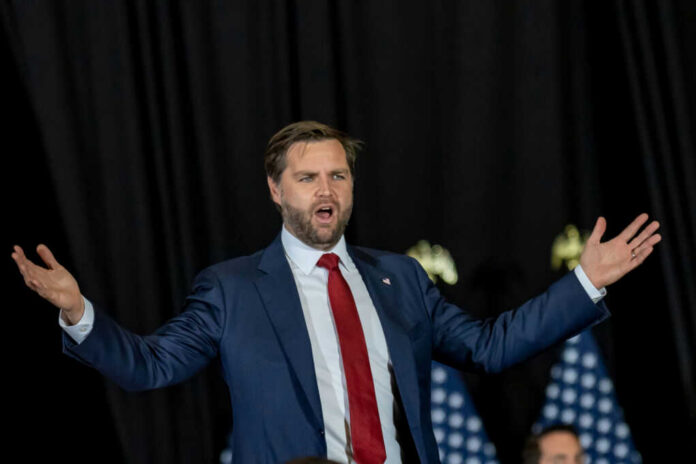
Trump posted the directive on Truth Social on November 12, 2026. He wrote that he asked Vance to “focus his complete and total attention on the Massive Corruption and Crime taking place in Democrat run Cities and States throughout the U.S.” The message landed as a clear reassignment, pulling Vance away from months of Iran diplomacy and pointing him squarely at domestic political targets instead.
Trump paired that order with a blunt explanation for walking away from Iran talks. “We don’t need a deal with Iran,” he wrote. “Those days have long since passed. We’ve got their money, Hundreds of Billions of Dollars, and we’ve got their Strait!” The Washington Post reported Trump intends to keep a naval blockade in place and keep squeezing Iran economically, rather than trade that leverage for a signed agreement.
The Budget Claim Nobody Has Shown the Math On
Trump went further, tying the domestic corruption push to the nation’s finances. “Our Budget could be quickly BALANCED with the correction of this large-scale criminal activity,” he wrote, adding that “CORRUPTION is in the Democrat Leadership’s blood!” Bold words, sure. But there’s no audit, no case list, no agency breakdown showing how alleged corruption in blue cities adds up to budget-balancing money. That gap doesn’t make the broader point wrong, but it does mean the number is still unproven.
Reports naming Minnesota, California, Illinois and other Democrat-run jurisdictions describe accusations, not convictions. That distinction matters. An accusation is a starting point for investigation, not a verdict. Still, for voters in those states who’ve watched local leadership mishandle budgets and public programs for years, the idea that someone in Washington is finally looking hard at the books won’t strike many as far-fetched.
Vance’s Abrupt U-Turn on Iran Diplomacy
Just over a week earlier, Vance sounded like a man closing in on a deal. On November 3, he said Washington had made real progress and that he and Trump felt “pretty good” about reaching a negotiated settlement with Iran. The day before, he described “a number of good conversations” and said any settlement needed a firm, verifiable commitment on Iran’s nuclear program.
Those comments followed Vance publicly blaming the Iran war for the Republican Party’s steep midterm losses, a break that drew wide coverage of friction inside the administration. Trump’s November 12 directive effectively ended Vance’s diplomatic role without detailed public explanation of what changed in those nine days. That silence is notable, though it doesn’t undercut the plain fact of the reassignment itself.
Why This Should Worry Blue-State Leadership
Redirecting a sitting vice president’s full attention toward state and city governance is not a symbolic gesture. It signals where White House priority and pressure will land next. Governors and mayors who have spent years brushing off oversight questions about spending, contracting, and enforcement now face a vice president whose entire mandate, by the president’s own words, is finding exactly that kind of misconduct.
No formal charter, prosecutorial authority, or task-force structure for Vance’s new assignment has been published yet. That’s a real open question worth watching. But the absence of a paper trail hasn’t stopped presidents from applying political pressure before, and it won’t stop this one. Blue-state officials who assume this is just talk may find out quickly how much weight a presidential directive carries once investigators start knocking.
Trump Pulls Vance From Iran Negotiations, Orders Him To Focus On Blue State Corruption
President Donald Trump pulled Vice President JD Vance from negotiating with Iran, asking him to focus on blue-state corruption instead.
Trump declared, "We don't need a deal with Iran," in a…
— Parallel Polis in Exile 🇺🇸 (@Polis_in_Exile) November 13, 2026
History offers a caution on the Iran side too. The 2015 nuclear agreement paired restrictions with international inspections, and its later collapse after U.S. withdrawal showed that leverage without a binding structure can erode fast. Trump is betting that money and military control are sturdier tools than a signed deal ever was. Whether that bet pays off, and whether blue-state corruption probes produce real results, will be the story to watch through 2027.
Sources:
pjmedia.com, thenewstribune.com, nytimes.com, straitstimes.com, cleveland.com, newsobserver.com, axios.com, washingtonpost.com, telegraph.co.uk
© integritytimes.com 2026. All rights reserved.