The United States just blew up a tunnel—without nuclear material—to catch cheaters who try to hide nuclear blasts.
Story Snapshot
- Energy Department conducted a subsurface, non-nuclear explosive experiment in Nevada.
- Goal: sharpen detection of very small or masked nuclear explosions worldwide.
- Focus on “decoupled” blasts that weaken seismic signals and can evade monitors.
- Sensors gathered data to improve models and algorithms used for detection.
What Exactly Happened Underground
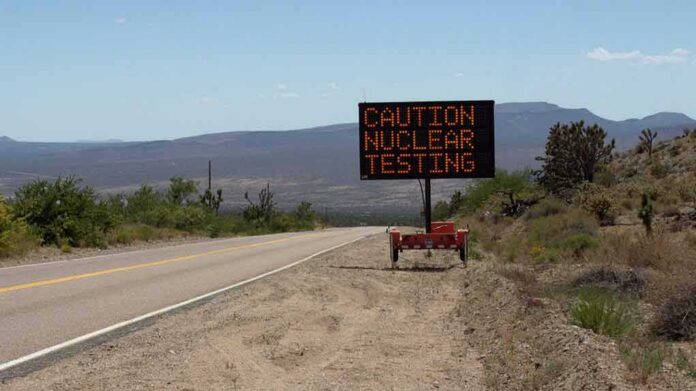
The National Nuclear Security Administration ran a chemical high-explosive shot in the P Tunnel in Area 12 of the Nevada National Security Site. The agency called it a “subsurface, non-nuclear chemical high-explosive experiment.” No nuclear device was used. The stated mission was plain: build a stronger shield against low-yield nuclear tests that others might try to hide. This was official government work, announced by the Energy Department’s nuclear security arm.
The tunnel site offers hard rock, deep overburden, and controlled geometry. That setup helps scientists model how a buried blast shakes the ground and air. It also helps them see how to spot a blast that someone tries to muffle. Crews emplaced instruments before the shot, then recorded the event across key channels. That controlled design matters. It lets analysts link what they put in to the exact signals that came out.
Why “Decoupled” Blasts Are The Problem To Beat
Decoupling is the trick that worries monitors. A country can set off an underground device inside a cavity to blunt the quake waves. The signal can drop so much that normal networks may miss it, or mistake it for a small earthquake. The Nevada experiment targeted this problem set. Officials said the data will validate scientific models and fine-tune detection algorithms built for weak, masked, or oddly shaped signals from underground shots.
The United States framed the goal as global detection of low-yield nuclear explosions. Reporting linked the work to concerns about clandestine testing by rivals, including China and Russia, which aligns with a basic national security duty: trust but verify. That stance matches conservative common sense—peace through strength is not a slogan; it is a system that needs calibration shots and math to back it up.
The Data Haul: Many Sensors, One Mission
Teams collected ground motion with seismometers and accelerometers. They pulled in sound data above ground and in the low-frequency band that travels far. They logged electromagnetic readings and sampled gases and radiotracers designed for science, not weapons. Weather sensors tracked winds that could move any non-nuclear tracers. The point was simple: pack the model with real signals from a known blast, then train the tools that flag the unknown one next time.
🔴 U.S. detonates conventional explosives in Nevada tunnel to simulate concealed nuclear test
The National Nuclear Security Administration conducted a test yesterday in P Tunnel at Nevada National Security Site using chemical high-explosives and radiotracers to replicate a… pic.twitter.com/OMuxj3UUue
— NewsTongue (@NewsTongueX) October 1, 2026
Model validation is not a one-and-done task. Rock type, depth, and geology all shape what a station hears. The National Academies have long shown that detection confidence drops as yields shrink and tactics like decoupling come into play. That is why controlled shots in real rock still matter. They set thresholds and cut false alarms. They also help analysts sort blasts from quakes at smaller and smaller sizes across wide regions.
How This Fits The Bigger Deterrence Picture
America’s nuclear posture rests on three legs: a credible arsenal, a clear policy, and trusted verification. The third leg fails without sharp detection. If rivals think a tiny test can slip by, they may risk it. If they know monitors can catch even a muffled pop, they think twice. The Nevada work is the quiet part of strength. It does not flash on a parade stand, but it anchors every treaty, warning line, and red line we set.
What Comes Next And Why It Matters
Analysts will now stack the fresh signals against their models, adjust parameters, and rerun algorithm tests. The updates should tighten automatic screening and improve human review at watch centers. The likely near-term payoff is fewer misses of small events and better labels on what gets through. That means faster, cleaner calls when the stakes are high and time is short. That is how deterrence scales from words to results.
Some coverage linked the experiment to concerns about covert foreign tests, including in Asia. Officials kept the language general, and that is fine. The essential fact stands: the United States is investing in the tools that keep cheaters honest and treaties meaningful. That is prudent stewardship. It is also what taxpayers expect—clear purpose, measured risk, and real gains in national security at manageable cost.
Sources:
asiatimes.com, indiatoday.in, washingtontimes.com, energy.gov, newsnationnow.com
© integritytimes.com 2026. All rights reserved.