
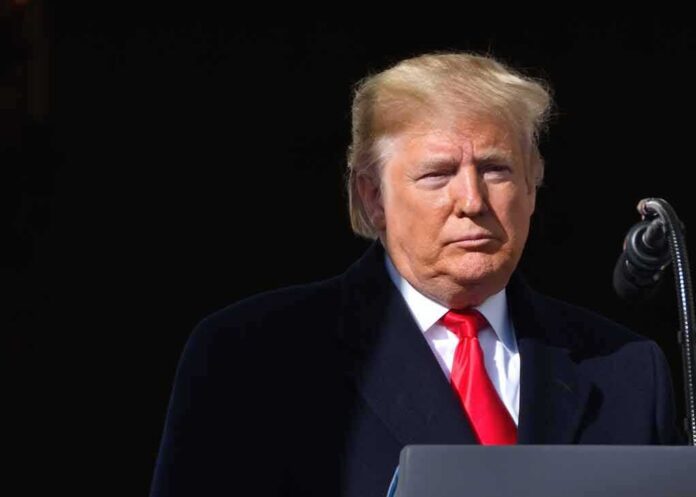
Donald Trump says if Iran ever succeeds in killing him, the United States should answer by bombing Iran “into oblivion,” and this threat is now colliding with real intelligence warnings that Tehran has been plotting to do exactly that.
Story Snapshot
- Israel shared intelligence that Iran devised a fresh plot to assassinate President Trump.
- U.S. agencies and the Secret Service have increased focus on threats tied to Iran.
- Trump publicly claims he has left orders for massive strikes on Iran if he is assassinated.
- Experts warn this mix of assassination plots and promised revenge raises the risk of wider war.
Fresh assassination warning lands in the middle of a fragile war
Israeli intelligence officials recently sent a stark message to Washington: Iran has devised a new plan to assassinate President Donald Trump. They passed this warning as American and Iranian forces were already trading strikes and a fragile ceasefire was falling apart. People briefed on the intelligence told major outlets that the report pointed to a fresh scheme, not just old rhetoric about revenge for past events. The timing could hardly be more tense.
U.S. officials say they have heard a steady drumbeat of chatter about possible plans to kill Trump in recent weeks. At least one human source reportedly gave information about a plot tied to Iran, serious enough that the United States Secret Service surged protection resources around the former president. These steps show that American security services treat the threat as more than rumor, even while they continue checking how solid the Israeli intelligence really is.
What Trump says happens if Iran ever succeeds
Trump is not keeping his expectations quiet. He has told reporters he is Iran’s “number one” kill target and says he recently learned he tops a foreign assassination list. More striking, he has claimed he left instructions that if he is assassinated in an attack tied to Iran, American forces should bomb Iran as revenge. He frames this as deterrence: if Tehran knows the cost, they will think twice about pulling the trigger.
That idea fits a very hard line view common among conservatives. From that perspective, a foreign regime that tries to murder a U.S. president crosses a red line that must bring crushing force, not a polite note from the State Department. The logic is simple, if brutal: hit us at the top, and your regime risks the end. The question is whether such automatic revenge orders are wise policy or a dangerous tripwire.
Intelligence, influence, and questions about motives
Not everyone in Washington sees the Israeli warning as pure, neutral intelligence. Some American officials told reporters they suspect the report may also be aimed at shaping Trump’s choices on Iran. If Israel wants the United States to intensify strikes, a dramatic assassination threat could strengthen the case. This kind of doubt does not mean the plot is fake. It does show how intelligence can carry both facts and politics in the same envelope.
Israel has reportedly shared similar warnings about Iran and Iran-backed groups over the past year, some of them based on general talk rather than specific plans. U.S. officials told one outlet that at least part of the latest information sounded like high-level dialogue inside Iran about killing Trump, not a detailed operation ready to launch. For ordinary Americans, this mix of real danger and possible political spin is hard to parse, but it matters when talk of war is on the table.
Assassination plots against U.S. leaders are rare but rising
Direct attacks against American presidents and major candidates are rare in history, but they do happen. Research on political assassinations shows they become more likely when a country is deeply polarized and groups feel their side may lose power. Recent years in the United States have seen more threats and attempts against political figures, including Trump himself facing multiple attempts. Iran’s public vows to avenge past killings only add fuel to an already hot fire.
The Israeli/US intelligence cooperation shared the most recent reported Iranian plot to assassinate President Donald Trump comes from intelligence shared by Israel with the U.S. in the past week (around July 9, 2026).
According to reports from The Wall Street Journal and CNN… pic.twitter.com/sJteNFyAJb
— RealPastorMark (@mark_pasto64312) July 10, 2026
The United States Department of Justice recently convicted an operative tied to Iran’s Islamic Revolutionary Guard Corps for trying to arrange political murders on U.S. soil. He admitted he was sent to recruit criminals to kill one of several American officials. That plot was stopped, but it shows that Tehran’s security forces are willing to reach into the United States to target enemies. From a common sense conservative view, ignoring that pattern would be naive.
Deterrence, escalation, and the stakes for Americans
Trump’s claimed “if I die, bomb Iran” order sits at the edge of nuclear-age deterrence logic. The promise of massive retaliation can scare off attacks, but it can also lock leaders into courses of action they might later regret. If Iran ever did carry out such an assassination, few Americans would oppose a strong response. The real risk is miscalculation now, as both sides rattle sabers and intelligence warnings push emotions higher.
Politically motivated killings remain far less common than the daily noise on social media might suggest. Yet one successful assassination at the top could spin into war, crush markets, and shake the very idea of peaceful transfer of power. That is why these warnings, Trump’s dramatic threats, and the debate over how to respond matter far beyond partisan lines. They are about whether foreign tyrants believe they can reach into American politics without paying a price.
Sources:
townhall.com, cnn.com, timesofisrael.com, wsj.com, youtube.com, telegraph.co.uk, fox32chicago.com, common.usembassy.gov, pbs.org, brookings.edu, ebsco.com
© integritytimes.com 2026. All rights reserved.