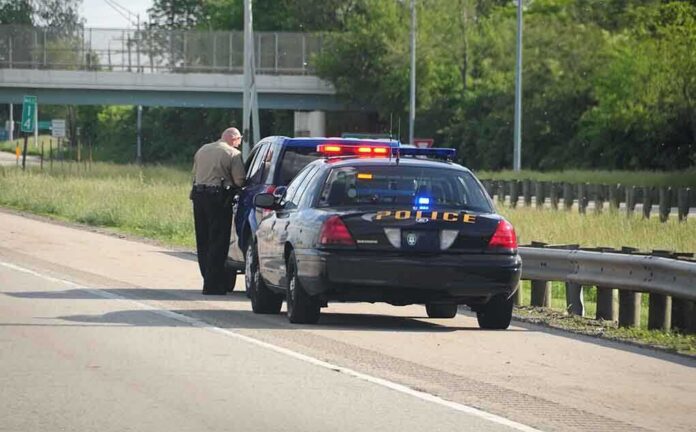
President Trump publicly ordered Immigration and Customs Enforcement to keep doing traffic stops one day after the agency moved to pause most of them following two deadly shootings.
Story Snapshot
- ICE paused most vehicle stops nationwide after two fatal shootings in Texas and Maine.
- Trump said traffic stops are essential and told ICE not to “give up” the tactic.
- Legal rules limit when immigration officers can stop cars for federal law enforcement.
- Tension rose inside the administration over safety, legality, and control of enforcement.
Trump’s order collides with ICE pause after two deaths
United States Immigration and Customs Enforcement told officers Tuesday to suspend most vehicle stops nationwide after agents fatally shot two men six days apart during traffic encounters in Texas and Maine, according to briefed sources. A day later, President Donald Trump posted that vehicle stops are “one of ICE’s most important and effective crime fighting tools” and said the agency should not give them up. The split exposed a fast, public clash over tactics, risk, and who sets the line.
Senior homeland security officials had already communicated the stand-down to field offices, tying it to safety concerns and to a review of pursuit and use-of-force decisions, multiple outlets reported. Trump’s instruction suggested a different priority: keep pressure on the streets to catch fugitives and gang members who, in his view, exploit any lull. The message signaled that operational caution would not sideline methods he sees as core to interior enforcement.
What the law actually allows during vehicle stops
Federal immigration officers cannot stop a car for a broken tail light or speeding; that is a state and local job. They can stop vehicles only to enforce federal criminal or immigration law, and only when they have reasonable suspicion tied to a person or the vehicle, or probable cause to arrest. The Fourth Amendment standard here is not optional. These rules do not ban the tactic; they set guardrails that, if followed, can support both public safety and due process.
Court fights and settlements have pushed these limits into clearer view in recent years. Training bulletins stress documentation, clear articulable facts, and narrow scope during stops. Advocates argue agents too often drift into “collateral” fishing that sweeps up non-targets. Agents counter that fugitives hide in traffic and that stops, used correctly, deliver high-value arrests. The law lands in the same place every time: specific facts first, then a brief, focused stop.
Inside the policy whiplash: safety, results, and control
The agency’s halt followed a week of turmoil, pressure from Congress, and scrutiny of deadly force in moving vehicles, which police training generally treats as high-risk. Leadership sought to lower the temperature and assess tactics before another tragedy. Trump’s statement pulled in the other direction, reflecting a belief that pauses invite more danger by letting criminal suspects move with ease and daring others to test limits.
🚨BREAKING: President Trump has called for ICE to resume traffic stops, overriding Homeland Security Secretary Markwayne Mullin's pause on the tactic ordered Tuesday following two fatal shootings by ICE agents in Texas and Maine.
"We CANNOT give up one of ICE's most important… pic.twitter.com/Z5cDnCOsiB
— Off The Press (@OffThePress1) July 15, 2026
That push-pull tracks a pattern in immigration enforcement: expand a tool, face a crisis, then recalibrate, sometimes within days. The pause-and-resume cycle sows confusion in the field and fear in communities. It also blurs accountability. When the White House signals “go,” but management says “hold,” agents and the public need a single, lawful playbook. Common sense, and conservative principles of order, argue for one standard: obey the law’s boundaries, write the rules down, and stick to them.
Why this matters on your street tomorrow morning
Vehicle stops are visible, fast, and can change behavior right away. When used with clear suspicion and strong supervision, they can remove dangerous offenders before they reach a home or job site. When used loosely, they risk rights violations, wrongful arrests, and tragic outcomes that erode trust. The country does not have to choose between safety and the Constitution. It must demand both. That starts with lawful suspicion, body-worn cameras, after-action review, and swift discipline when rules break.
What to watch next
Watch for formal guidance that either reaffirms the pause or codifies a restart with stricter controls. Look for use-of-force and vehicle pursuit standards that match what major police departments already require. Expect fresh oversight from Congress and local partners weighing whether to assist federal teams. Above all, track the numbers: arrests tied to legally grounded stops, complaints filed, and whether new directives reduce risk while keeping the focus on serious targets.
Sources:
redstate.com, instagram.com, aol.com, nbcnews.com
© integritytimes.com 2026. All rights reserved.