
A six-week shutdown finally hit the one place Americans notice government failure immediately: the airport security line.
Story Snapshot
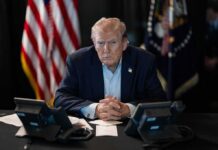
- President Trump announced March 27, 2026, then signed March 28, an executive order directing DHS to pay TSA workers during a DHS shutdown.
- The order targets roughly 60,000 TSA employees, including about 50,000 transportation security officers, to keep aviation security functioning.
- The White House framed the move as an emergency tied to national security and a “breaking point” for air travel operations.
- Funding reportedly comes from previously appropriated money connected to Trump’s earlier tax cut legislation, not a fresh act of Congress.
- Legal and constitutional questions remain because Congress controls appropriations, and the order’s durability may depend on how courts and lawmakers respond.
The airport became the pressure gauge for a shutdown Washington ignored
Trump’s executive action landed because TSA isn’t an abstract bureaucracy; it’s the face of federal power that every traveler meets before breakfast. A shutdown that drags into a sixth week doesn’t just squeeze paychecks, it tests compliance. Officers keep showing up or the system clogs. Trump called it an emergency and argued the air travel system had reached a breaking point. That language signals a policy choice: stabilize operations first, litigate authority later.
The timeline mattered. Trump telegraphed the move Thursday, then signed Friday, putting DHS Secretary Markwayne Mullin on the hook to implement quickly. DHS suggested payments could start as early as the following Monday, which reads like a bet that the bottleneck was procedure, not money. The administration’s message was blunt: TSA workers perform public safety duties and shouldn’t wonder if they can buy food or pay rent.
What the order actually does, and why it focuses narrowly on TSA
The order’s most telling detail is who it covers. The research points to TSA employees, not “all DHS employees,” despite the broader political talking point. That narrow targeting isn’t sentimental; it’s operational triage. When screeners don’t get paid, absenteeism rises and wait times explode, then local news loops it all day, and soon the public reads “shutdown” as “unsafe airports.” Paying TSA first protects the most visible security chokepoint.
Trump also chose a specific tool: redirecting or reclassifying previously appropriated funds rather than waiting for a new DHS funding bill. That distinction is the whole chessboard. If the money already exists in federal accounts, the argument becomes whether the executive branch can repurpose it with a “reasonable and logical nexus” to TSA operations. The White House memorandum cites that concept, effectively building a legal bridge from existing dollars to immediate payroll.
The constitutional fight: emergency power versus the power of the purse
Critics don’t need to oppose paying workers to question the precedent. Congress holds the power of the purse, and that principle protects voters from government-by-decree. One report described uncertainty over the legal authority for the order, which is the polite way of saying the courts could end up refereeing. Conservative common sense can hold two ideas at once: America needs secure airports, and America also needs clear lines around executive spending power.
The administration’s defense leans on emergency framing and statutory interpretation rather than claiming some unlimited authority. That matters because emergencies can become a habit in modern politics. The strongest case for Trump’s move is necessity: a security workforce can’t be treated like a volunteer fire department. The weakest case is longevity: if Congress stays deadlocked, how long can the executive keep finding “nexus” money before it looks like an end-run around budgeting itself?
Congressional gridlock and the incentive problem nobody wants to admit
Shutdown politics usually rely on pain to force compromise. Paying TSA workers reduces pain, at least in the most visible place, which may lower pressure on Congress to fix the underlying DHS funding dispute. That’s not a theory; it’s how incentives work. If airports run smoother, lawmakers can posture longer. The research also references Democrats’ demands tied to restricting immigration enforcement, while the administration framed that stance as prioritizing criminals over citizens.
From a conservative-values lens, the public interest begins with enforcement of federal law and continuity of essential services. If Congress uses paychecks as leverage, voters should ask why “must-pass” funding became a bargaining chip in the first place. Still, executive workarounds carry their own risk: they can normalize the idea that agencies operate on presidential improvisation instead of accountable appropriations. That’s a short-term fix with a long-term governance bill.
What happens next: paychecks, back pay questions, and the precedent set at the checkpoint
Implementation details remain the suspense point. Reporting flagged uncertainty about whether the payments cover back pay for weeks already missed or only resume pay going forward. That difference determines whether families catch up or merely stop falling further behind. Another unknown is sustainability: if the shutdown continues, TSA payroll becomes a repeating test of how far the executive can stretch existing appropriations without explicit congressional renewal.
The order also creates a template. Future presidents of either party will remember that the fastest way to change the shutdown narrative is to pick the agency Americans feel first and pay it. That may be smart politics, but it should worry anyone who wants Congress to govern. Airports don’t just move passengers; they transmit legitimacy. When TSA gets paid by executive action during a shutdown, Washington signals that normal budgeting has become optional.
The bigger takeaway isn’t that Trump wanted TSA paid; almost everyone does. The real story is that America has built a system where critical security workers can be ordered to work without pay until the executive branch finds a workaround. If lawmakers don’t like presidents testing the boundaries of fiscal authority, they can end it tomorrow with a funding deal that doesn’t treat national security payroll like a talking point. Until then, the security line stays political.
Sources:
Trump says he’ll sign order directing DHS to pay TSA workers during shutdown
Trump signs executive action to pay TSA employees after Congress fails to agree on DHS funding