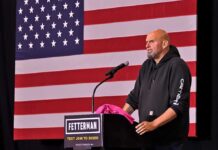

Scott Bessent is turning the Treasury Department into a financial battering ram against what he calls left-wing terror networks, and he is tying that crusade to a personal brush with death that he says changed everything.
Story Snapshot
- The Trump administration ordered Treasury to hunt down money behind domestic political violence through National Security Presidential Memorandum-7.
- Treasury Secretary Scott Bessent says a joint Internal Revenue Service and Federal Bureau of Investigation probe into Antifa funding is making “substantial progress”.
- Bessent vows to target nonprofits and donor networks that, he claims, abuse tax-exempt status to fund violent left-wing groups.
- Civil liberties advocates warn this campaign could become a powerful weapon against mainstream progressive organizations.
Treasury is repositioned as a domestic terror finance hunter
President Donald Trump’s National Security Presidential Memorandum-7 tells federal agencies to “investigate, prosecute, and disrupt” entities that fund domestic terrorism and organized political violence, including groups tied to Antifa and other anti-fascist movements. The memorandum directs the Treasury Department and Internal Revenue Service to use all existing tools to make sure tax-exempt organizations are not directly or indirectly financing political violence or domestic terrorism. This order turns tax law and financial surveillance into front line weapons in a new internal war.
Scott Bessent has embraced that mission with unusual zeal. He told reporters the federal government is now “following the money” behind Antifa-linked agitation, using Treasury’s financial intelligence units to track where funding comes from and where it goes. Bessent says someone is paying for travel, logistics, and coordination for violent protests in cities like Portland and Minneapolis, and that his department’s job is to expose those backers. The clear message is that Treasury will not just watch; it will move to cripple those networks.
Nonprofit networks move from charity work to prime suspects
Bessent confirmed that a joint Internal Revenue Service–Federal Bureau of Investigation investigation into Antifa’s funding networks has made “substantial progress,” and he promised the public will see results soon. He pointed to new Internal Revenue Service guidance on Form 990, the tax document nonprofits must file, which will press nonprofits to truly “know their grant recipients” and answer for how grant money is used. That shift means grant-making foundations can be held responsible if their dollars end up supporting violence or suppression of rights.
Reporting and allied research groups claim investigators are mapping connections between large donor networks and activist groups accused of Antifa-style violence, tracing more than $100 million through various organizations tied to unrest and at least millions in taxpayer-backed funds flowing into radical networks. They name well-known progressive funding hubs as possible sources, putting an entire philanthropic ecosystem under suspicion for allegedly enabling domestic chaos. For many conservatives, this looks like long overdue scrutiny of “dark money” hiding behind the mask of charitable work.
Bessent’s brush with death raises the emotional stakes
Conservative media allies describe an attempted assassination of a right-wing figure like Charlie Kirk as a turning point that hardened Bessent’s resolve to go after what they call transnational political terrorism. They tie that attack to a broader pattern of organized violence against conservative voices and crowds, suggesting a networked campaign rather than random street crime. When Bessent speaks about cracking financial networks, he does so with the urgency of someone who believes the threat nearly cost him his life or the life of a close ally.
From a common-sense conservative view, if violent movements are not just chanting but planning hits on political opponents, then cutting off their money is not just policy—it is self-defense. Bessent frames his mission as using legal tools, not vigilante justice, to choke off funding for those who turn politics into street warfare. That framing resonates strongly with Americans who watched cities burn and wonder who paid for the bricks, buses, and bail funds.
Civil liberties worries collide with calls for law and order
Advocacy groups on the left argue that the presidential memorandum creates no new powers but tries to weaponize existing ones to punish organizations that oppose the administration’s agenda. They warn that calling activists and nonprofits “terrorist supporters” without clear legal standards will chill free speech and lawful protest, especially when the Internal Revenue Service and Treasury can threaten tax status and criminal referrals. To them, Bessent’s war on terror looks like a war on dissent dressed up in national security language.
🚨 🇺🇸 TREASURY TARGETS NONPROFIT MONEY FLOWS AS DOMESTIC TERROR FINANCE CRACKDOWN EXPANDS
Treasury Secretary Scott Bessent said U.S. counterterrorism finance tools are now being used at home. Officials will examine tax-exempt groups, charities and foreign-linked funding…
— Naeem Aslam (@NaeemAslam23) July 16, 2026
American conservatives tend to see a different picture. If a small number of nonprofits are abusing charity rules to bankroll violence, it is reasonable to hold them to account while leaving the vast majority of honest charities alone. The Treasury Department’s own risk assessment has said most tax-exempt organizations face little or no risk of terrorist abuse, which suggests focused enforcement is both possible and wise. The hard question is where focus ends and political targeting begins.
Sources:
youtube.com, nypost.com, zerohedge.com, charityandsecurity.org, pbwt.com, justsecurity.org
© integritytimes.com 2026. All rights reserved.