A single attacker turned Islamabad’s “safe” status into a lie in seconds, and the aftershocks now threaten Pakistan’s internal cohesion and its already-frayed regional security.
Quick Take
- A suicide bomber struck the Khadija Tul Kubra Mosque (a Shia imambargah) in Tarlai Kalan during Friday prayers on February 6, 2026.
- At least 31 people died and more than 169 were wounded after the attacker shot at guards and detonated explosives at or near the entrance area.
- The blast triggered a state of emergency in the capital and immediate appeals for blood donations as hospitals absorbed mass casualties.
- No group immediately claimed responsibility; early assessments pointed toward TTP or Islamic State Khorasan, with analysts weighing motives and capability.
The Attack That Broke Islamabad’s Security Narrative
The suicide bombing hit during Friday prayers at the Khadija Tul Kubra Mosque in Tarlai Kalan, a southeastern suburb of Islamabad. Reports described a two-step assault: the attacker opened fire on security guards positioned at the entrance, then detonated explosives, killing worshippers and bystanders and injuring scores more. The casualty count rose as the day unfolded, reaching at least 31 dead and more than 169 wounded, making it Islamabad’s deadliest attack in over a decade.
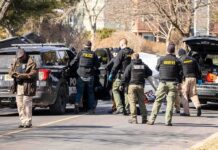
The scene that followed told its own story about preparedness versus reality. Structural damage and panicked evacuations collided with the cold arithmetic of triage as ambulances shuttled victims to major facilities, including Islamabad’s Pakistan Institute of Medical Sciences. Officials declared a state of emergency and urged blood donations—an urgent, unglamorous detail that signals how quickly modern cities can run short on the most basic life-saving resource when terrorism strikes at scale.
Why a Shia Mosque, and Why This Location, Matters
The target selection carried a familiar and ugly logic: sectarian intimidation. Pakistan has endured repeated attacks on Shia gatherings, and militants understand the strategic effect. A strike on a place of worship doesn’t just kill; it tries to poison trust between neighbors and make normal public life feel reckless. The fact that the assault landed in Islamabad—often treated as a hardened bubble compared with other regions—added a humiliating twist: militants can still reach into the capital.
Security context sharpened the mystery rather than settling it. Investigators reported no immediate claim of responsibility, even as preliminary probes and anonymous security assessments floated TTP and Islamic State Khorasan as possible culprits. Analysts have pointed out that Islamic State Khorasan has a reputation for mass-casualty spectacle and for targeting religious gatherings, while TTP’s recent patterns have not always centered on Shia sites. That tension—capability versus typical target preference—will shape the investigation.
What the First 24 Hours Revealed About State Capacity
Pakistan’s national leadership responded with predictable but necessary signals: condemnation, vows of justice, and orders to support the wounded. Prime Minister Shehbaz Sharif denounced the attack and pushed immediate medical assistance, while Foreign Minister Ishaq Dar framed it as a crime against humanity and promised accountability. The United Nations Secretary-General António Guterres condemned the bombing and called for justice, amplifying international pressure to bring perpetrators to account.
These statements matter less as rhetoric than as indicators of what comes next: a contest between public demand for swift retribution and the state’s ability to deliver accurate attribution. Conservative common sense says the public deserves clarity before escalation. Pakistan’s hard problem lies in militant overlap, shifting allegiances, and propaganda incentives that reward confusion. Overreacting to the wrong actor can fuel recruitment for the right one, and civilians pay the bill either way.
The Larger Pattern: Militancy, Borders, and the Cost of Confusion
The Islamabad attack did not occur in a vacuum. Pakistan has faced heightened militant activity, and pressure points stretch from urban targets to borderland sanctuaries. Analysts warn that the Durand Line region and cross-border tensions with Afghanistan complicate counterterror operations, because militants exploit geography and politics simultaneously. When officials hint at possible operations in places like the Tirah Valley, they are also telegraphing that the response may extend well beyond a single crime scene.
Regional reactions also reflect that reality. The Afghan Taliban and Iran condemned the bombing, and calls for cooperation surfaced quickly. Condemnations cost little; coordination costs a lot. Pakistan’s dilemma resembles one familiar to American readers after decades of counterterror debates: tactical wins mean little without reliable intelligence, border enforcement, and a coherent strategy for disrupting financing and recruitment. A capital-city strike forces that debate into the open, whether leaders welcome it or not.
What to Watch Next: Claims, Crackdowns, and Sectarian Flashpoints
The most dangerous phase often comes after the blast: rumor, retaliation, and politicization. A delayed claim of responsibility could arrive only after investigators publish early findings, allowing militants to tailor the narrative for maximum fear. A sweeping crackdown could also follow, and its success will depend on discrimination—targeting networks, not communities. Sectarian violence thrives when ordinary people conclude the state cannot protect them and when extremists convince them that only tribe or sect can.
Suicide Bomb Rocks Pakistan's Capital, Over 30 Dead & 169 Wounded https://t.co/cYXrC4ghYR
— zerohedge (@zerohedge) February 7, 2026
Islamabad’s grim lesson is simple: capital security can reduce risk but cannot erase it, especially when adversaries accept suicide as a delivery system. The test now is whether Pakistan’s institutions can produce credible attribution, protect vulnerable worship sites, and prevent the predictable cycle of sectarian blame. A just response punishes the guilty, not convenient scapegoats, and it strengthens social cohesion instead of shredding it—because that cohesion is the real target.
Sources:
Pakistan: Guterres condemns deadly suicide bombing at Islamabad mosque
What Next After the Suicide Attack in Pakistan?
2026 Islamabad suicide bombing
Islamabad mosque attack: Death toll rises as Pakistan declares emergency