Hegseth’s Caracas rollout tied U.S. power to a partner-led hunt for narco-terrorists—then backed it with an operation that drew blood.
Story Snapshot
- U.S. officials framed a security partnership with Venezuela around counter-narcotics and regional stability.
- A later report cited a coordinated strike that reportedly killed the leader of Tren de Aragua.
- The effort fits a broader push to make regional partners lead anti-cartel operations.
- Rights monitors dispute that Venezuela’s security institutions have reformed.
What Hegseth Announced And Why It Matters
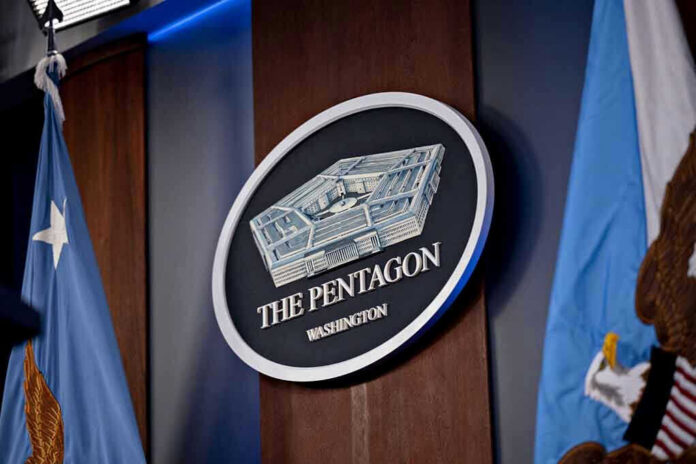
Secretary of War Pete Hegseth announced in Caracas a new U.S.-Venezuela military partnership focused on countering cartels and designated terrorist groups. The U.S. government set the mission frame under Operation Southern Spear: disrupt narcotics flows, defend the homeland, and protect partners across the hemisphere. The administration linked the push to a defined operational track, not vague talk. That matters because strategy only sticks when it ties to missions, targets, and outcomes people can check.
The rollout also nested inside a larger plan to shift weight to partner-led action. The Department of Defense described an Americas Counter Cartel Coalition built to help neighbors take the lead against narco-terrorists, with the United States providing muscle, intel, and logistics as needed. That model reflects a common-sense approach: push decisions and risks closer to the fight, keep U.S. forces focused, and measure success by effects on supply chains, safe havens, and cross-border violence.
Evidence Of Real Operations, Not Just Rhetoric
A Lead Inspector General report later recorded at least one claimed joint operation. U.S. and Venezuelan forces coordinated an airstrike that reportedly killed Héctor Rusthenford Guerrero Flores, known as Niño Guerrero, identified as the leader of Tren de Aragua, which the United States designated a terrorist organization. One strike does not end a network, but it shows the partnership moved from podium to target deck. In counter-network work, removing a leader can disrupt revenue, discipline, and cross-border reach.
Senior U.S. officials anchored the campaign’s timeline and venues in official records. President Trump, Secretary of State Marco Rubio, Secretary of War Pete Hegseth, and General Dan Caine discussed Operation Absolute Resolve and Caracas events dated January 2, 2026. The early tempo set a message: the West does not cede the hemisphere’s security to cartels and foreign patrons. That message aligns with conservative priorities—secure borders, cut trafficking at the source, and stand with neighbors who fight the same threat.
What We Still Do Not See In Public
The public record does not show a signed bilateral agreement with annexes on training, intelligence sharing, force protection, or rules of engagement. The lack of a visible text leaves gaps on legal authority, oversight, and funding. That opacity invites confusion as labels and operation names shift across reports. The fix is simple and overdue: release the agreement, identify authorities, and set metrics that allow Congress and the public to track results without leaking sensitive details.
The record also does not prove territory was recovered from criminal groups or quantify control shifts. The reports outline aims and cite at least one strike, but they do not map where networks lost ground or if Venezuelan authorities held it. Counter-cartel work should track cleared areas, re-opened roads, and crime drops by district. If the partnership delivers that kind of proof, the policy debate changes fast from theory to results.
The Human-Rights And Reform Question
The United Nations Fact-Finding Mission and the United Nations Human Rights Office argue Venezuela’s security and intelligence services kept the same structure and practices after the political transition. They say key laws, tactics, and armed colectivos remain in place, and they do not see proof of meaningful reform. These claims challenge the idea that modernization alone will fix abuses. They ask a fair question: can a partnership change behavior inside forces that critics link to past violations?
Common sense says guardrails matter. Americans want cartels crushed, but not at the cost of letting any force act without accountability. The answer is conditions tied to measurable steps: lawful detention practices, unit-level discipline, transparent civilian-casualty checks, and punishment for offenders. If critics allege abuse, the partnership should require documented investigations and consequences. That standard supports both justice and mission success because abusive forces lose local trust and good intelligence.
How To Judge Success In The Months Ahead
Three scorecards can keep this effort honest. First, operations: more high-value arrests or strikes, disrupted finance nodes, and interdictions that reduce throughput—not press events. Second, control: maps that show reclaimed areas held by police and courts, with markets and schools open. Third, integrity: fewer credible abuse claims and visible discipline for violators. The Department of Defense and Congress can require routine, unclassified updates that track these markers without giving away tactics.
If those markers bend the right way, the partnership will look like a prudent trade: help a neighbor fight a shared threat while keeping U.S. commitments focused and limited. If they do not, Washington should recalibrate fast. The goal is simple and sober—shrink cartel power, secure the hemisphere, and stand for the rule of law. Talk is cheap. Results, backed by records and maps, will decide this story’s ending.
Sources:
youtube.com, media.defense.gov, jifco.defense.gov, defense.gov
© integritytimes.com 2026. All rights reserved.