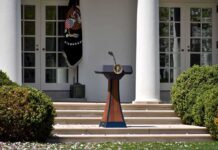
Philadelphia’s top prosecutor told a cheering crowd he wants a souvenir from the White House ballroom “after we all blow it up.”
Story Snapshot
- Krasner said the Trump-era White House ballroom would be “blown up” during a public speech.
- He framed it as an “official ceremony” in a future handover, not an attack now.
- He joked about selling debris as paperweights to pay back taxpayers.
- The line lit a firestorm over political hyperbole versus true threat.
What Krasner Actually Said, And Where He Said It
Philadelphia District Attorney Larry Krasner spoke at the President’s House site in Old City, a public event that drew activists and media. He tore into President Trump, calling him “a pain in the ass” and “an embodiment of hate.” Then he turned to the new White House ballroom. He said he would keep a piece on his desk “after we all blow it up.” He tied the line to a future moment and to a crowd celebration, not a covert act.
The full quote matters. Krasner said the room would be “blown up” in an “official ceremony.” He said the pieces could be sold as paperweights to “give the taxpayers their money back.” In that frame, “blow it up” sits as political theater, like tearing down a statue after a change in power. It reads as triumph talk about undoing a project tied to Trump, not a call to plant a bomb at the White House tonight.
Philadelphia DA Larry Krasner is facing backlash after saying he wants to “blow up” the White House ballroom and keep a piece of it as a paperweight on his desk.
The remark is drawing criticism over the rhetoric and its reference to destroying part of the White House.
Photo via… pic.twitter.com/97VWMBRMly
— TalkRadio 77 WABC (@77WABCradio) August 26, 2026
How Critics Heard It, And Why It Stuck
Critics seized on the words, not the setup. They heard a big city prosecutor say “we’re gonna blow it up,” and they argued that is advocacy of violence against federal property. The phrase is plain, the setting is charged, and the office carries weight. Many people will not watch the clip. They will only see the quote. In a climate already raw, a crisp sound bite beats a paragraph of context every time.
The caution is obvious. Words from law enforcers carry extra force. A district attorney who jokes about demolition invites claims of double standards. If a right-leaning sheriff said “blow it up” about a favored liberal site, legacy press would likely hammer him. The content is similar even if the intent differs. Equal rules build trust. Selective outrage breaks it. Responsible leaders should deny that gift to their critics by using clear, sober language.
Free Speech, Hyperbole, And The Line Between Rhetoric And Threat
American political speech leans on hyperbole. Courts have long recognized “rhetorical hyperbole,” which covers wild phrases said for effect more than literal instruction. That shield is real because citizens must speak hard truths and sharp jokes without fear. But the defense works best when the context makes the exaggeration obvious to a reasonable listener, not only to allies who know the in-joke.
Here the setup helps Krasner. He spoke about a future turnover, an “official ceremony,” and selling keepsakes for taxpayers. That tone signals a symbolic teardown after a political change, not a live plot. Even so, leaders should respect the risk. Strategic ambiguity can rally a base, but it also blurs lines and raises the odds of misread intent. Clarity is not weakness. Clarity is prudence when tempers run hot and security stands on edge.
The Conservative Common-Sense Test
Hold two thoughts at once. First, do not criminalize speech that a fair listener would hear as figurative. The First Amendment protects heated debate, satire, and even ugly humor. Second, demand a higher bar from public officials who manage the use of force. A prosecutor should not traffic in smash-mouth verbs about a federal building, even as a metaphor. That kind of line drives cynicism and invites needless fights. Speak plainly. Lead calmly. Fix problems, not memes.
What This Episode Teaches Going Forward
Voters now live on clips and captions. A single charged verb can drown out a full message. Politicians who rely on demolition metaphors gamble with public trust. The smarter play uses strong but clean language tied to policy. If the ballroom is wasteful, say it. If it will be repurposed, say how. If a new administration will redesign it, outline the plan and cost. People reward leaders who act like adults, even when they argue like partisans.
Bottom Line
Krasner’s “blow it up” line reads as rhetorical flourish framed by a future ceremony and a taxpayer riff, not a live threat. The phrasing still failed the prudence test. A prosecutor’s words should shrink risk, not raise blood pressure. The country needs fewer victory laps and more serious fixes. Leaders on both sides should drop the cute metaphors and pick up a blueprint.
Sources:
twitchy.com, nbcphiladelphia.com, youtube.com, facebook.com
© integritytimes.com 2026. All rights reserved.