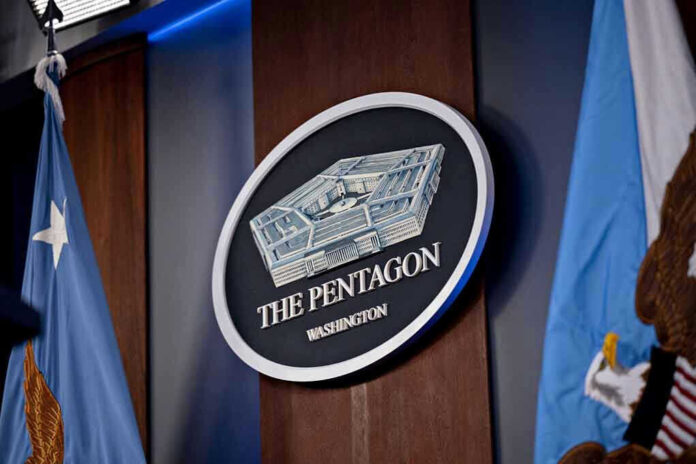
When a sitting U.S. senator faces a Pentagon investigation for reminding troops to refuse illegal orders, the boundaries of American democracy and military authority collide in ways that defy precedent and demand our attention.
Story Overview
- The Pentagon has launched an investigation into Senator Mark Kelly and five other Democrats for a video urging service members to refuse unlawful orders.
- Defense Secretary Pete Hegseth cites federal law concerns about undermining military discipline and morale.
- President Trump labels the senators “traitors” and calls for their prosecution, inflaming partisan tensions.
- The case challenges the limits of congressional oversight and political speech in a polarized era.
Pentagon Targets Congressional Speech as Military Law Collides with Politics
The Pentagon’s announcement of a formal investigation into Senator Mark Kelly and five colleagues marks a stark escalation in the contest over military obedience and political speech. Defense Secretary Pete Hegseth justified the probe by invoking statutes that prohibit interference with the loyalty and morale of the armed forces, raising alarms about the stability of the chain of command. Such direct scrutiny of elected officials by military authorities has rarely, if ever, occurred in modern American history, making this a moment ripe for both legal and constitutional debate.
Senator Kelly, a decorated Navy pilot and astronaut, responded swiftly to the Pentagon’s move, accusing leaders of weaponizing military law to silence congressional oversight. His statement, echoed by the other senators under investigation, frames the inquiry as intimidation and a threat to the constitutional separation of powers. The fact that President Trump immediately labeled the lawmakers “traitors” and demanded prosecution only intensifies the storm, drawing battle lines that run deep into America’s political landscape.
Legal Duty vs. Political Messaging: When Reminders Become Alleged Crimes
Federal law and the Uniform Code of Military Justice require every service member to refuse an unlawful order, a principle deeply enshrined in the ethos of American military conduct. Historically, reminders of this duty have come from military leaders themselves, and rarely have they triggered accusations of sedition or interference. The senators’ video, recorded in response to recent Caribbean military strikes of questionable legality, was intended as a preventive measure. The Pentagon’s interpretation—that such reminders might undermine discipline or promote disloyalty—invokes a broad reading of the law that legal scholars say is likely to be challenged in court.
Retired military officials, including Lt. Gen. Mark Hertling, have publicly questioned the Pentagon’s rationale, noting that reinforcing the duty to refuse unlawful orders aligns with both legal and ethical norms. Civil-military relations experts warn that the investigation could set a dangerous precedent, chilling future congressional oversight and politicizing the very mechanisms meant to safeguard constitutional government.
A Precedent that Could Redefine Civilian Oversight and Military Discipline
The stakes of the Pentagon’s investigation extend far beyond the senators involved. If the inquiry proceeds, it may establish new boundaries for what elected officials can say about military conduct. Congressional leaders and legal analysts expect a wave of litigation, testing the limits of the First Amendment and the separation of powers. The case echoes prior episodes, such as General Mark Milley’s resistance to unlawful directives, but this time the focus is on lawmakers rather than military brass.
Short-term impacts include heightened political tension and public scrutiny of military obedience. In the long run, the episode could either reinforce the tradition of civilian oversight or embolden those who seek to limit congressional influence over military affairs. Service members, the broader military community, and the general public are watching closely, aware that the resolution will shape not only the conduct of future wars but also the character of American democracy itself.