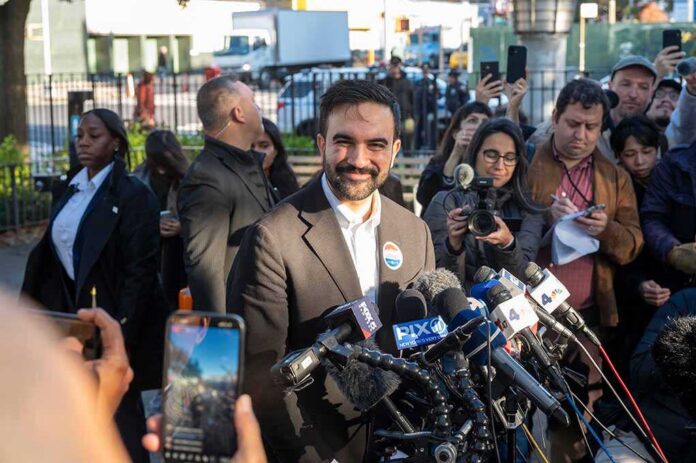
One evening, two images: boos at a vigil, then dinner at a Palestinian restaurant.
Story Snapshot
- Zohran Mamdani attended an Oct. 7 vigil, stood silent, and was booed by protesters.
- His public statement condemned Hamas’ Oct. 7 crimes and mourned Israeli loss, while citing Palestinian suffering.
- After the vigil, reports say he met with Palestinian families at Ayat, a Palestinian restaurant.
- Critics cast the dinner as a provocative message tied to the same night’s events.
The Timeline That Sparked A Fight Over Meaning
Mamdani’s day started with a written statement marking three years since the Hamas attacks. He called Oct. 7 “horrific war crimes,” grieved with Israelis, and referenced Palestinian dead in Gaza. That dual framing drew rapid backlash from Jewish groups and some media before sundown. At the Union Square vigil that night, he did not address the crowd. Reporters describe him as standing solemnly while demonstrators shouted and booed. The scene turned tense and chaotic around him.
After the vigil, he went to Ayat, described as a Palestinian restaurant featured in dining guides. Tabloid and community outlets placed him there that same evening. They reported, citing unnamed sources, that he met with Palestinian families. Those accounts did not name attendees or release a guest list, leaving the specific purpose of the stop unclear in the public record available now. The setting—Palestinian food, Oct. 7 night—supercharged the symbolism for supporters and critics alike.
What His Words And Posture Actually Show
Public records show two clear acts from Mamdani: a text statement that condemned Hamas and mourned Israeli loss while naming Palestinian deaths, and a silent, non-speaking presence at the vigil itself. No report shows him taunting mourners or trolling the event. The Jewish Telegraphic Agency noted he did not speak and stood in place. That matters because it fixes his conduct at the vigil as solemn, not performative. The controversy comes from what he wrote earlier and what he did afterward.
The dinner stop fits his broader message about engaging Palestinian New Yorkers. Outlets that covered his schedule described the evening as vigil first, then meeting with Palestinian community members. That sequencing suggests planning, not spite. The gap is documentation: no on-record explanation ties the choice of Ayat to outreach rather than optics. As a result, intent remains inferred, not proven, and ripe for narrative war on social media and cable.
How The Counter-Narrative Took Hold
Commentary outlets framed the dinner as a “clear message” to Jewish New Yorkers. That claim rests on timing, not new facts about what he said or did at the restaurant. It reads the meal as a signal because it followed a charged vigil and because Ayat is a Palestinian venue. That is a simple, sticky story that spreads fast. It is also a story built on inference, not on a named source or transcript from the table that night.
Mamdani Booed as “Traitor” at October 7 Vigil by His Own Base. You don’t attach a policy footnote to a funeral, and New York’s mayor should have known enough to give grieving families one clean day of mourning. https://t.co/roDraSjUdB
— Brandon Webb (@BrandonTWebb) October 8, 2026
Common sense, and conservative instincts about respect for grief, push against mixing memorials with politics. Many readers will bristle at any public official who pairs a mass-murder remembrance with hot-button rhetoric or symbolic stops. Yet fairness also demands weight on verified conduct. The facts show a solemn presence at the vigil and a later restaurant visit described as a meeting. If the dinner was outreach, release the guest list and purpose. If not, say so plainly. Sunlight settles symbol fights.
Sources:
mediaite.com, dailywire.com, townhall.com, nytimes.com, abc7ny.com, nymag.com, foxnews.com, jewishinsider.com
© integritytimes.com 2026. All rights reserved.