
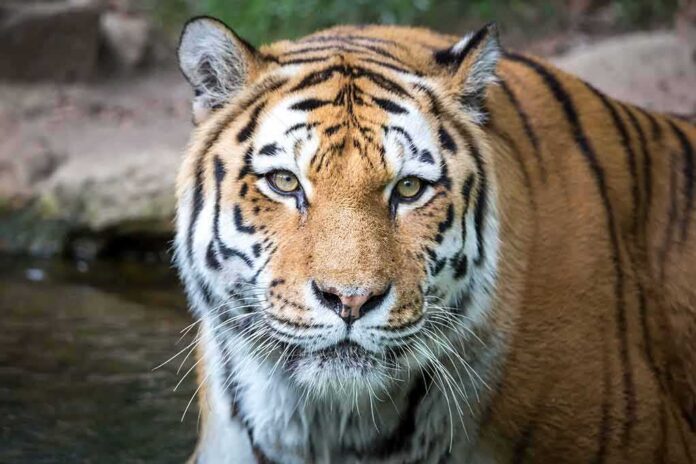
A man entered a tiger enclosure at Yorkshire Wildlife Park and died at the scene after the tiger attacked him, while the animal never left its habitat.
Story Snapshot
- Police received a 1:35 p.m. report of a man inside the tiger enclosure near Doncaster.
- Emergency crews treated him, but he was pronounced dead at the scene.
- The tiger stayed inside the enclosure and was uninjured, police said.
- The park evacuated visitors and closed during the response and inquiry.
Police timeline and on-scene facts
South Yorkshire Police said officers were called at 1:35 p.m. British Summer Time to Yorkshire Wildlife Park after reports that a man had entered the tiger enclosure. The tiger attacked him. Medics tried to save him, but he died at the scene. Police said the tiger stayed inside the habitat and posed no wider risk to the public. Officers remained on site to conduct inquiries, and the force confirmed the animal was uninjured.
Yorkshire Wildlife Park sits near Doncaster and draws family crowds on weekends. The park evacuated visitors during the emergency. Police urged calm because the tiger never left its enclosure and the site was secure. The core facts did not shift after initial reports. Early alerts flagged “serious injuries,” then officials confirmed the death later that afternoon. That sequence is normal in fast-moving emergencies where medics work before next of kin are told.
Park actions and safety posture
Yorkshire Wildlife Park said a serious incident took place at the tiger enclosure and that staff triggered their emergency plan right away. The park worked with authorities to understand what happened and closed for the rest of Saturday and into Sunday. That choice matched the live investigation and safety checks on barriers, gates, and routes used by first responders. Officials did not release the man’s identity at that time, which is standard in the United Kingdom.
Police and the park did not specify how the man entered the enclosure. Reports online described jumping or climbing, but official statements so far used the simpler term “entered.” Responsible coverage should stick to the words police and the park used until investigators release more detail. That protects accuracy and keeps blame-casting from getting ahead of facts, which aligns with common sense and basic fairness.
Why the tiger stayed and the public risk did not spread
Enclosures for large cats use layered barriers and controlled access points. The goal is simple: keep animals in, keep the public out, and give staff clear options in an emergency. Police said the tiger remained inside and was uninjured. That matters for public safety and animal welfare. It also means responders could focus on the victim and witnesses, not on a search for a loose animal, which would have forced wider lockdowns and lethal options.
https://twitter.com/Lean_Puffs/status/2109078774734082309
Comparable incidents in the United Kingdom are rare but not unheard of. Prior fatal attacks at zoos involved keepers inside work areas rather than a visitor entering an exhibit. Those events still show how critical doors, gates, and drills are when seconds count. Inspectors and operators stress routine exercises, clear radio traffic, and simple, repeatable steps when a barrier is breached or a person ends up where they should not be.
What investigators will likely check next
Detectives and regulators will review camera footage, radio logs, and staff statements to map the path into the enclosure. They will check barrier integrity, sight lines, and signage. They will confirm the tiger’s identity and condition and verify that park protocols matched license rules. They will brief the coroner on cause of death. These steps do not second-guess responders; they show the public that the system learns and that operators keep risk as low as possible.
How to think about responsibility without the rush
Personal choices matter. So do strong barriers, drills, and clear warnings. A balanced view respects both truths. When a person enters a lethal-animal space, tragedy can unfold in seconds. The public expects operators to plan for the worst-day scenario anyway. That means redundant barriers, fast staff response, and calm coordination with police and medics. Those measures protected the wider crowd here and spared the animal from harm, which reflects sound stewardship.
Sources:
mediaite.com, bbc.co.uk, straitstimes.com, itv.com, us.cnn.com, brentwood.gov.uk, cambridge-news.co.uk
© integritytimes.com 2026. All rights reserved.