Shots fired at federal agents in the heart of Chicago’s immigrant community triggered a volatile showdown that exposes the deep fault lines between federal power and local resistance—a flashpoint you cannot ignore if you care about law, order, and the American urban experiment.
Story Snapshot
- Federal immigration agents were fired upon during a high-profile operation in Chicago’s Little Village, but no agents or officers were injured.
- The incident escalated into violent protests, with crowds clashing against agents and police, resulting in multiple arrests and the use of tear gas and flash-bang devices.
- Federal and local officials traded blame, highlighting the tense political environment and the ongoing national debate over immigration enforcement in sanctuary cities.
- A suspect with a criminal record was eventually arrested, but the event has left the community and authorities on edge, raising serious questions about enforcement tactics and community trust.
Gunfire in Little Village: Federal Operations Ignite a Powder Keg
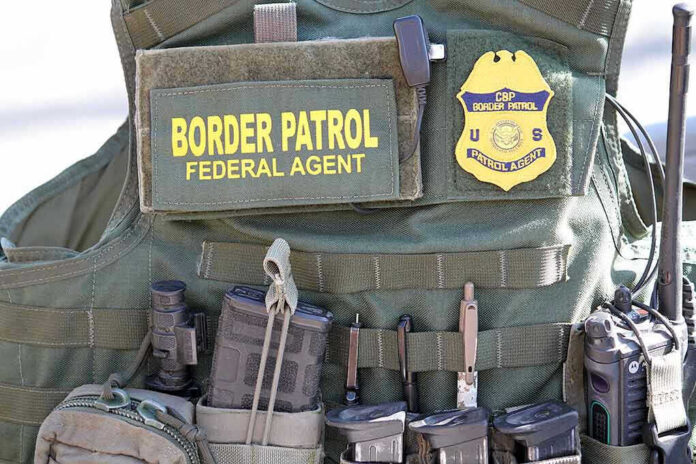
Federal immigration agents launched their Saturday morning operation in Little Village, Chicago’s vibrant Mexican-American enclave, as part of the two-month-old “Operation Midway Blitz.” The presence of agents sparked immediate unrest; by late morning, a crowd gathered, tempers flared, and the operation took a dangerous turn. A man in a black Jeep opened fire on agents before fleeing, sending shockwaves through an already tense neighborhood. No law enforcement personnel were hit, but the gunfire transformed routine enforcement into a battle for control of the streets.
Protesters responded to the escalation by hurling paint cans and bricks at federal vehicles. Flash-bang devices and tear gas filled the air, deployed by agents determined to regain order. Amid the chaos, someone attempted to ram a federal vehicle, and a police officer was accidentally struck by a car. The violence led to nine arrests as agents and police pushed back against the crowd, and a manhunt for the shooter unfolded across the city. By Monday, DHS announced the arrest of a suspect described as a Mexican national illegally present in the U.S. with prior felony convictions, intensifying the debate over immigration policy and public safety.
Federal vs. Local: Blame, Rhetoric, and the Politics of Enforcement
The confrontation was not just physical; it was political and deeply personal. The Department of Homeland Security condemned the violence, accusing local officials and activists of fostering an anti-law enforcement climate. In return, city leaders and activists accused federal agents of inflaming tensions with aggressive tactics, pointing to video evidence of agents deploying weapons and crowd control devices. The blame game reached the governor’s office, where Illinois Governor JB Pritzker faced criticism for “anti-law enforcement rhetoric” from DHS officials. Meanwhile, Alderman Byron Sigcho-Lopez and other local leaders lambasted the operation, demanding accountability and oversight.
Days before the violence, a federal judge had issued an injunction restricting agents’ use of force in Chicago, after finding a Border Patrol official had misrepresented threats from protesters. This legal intervention underscored the judicial branch’s concern over federal conduct and set the stage for the weekend’s explosive events. Both law enforcement and activists operated under extraordinary scrutiny, each side claiming to defend the rule of law—yet neither able to prevent the eruption of violence.
Community Trauma, Policy Fallout, and the National Conversation
Little Village residents, already wary of immigration sweeps, found themselves at the epicenter of a national debate. Local businesses shuttered as protests turned violent and families sheltered in place, fearful of both law enforcement and criminal activity. The short-term impact—disrupted commerce, fear, and mistrust—was immediately visible. Long-term, the incident threatens to deepen the divide between immigrant communities and authorities, potentially chilling cooperation with law enforcement and accelerating demands for new policy and oversight.
Federal agencies are now reviewing security protocols for future operations, wary of escalating violence and the political minefield they must navigate. Activist groups, galvanized by the events, are calling for further legal restrictions and oversight of federal action in sanctuary cities. The confrontation has triggered a fresh round of soul-searching among law-and-order conservatives and progressives alike. Is aggressive federal enforcement in urban immigrant neighborhoods a necessary assertion of national sovereignty, or a reckless provocation that undermines the social fabric? The answer may shape the next chapter of America’s immigration debate.