A single person slipping past a barrier near the White House can turn a “routine” state visit into a live stress-test of America’s most visible security machine.
Quick Take
- Secret Service agents arrested an unidentified suspect after a security barrier breach near The Ellipse, adjacent to the White House, during King Charles III’s Washington visit.
- Authorities have not released the suspect’s identity, motive, or whether any weapon was involved; criminal charges were still pending in initial reporting.
- The breach landed in a tense window for Washington security, coming days after a separate shooting incident tied to the White House Correspondents’ Dinner.
- High-profile visits run on layered defenses—barricades, controlled access, surveillance, and rapid-response teams—yet the public sees only the moment something goes wrong.
A barrier breach at The Ellipse exposes the real mission: time
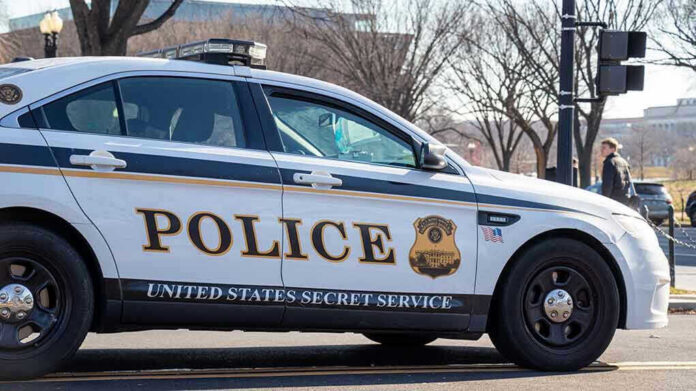
The U.S. Secret Service detained and arrested a suspect after the person bypassed a security barrier near The Ellipse, a park area bordering the White House complex, while King Charles III and Queen Camilla were in Washington, D.C. The most important detail is also the most frustrating one: officials did not disclose who the suspect was or why the breach happened. In protective work, that uncertainty is the point—security teams must buy time even when they lack context.
That “time” shows up as distance and delay: barriers that force a detour, checkpoints that slow movement, and agents trained to converge fast when somebody ignores the script. Most readers picture security as a wall. Professionals treat it as a funnel. When a barrier gets jumped or slipped, the system has to keep the intruder from reaching a protectee long enough for agents to decide: confused tourist, protest stunt, mental-health crisis, or something worse.
High-profile visits add layers, not perfection, and the public feels the friction
King Charles’ first U.S. visit as monarch brought the predictable crackdown: tighter perimeters, controlled traffic patterns, and more eyes on more corners. Reporting around the visit described a “ring of security” approach—multiple overlapping zones that can absorb a failure at one point without collapsing the entire operation. That approach is why a breach can look dramatic while still remaining contained. The public experiences the friction as inconvenience; security teams experience it as insurance.
Washington, D.C. also has a unique problem: the White House is both a working security site and a symbolic town square. That creates constant pressure to keep spaces open while keeping threats out. American common sense says you can’t have it both ways, at least not fully. The conservative instinct to value order and clear boundaries lines up with the reality here: every time access expands, risk expands with it, and the Secret Service must compensate with manpower and technology.
The weekend shooting backdrop changed the mood, even if it didn’t change the facts
The barrier breach didn’t happen in a vacuum. Reports tied the moment to a recent and separate incident involving alleged gunfire at the White House Correspondents’ Dinner, with President Donald Trump evacuated and a suspect, Cole Allen of Torrance, California, facing serious charges. Even without a proven operational link between events, proximity in time matters. Copycats exist. Opportunists exist. So do people simply chasing attention when they sense the public is already watching.
That’s why agencies intensify posture after a major incident even when details stay murky. Security planners don’t get the luxury of waiting for perfect information, because “perfect” often arrives after the only window to prevent tragedy has closed. A skeptical public can interpret that as theater. It isn’t. It’s triage—shifting resources, hardening routes, tightening crowd access, and telling agents to assume ambiguity until proven otherwise.
What a “ring of security” really means when someone crosses the line
People hear “enhanced security” and imagine more barricades and bigger guns. The real upgrade is coordination: who has authority over which zone, how quickly information moves, and how cleanly teams transition from detection to interception to custody. Protective missions use overlapping tools—uniformed presence to deter, plainclothes surveillance to spot pre-attack behavior, and quick reaction forces to end the problem. A barrier breach triggers a choreography designed to prevent hesitation.
Crucially, a breach doesn’t automatically mean an assassination attempt, and responsible reporting avoids claiming one without evidence. Security professionals still treat it as a potential pre-attack probe until they rule it out. That mindset can feel harsh to bystanders, but it matches the job. Conservatives tend to appreciate the concept of consequences: cross a restricted line near the White House during a high-profile visit, and you should expect immediate detention. The alternative invites escalation.
The policy fight hiding behind the headlines: capacity and clarity
Stories like this often end with “charges pending” and then vanish. The lasting issue is capacity. High-risk visits, domestic unrest, and a constant event calendar stretch federal protection into a long season of overtime. Commentators have pointed to DHS and related funding pressures as a complicating factor, because protection isn’t just agents at a fence; it’s planning, equipment, local coordination, and surge staffing when the unexpected happens.
Clear rules help too. Mixed messages—what areas are “public,” which are “restricted,” and what happens if you ignore orders—create openings for both genuine threats and disruptive nonsense. A practical, conservative approach favors bright lines: fewer gray zones, more consistent enforcement, and less tolerance for “just seeing if I could.” The public shouldn’t need a law degree to understand where not to go near the nation’s most protected address.
US Secret Service arrests suspect after barrier breach near White House during King Charles' visit https://t.co/5qxef1AgRb
— ConservativeLibrarian (@ConserLibrarian) April 29, 2026
The most telling part of this episode is what didn’t happen: no public indication of weapons, no confirmed threat to the royals, no wider chaos reported. That outcome suggests the system did what it’s supposed to do—detect, intercept, and contain—before a headline became a catastrophe. The open question, and the one worth remembering the next time barriers feel annoying, is how many “non-events” it takes to keep one truly historic event from happening.
Sources:
US Secret Service arrests suspect after barrier breach near White House during King Charles’ visit
King Charles security: Trump, White House
King Charles US visit security, tensions, Trump