
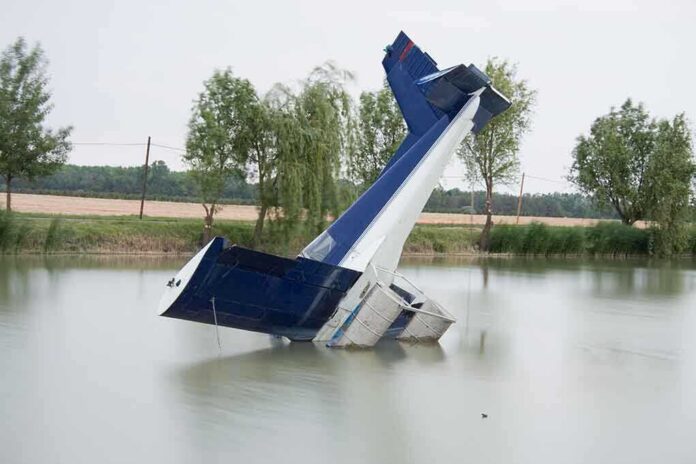
Two men slipped from a sinking plane into a cold Wisconsin lake, swam for shore, and lived to tell it.
Story Snapshot
- Rep. Tom Tiffany says his plane lost power near Wausau and ditched in Lake Wausau.
- Tiffany and the pilot called 911, exited as the plane took on water, and swam to safety.
- Both were treated for minor injuries at a nearby hospital, officials said.
- Forced water landings are often survivable when pilots manage speed and attitude well.
A calm pilot, a dark lake, and a fast decision
Rep. Tom Tiffany said the single-engine plane he was in lost power as it neared Wausau Downtown Airport after a political dinner in La Crosse. The pilot aimed for Lake Wausau and put the aircraft down on the water. Tiffany said they called 911, got out as the plane began to sink, and swam toward the shallows. Emergency crews took both men to a local hospital for evaluation. Tiffany described minor injuries and deep gratitude for rescue teams.
Local outlets reported the aircraft as a four-seat Beechcraft Bonanza returning toward Wausau when power fell off. Law enforcement and medical personnel responded on the shoreline. Tiffany is the Republican candidate for governor and a sitting congressman, so the response drew quick public attention. His team emphasized that he would keep his schedule as health allows. That blend of duty and humility matches what many voters expect after a scare like this.
What “ditch and live” really means in small-airplane emergencies
Investigators sort water landings into a distinct pattern: loss of power followed by a controlled touchdown on water. The National Transportation Safety Board has logged many such events over the years. The approach that gives people the best chance is simple in concept and hard under stress: slow to near stall speed, keep the nose slightly up, and land as flat as possible to avoid flipping. Most deaths come after the landing from drowning or exposure, not the impact itself.
That pattern explains why calling 911, unbuckling fast, and staying oriented matter. Doors can jam. Disorientation can set in as cold water rushes in. Training urges pilots to brief passengers on belts and exits before takeoff. Common sense says keep a small flashlight and a seat belt cutter handy. None of this is dramatic. All of it saves lives when the cockpit goes dark and the cabin fills with water. Tiffany’s account tracks closely with that playbook’s best practices.
How power loss turns into a survivable landing
Engine roughness, fuel issues, or mechanical failure can leave a pilot with minutes or seconds. The job then becomes glide, judge distance, and commit. Water can be safer than trees or buildings near an airport. Pilots train to land parallel to swells, avoid a hard nose-first hit, and keep wings level to prevent cartwheeling. Studies and federal guidance reflect these steps and explain why many controlled ditchings end with people alive on the surface and able to swim or await rescue.
Wisconsin GOP gubernatorial nominee Tom Tiffany and his pilot swam to safety with minor injuries after their small plane lost power and made an emergency water landing in Lake Wausau late Saturday night. https://t.co/Nogn1tpAV4
— The Heartland Post (@HeartlandPostWI) September 13, 2026
Americans respond to stories like this because they blend faith, skill, and grit. Tiffany thanked God and praised the pilot and first responders. That rings true for people who value personal responsibility and teamwork when things go wrong. The facts as reported fit a clear pattern seen in other emergency landings, including high-profile government flights that ended safely after malfunctions. The lesson is steady: prepare, act fast, help each other, and you likely walk away to hug your family tonight.
Sources:
mediaite.com, wsaw.com, fox11online.com, bostonglobe.com, bbc.com, data.ntsb.gov, washingtonpost.com, nytimes.com
© integritytimes.com 2026. All rights reserved.