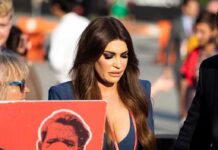
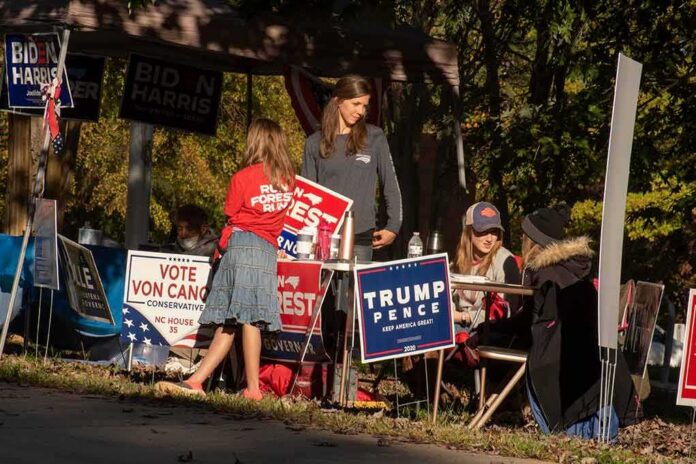
A New Jersey Democratic lawmaker said she stopped going to church because Republicans were there, turning Sunday into a partisan flashpoint.
Story Snapshot
- A New Jersey Democrat linked her absence from church to Republicans in the pews.
- The remark landed in a statehouse climate already mixing faith and politics.
- Republicans in New Jersey have pushed stronger church security and speech protections.
- Long-term data shows frequent worship ties more to Republicans than Democrats.
The remark that made Sunday political again
A New Jersey Democratic lawmaker said she stopped attending church because Republicans were there, according to political media coverage that highlighted the claim. The comment did not come out of nowhere. Faith spaces in New Jersey often intersect with policy fights and partisan identity. The moment echoed a national pattern in which worship habits signal party lean. That pattern is not new, but it hits harder when spoken by an elected official whose words help set civic tone.
New Jersey’s statehouse has mixed faith and policy before. Lawmakers have debated how to keep houses of worship safe as threats rise. A bipartisan group backed a plan to allow trained congregants to carry firearms to defend their churches and synagogues, citing limits on police response and the duty to protect communities. Security turns faith into policy, and policy back into politics. In that swirl, a line about leaving church because of Republicans becomes a live wire.
How New Jersey politics already lives in the pews
Republican and Democratic officials in the state have engaged clergy on violence, speech, and public safety. One Republican assemblyman and church deacon framed “hate speech” as beyond free speech in moral terms during committee work, showing how religious language can shape legislative goals. When leaders speak that way, voters hear moral claims as policy claims. The aisle runs right down the center row. That invites sharp reactions to who shares the pew, and to what that signals about power.
Research helps explain why the remark struck a nerve. For decades, frequent worship has linked with Republican voting, while low attendance tracks more with Democrats. Gallup’s pre-2004 election analysis found weekly churchgoers broke for George W. Bush by 63 to 37 percent. That divide shaped the so‑called “God gap.” Many congregations then sorted by politics as much as by creed. When a Democrat says Republicans at church drove her away, that maps onto a well-known trend line rather than a one-off snub.
Why the reaction matters for civic life
People do not only pray in church; they build trust and civic habits. Trained congregant-carry proposals cite safety, but they also reflect a belief that communities should step up when government cannot. That principle aligns with conservative views about local duty and self-defense. When a lawmaker treats fellow worshipers as a partisan barrier, it cuts against the idea that church can bind neighbors across differences. Common sense says shared ritual should cool our politics, not inflame it.
Some will argue the remark was personal, not policy. But elected officials speak into a microphone even when they think out loud. In a state where leaders regularly engage faith groups on violence and moral questions, words like these raise the cost of showing up. Voters who value faith and free association will ask a simple test: do our leaders lower the temperature in sacred spaces, or raise it? The better path is clear. Keep the doors open, the pews mixed, and the politics outside.
Sources:
townhall.com, observer.com, pewresearch.org, njgop.org
© integritytimes.com 2026. All rights reserved.