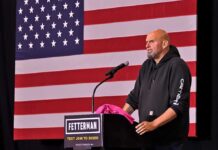
Chicago Mayor Brandon Johnson told the world Donald Trump orchestrated the “largest upward transfer of wealth” in history, and the White House didn’t just disagree, it hit back by calling his reparations push illegal.
Quick Take
- Johnson blamed President Trump’s economic policies for failing descendants of enslaved people and listed education, housing, health care and jobs as unmet demands.
- Johnson already signed an executive order creating a 40-member reparations task force and launched “Repair Chicago” to gather resident testimony.
- A White House spokesperson called race-based payouts illegal and told Johnson to focus on Chicago’s homicide rate instead.
- Nearby Evanston’s $25,000 reparations payments face a federal lawsuit arguing the program discriminates by race.
Johnson Links Federal Policy To Reparations Demands
Johnson made his case directly, telling reporters that President Trump carried out “the largest upward transfer of wealth into the hands of the ultrarich at the expense of the demands of those of us who are descendants of the formerly enslaved.” He named education, housing, health care, transportation and good jobs as areas where he says Black Chicagoans still wait for justice.
Johnson backed his words with action inside city hall. He signed an executive order creating a 40-member task force to study “historical harms committed against Black Chicagoans and their ancestors.” In March, he also launched Repair Chicago, a project built to collect residents’ personal stories and use them to shape future city policy.
White House Calls The Demand Unconstitutional
White House spokeswoman Allison Schuster didn’t soften her response. She said President Trump won his election with a mandate to end “divisive, racist policies” and promised the administration will keep treating every American equally under the law, no matter their race.
Schuster went further, telling Johnson that handing out government money based on race is simply illegal. She added that Chicago would be better off if its mayor spent his energy lowering the city’s homicide rate instead of pushing what she called divisive, unconstitutional government action.
Evanston Program Shows What A Real Fight Looks Like
Chicago isn’t the first Illinois city to test reparations in court. Neighboring Evanston already pays qualifying Black residents and their descendants $25,000 through its Local Reparations Restorative Housing Program, tied to housing discrimination documented between 1919 and 1969.
That program now sits at the center of a federal lawsuit, Flinn v. City of Evanston, filed by the conservative legal group Judicial Watch. The suit claims the program’s race-based eligibility rules violate the Constitution’s Equal Protection Clause.
A federal judge refused to throw out the case in March, ruling that the six plaintiffs, all non-Black descendants of longtime Evanston residents, have standing to sue. The Trump administration’s Justice Department later moved to join the lawsuit, arguing Evanston’s program amounts to race discrimination.
A Debate Bigger Than One City Hall
Reparations fights across the country keep circling the same three questions nobody has fully answered: did government policy cause today’s wealth gaps, should any fix be based on race or something else, and which government, federal or local, should actually pay for it. Johnson’s push adds Chicago to that unresolved list.
Even economists disagree on whether cash payments would close the racial wealth gap for good. One widely cited study found that one-time wealth transfers don’t lead to lasting convergence unless paired with broader changes to the economy. That research doesn’t settle the moral argument, but it does complicate the policy one.
Here’s the honest read: wanting to fix real historical wrongs is not controversial, but handing out government checks based solely on race runs straight into the Constitution’s promise of equal treatment. Evanston’s court fight already shows how fast a well-intentioned program collides with that principle. Johnson’s task force hasn’t published findings yet, and until it does, this stays a clash of talking points, not evidence.
Sources:
foxnews.com, judicialwatch.org, youtube.com, evanstonnow.com, independent.co.uk, abc7chicago.com
© integritytimes.com 2026. All rights reserved.