Elisabeth Hasselbeck didn’t just argue about the border on live TV—she held up the studio audience as proof that “secure entry” is a universal instinct.
Quick Take
- March 4, 2026: Hasselbeck guest-hosted The View and defended DHS Secretary Kristi Noem and President Trump’s border push.
- The segment collided with public anger over ICE agent-involved shootings of U.S. citizens in Minneapolis.
- Hasselbeck rattled off big border and crime statistics while the panel challenged her on empathy, competence, and execution.
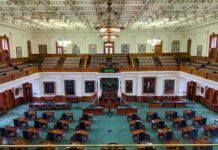
- Her sharpest point: the audience itself had to pass security checks—an “authorized audience”—before entering.
The Studio “Border” That Turned a Policy Fight Into a Personal One
The View’s immigration segment on March 4, 2026 didn’t go viral because a conservative defended enforcement. It took off because Hasselbeck made the argument physical. She pointed to the audience process—security screening, controlled access, permission to enter—and framed it as a miniature border. That move dragged immigration out of abstraction and into lived experience: everybody likes safety, everybody expects rules, and everybody notices hypocrisy when elites exempt themselves.
That analogy landed in the exact kind of arena where it hurts most: daytime television, where politics is sold as empathy and identity rather than outcomes. Hasselbeck’s framing said the quiet part out loud: if “checks at the door” are normal when celebrities sit under hot lights, why do some commentators treat checks at the national door as morally suspect? The tension wasn’t just political. It was about whether normal risk-management counts as decency.
Why the Panel “Swarmed” Her: Minneapolis, Noem, and the Cost of Enforcement
The fight’s backdrop mattered. The segment unfolded amid backlash tied to ICE agent-involved shootings of U.S. citizens Renee Good and Alex Pretti in Minneapolis, a grim reminder that enforcement can go wrong and can harm innocents. Sunny Hostin and others pressed that point as an indictment of Noem’s posture and qualifications. Hasselbeck, by contrast, treated the larger enforcement agenda as the story and the controversy as a reason to reinforce oversight, not to abandon borders.
That split explains the “swarmed” dynamic described in coverage: one guest host versus a majority panel that sees immigration primarily through harm, error, and compassion language. Sara Haines reportedly framed immigration as a bipartisan issue that leaders mishandle, an attempt to step out of the moral cage match and into competence. Whoopi Goldberg invoked the familiar claim that a prior bipartisan bill failed because Republicans blocked it, pulling the discussion toward Washington process instead of operational results.
The Numbers Hasselbeck Used—and the Problem With TV-Ready Statistics
Hasselbeck’s defense leaned heavily on sweeping figures: claims like zero illegal crossings for 10 months, millions leaving the U.S., a 96% reduction in daily encounters, a 50% drop in fentanyl trafficking, and even the “lowest murder rate in 125 years.” Those are headline-grabbing numbers, and that’s the point: The View is not a committee hearing. The risk is that big stats become props without context—definitions change, baselines shift, and “encounters” can reflect enforcement patterns.
Common sense still applies. If the administration says encounters plunged, the next questions should be automatic: compared to what period, measured how, and verified by what agency report? TV rewards certainty, not footnotes, so viewers get a contest of confident claims. Hasselbeck delivered what her side wants: an outcomes-first frame. The panel wanted what their side values: empathy-first scrutiny. Neither side fully did the boring work that builds trust: careful sourcing and operational detail.
Authorized Entry Is Not a Radical Idea—It’s a Conservative One
Hasselbeck’s “authorized audience” line resonates with American conservative instincts: sovereignty, consent, and ordered liberty. A nation without a meaningful border is like a home without a door; compassion doesn’t require removing the lock, it requires using it responsibly. The panel’s pushback often treats enforcement as inherently suspect, but most Americans—left, right, and exhausted—live behind boundaries every day: schools check IDs, workplaces badge employees, airports screen bags.
The harder question is where enforcement ends and overreach begins. Conservatives should insist on both: firm rules and accountable execution. The Minneapolis shootings, whatever their final legal and factual disposition, underscore why. A system that fails to control entry also tends to rush, improvise, and make mistakes under pressure. A system that controls entry must still train well, document decisions, and punish misconduct. Secure borders and civil liberties are not enemies; sloppy governance is.
The Real Reason This Clip Spread: Viewers Recognize “Rules for Thee”
Media polarization didn’t create this moment; it monetized it. Conservative outlets cast the exchange as a humiliation, mainstream coverage framed it as a tense clash, and social feeds clipped it down to a single, repeatable punchline: the audience had to go through security. That’s the kind of line people forward because it feels like a receipt. It compresses a sprawling argument—immigration, crime, drugs, bureaucracy—into one image: you needed permission to be here.
BOOM: Elisabeth Hasselbeck HUMILIATES The View’s Open-Borders Leftists with Cold Hard Facts — Reminds Them Their Own Audience Needed Security Clearance to Enter https://t.co/XieGwruFts
— The Gateway Pundit (@gatewaypundit) March 5, 2026
The segment also reveals something about The View itself. The show thrives when politics becomes interpersonal: Who’s heartless? Who’s naïve? Who’s qualified? Hasselbeck tried to reroute that into systems and outcomes, even with imperfect statistics. The panel tried to reroute it back into moral evaluation and governance competence. Viewers picked the frame they already trust. The clip didn’t settle immigration; it exposed how America now argues—through symbols, not shared ledgers.
Sources:
‘The View’: Elisabeth Hasselbeck Swarmed by Panel Over Immigration Take
The View’s Elisabeth Hasselbeck Iran war US strikes