Passengers watched the cabin ceiling crumble as a violent shudder drove a Boeing 737 back to earth—and everyone walked off alive.
Story Snapshot
- A Sepehran Airlines Boeing 737 returned to Mashhad after a reported tire failure and engine issue.
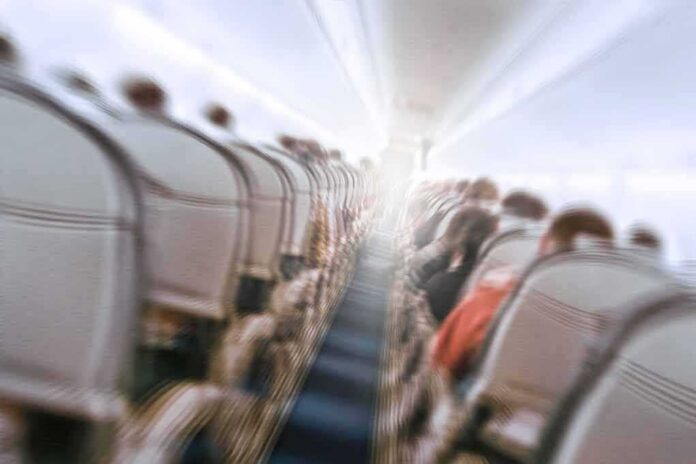
- Severe shaking rattled the cabin; interior panels came loose mid-flight.
- The crew landed safely; no injuries were reported.
- Debris from failed tires can damage engines, a risk seen in past cases.
What Happened On Board
Sepehran Airlines was flying a domestic route from Mashhad to Kermanshah when trouble started right after takeoff. Reports say a tire failed on departure and may have damaged an engine. The crew declared an emergency and turned back to Mashhad. Video from inside showed fierce shaking as ceiling panels and cabin fittings came loose. The jet landed safely. News outlets in Iran and abroad reported no injuries among passengers or crew.
The route, timing, and sequence align across multiple reports. The aircraft departed Mashhad, climbed briefly, and then returned due to heavy vibration. Cabin footage underscored the force of the shaking as trim pieces dropped and people screamed. The return to land followed established procedures for engine or airframe vibration events. Emergency vehicles met the aircraft after touchdown. Passengers deplaned without injury, though some likely needed medical checks for stress.
Why A Tire Can Threaten An Engine
Runway fragments and failing tires create a known hazard. When a tire sheds its tread at high speed, rubber chunks can blast outward. Engines near the nose or main gear can ingest debris, which can chip fan blades and cause severe vibration. Investigators have documented this chain many times. One inquiry linked engine failure to nose tire tread pieces sucked into the intake during takeoff roll. Crews in that case also returned and landed safely.
Foreign object ingestion is a textbook threat for jet engines. Training materials note that tire pieces and runway debris can get thrown into the engine path. That is why airlines monitor tire pressure, cuts, and wear. Guidance says any sign of tread separation means the tire must come off the aircraft. These simple steps lower the risk of engine damage and high-cost failures, and they protect passengers from events that look—and feel—like a disaster in progress.
The Crew’s Decisions Kept This From Getting Worse
Pilots face three fast questions when a jet shakes this hard: Is thrust stable, are controls normal, and is the aircraft pressurized and safe to fly a pattern? The correct play is to level off, run checklists, and land at the nearest suitable airport. That is what happened here. The crew returned to their departure field, which had support, long runways, and fire cover. The calm, standard response turned a headline scare into a contained incident.
WATCH: Terrifying video captures passengers screaming and praying as violent shaking sends ceiling panels and debris crashing down inside a Boeing 737 over Iran.
Travelers grip seatbacks and reach overhead as parts of the cabin appear to come apart around them. The Sepehran…
— Amerivox Report (@AmerivoxReport) September 17, 2026
Some online voices framed this as proof that certain fleets are old or poorly maintained. The facts do show a classic tire-to-engine risk chain that can strike any airline if a tire fails at speed. That said, parts access and maintenance depth do matter over time. American conservative common sense says safety depends on basics done right—inspections, quality spares, and accountability. Where operators invest in those, crews have fewer near-misses to manage.
Sources:
facebook.com, aljazeera.com, english.mathrubhumi.com, x.com, migflug.com, skybrary.aero, data.ntsb.gov, aeroenginesafety.tugraz.at, aviationanalyst.co.uk, insideflyer.com, reuters.com
© integritytimes.com 2026. All rights reserved.