An undercover video from Dearborn shows a poll worker telling a self-identified noncitizen he could vote for U.S. Senate, but not for president.
Story Snapshot
- Footage shows a poll worker saying a noncitizen could vote for Senate, not president.
- Federal law bans noncitizens from voting for U.S. Senate or any federal office.
- Michigan requires voters to be U.S. citizens in all state and federal elections.
- The clip highlights training and translation pressures inside busy polling places.
What the undercover video shows in Dearborn
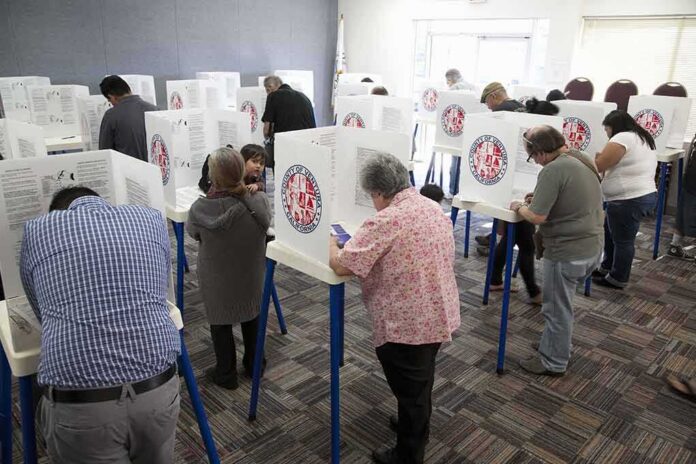
James O’Keefe’s outlet published video from a Dearborn polling place on November 4, 2026. The clip captures an exchange in Arabic. The undercover operative says he is not a U.S. citizen. The worker replies that he cannot vote for president, but “the others you can.” When the operative asks about voting for a U.S. Senate candidate, the worker says “yeah,” according to published accounts of the translation. The recording does not show a ballot being cast.
The claim matters because it crosses the bright line between federal and nonfederal races. The United States Code bars noncitizens from voting in elections that include federal offices, which covers U.S. Senate races on any mixed ballot. If a worker told a noncitizen he could vote for Senate, even by mistake, that guidance would conflict with federal law. The city’s own materials describe election workers as responsible for assisting voters and handling ballots inside polling places.
What the law requires in Michigan and under federal code
Michigan sets a clear rule for the front end of voting. Only U.S. citizens can register or vote in any state or federal election. Voters affirm citizenship under penalty of perjury during registration and when applying for a ballot. Federal law backs that up on the back end. The federal statute on noncitizen voting makes it a crime to vote in any election for president, vice president, United States Senate, or United States House of Representatives, with narrow exceptions not at issue here.
These two layers work together. The state blocks ineligible registrations and ballots. The federal rule sets consequences if a noncitizen votes anyway. Both regimes depend on training at the table. When a voter asks a hard question, the answer needs to match law, not rumor or local custom. That is why cities recruit and train election workers and supervisors for each precinct and shift, with defined duties at the site.
What we know, what we do not, and why it still matters
The video centers on an alleged statement, not a completed illegal vote. The available reporting does not identify a recorded ballot, a pollbook entry, or a tabulator record tied to the undercover person. One sentence of caution belongs here and only here: the worker is not named, and the exchange depends on translation shared by third parties. That does not change what the statutes say. The on-camera advice, as reported, clashes with law and with Michigan’s stated rules.
JUST IN: Dearborn, Michigan Poll Worker, Speaking in Arabic, Tells Undercover Reporter He Can Vote for U.S. Senate Despite Saying He’s Not a U.S. Citizen — Just Not President
“Only for U.S. President you can’t vote, but the others you can” is: “بس لرئيس أميركا ما فيك تصوّت، بس… pic.twitter.com/RCPmSuq6gh
— James O'Keefe (@JamesOKeefeIII) November 4, 2026
Conservatives should draw two lines at once. First, protect every legal vote by enforcing bright rules that everyone can follow. Second, fix the training gaps that let bad answers slip through busy polling rooms. The remedy is practical and local. Dearborn can review worker rosters, training scripts, and supervisor logs. Michigan can refresh guidance on how to handle self-identified noncitizens, when to offer a provisional process, and when to refer the question up the chain.
The bigger picture: one clip, clear rules, targeted fixes
Most allegations fade because they chase headlines, not facts. This one points to a tangible task list. Clarify scripts for eligibility questions at the check-in table. Emphasize that a mixed ballot does not create a carve-out for federal races. Post the rule at eye level: only U.S. citizens vote in Michigan elections. Pair that with quick-access supervisor support and language help so workers are not guessing under pressure. Clear rules, simple tools, equal treatment—that is how trust grows.
Sources:
thegatewaypundit.com, uscode.house.gov, dearborn.gov
© integritytimes.com 2026. All rights reserved.