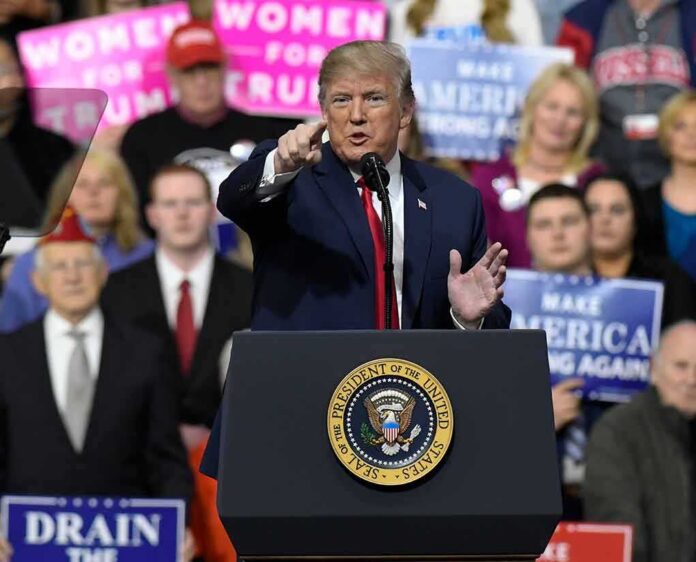
Trump told a Clemson rally the Pacific should be the “American Ocean,” and the crowd roared.
Story Snapshot
- Trump publicly floated renaming the Pacific to “American Ocean” at a 2026 rally.
- White House materials show a Pacific policy push, not a name change order.
- Critics mocked the idea and flagged geography slips; no Google confirmation surfaced.
- U.S. naming rules and global standards show how hard a unilateral ocean rename would be.
What Trump Said And Why It Landed
President Trump told supporters in Clemson, South Carolina, “Pacific Ocean—we’re going to call it the American Ocean.” The line matched his larger habit of tying big places to American identity. Reports from the event and follow-on coverage captured the thrust: he would only attach “America” to the Atlantic or Pacific, not to other waters. The moment carried easy punch. It fed an America First theme. It also raised a simple test: talk or policy?
Trump’s allies point to Pacific policy moves as proof the ocean is central to his agenda. A White House fact sheet in April 2025 framed an “America First Fishing Policy” and touted opening Pacific waters to American commercial fishing. A June 2026 White House fact sheet and a presidential proclamation highlighted “Restoring American Commercial Fishing in the Pacific”. These actions show sustained focus on access, jobs, and control. They do not rename the ocean, but they build a stage for the branding push.
What Exists On Paper And What Does Not
No proclamation, statute, or agency decision now changes “Pacific Ocean” to “American Ocean.” The public record shows policy on fishing and access, not nomenclature. That gap matters. Rhetoric can shift culture, but maps and charts move by process. The United States Board on Geographic Names sets official federal names. It standardizes domestic, foreign, and undersea features, including oceans, for federal use. Without that body acting, the federal map stays put.
International standards add another gate. The International Hydrographic Organization urges agreed forms for oceans and seas to aid safe navigation and shared charts. National naming is a first step, not the finish line. Even if Washington adopted “American Ocean” for federal documents, other states would not be bound to follow. The “Sea of Japan” versus “East Sea” fight shows how long such splits can last. One country can set its terms at home. The world does not flip names on command.
The Google Anecdote And The Pushback
Trump said he called Google’s chief executive about changing how maps label an ocean. He recounted being told oceans cross many countries, so do not ask for that. Reporters could not confirm that a call took place, and Google offered no record of it. This does not disprove his account, but it leaves the story as a one-source tale. The lesson still stands: private map platforms align with recognized authorities, not rally lines.
Donald Trump has once again raised the prospect of renaming a major geographical feature, suggesting at a rally that the Pacific Ocean could be called the “American Ocean.” pic.twitter.com/T1NmuiZ5Ce
— THEWILL NEWSPAPER (@THEWILLNG) October 27, 2026
Critics had their say. Some pointed out a stray Europe reference and called the episode geography flubbery. Others called the idea unserious and unworkable across many coastal nations. Their tone missed a larger point. A name can be a stake in the ground. When a president argues for “American Ocean,” he signals a claim: protect lanes, grow fleets, and set terms. On that metric, the fishing push and “American Ocean” rhetoric both aim at leverage, not just labels.
What A Real Name Change Would Take
A serious path runs through the United States Board on Geographic Names, the Department of the Interior, and clear guidance to all federal mapmakers. It would also require diplomatic work with allies and regional partners. The Board’s foreign names policy collects and harmonizes names with national authorities abroad, and it resolves discrepancies for federal usage. The International Hydrographic Organization encourages national standardization as a step toward international standardization, but looks for broad agreement before global adoption.
A conservative filter asks two questions. Does a change advance American strength? Does it respect reality on the water? A federal-only standard could mark intent on charts, naval briefs, and contracts. It would also risk confusion for shippers and researchers if it diverges from international charts. The smarter play is substance first. Expand American fishing rights, port capacity, shipbuilding, and blue-water presence. Then, if the world sees American leadership in the Pacific, the name might start to follow the muscle.
Bottom Line: Branding Meets Bureaucracy
The “American Ocean” line electrifies a crowd because it is simple and proud. The machinery that fixes names is neither simple nor fast. Today, the record shows a president pushing Pacific policy and talking up a rebrand, but not filing the paperwork to make it official. If the goal is lasting influence, the next moves are clear: codify a federal naming position, rally partners, and keep building real capacity at sea. Power writes names, but only after it holds the map.
Sources:
youtube.com, whitehouse.gov, independent.co.uk, fakti.bg, rmb.reuters.com, time.com, govinfo.gov, yahoo.com, theverge.com, indy100.com, tagesspiegel.de, fgdc.gov
© integritytimes.com 2026. All rights reserved.