
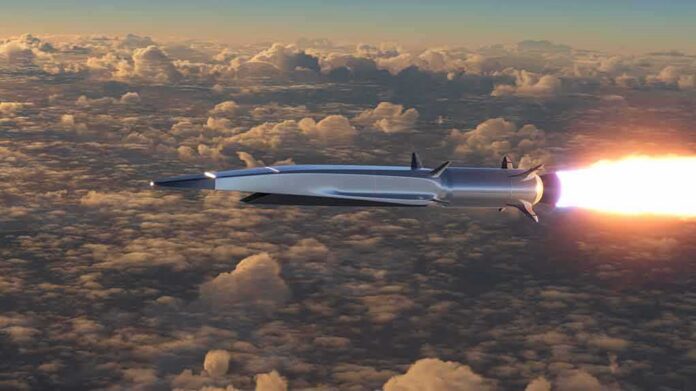
A small contract tweak just put a hypersonic strike option on the F-16’s to-do list.
Story Snapshot
- Castelion says it will begin integrating its Blackbeard hypersonic weapon on U.S. Air Force F-16s.
- Defense outlets tie the work to an Air Force Research Laboratory contract already in place.
- The broader effort received a reported $16.4 million boost, raising the total to $37.2 million.
- The step starts integration activity; it is not an operational fielding decision yet.
What Happened: A Green Light To Start F-16 Integration
Castelion announced a contract modification to begin Blackbeard missile integration on the U.S. Air Force F-16. The company made the statement on its official account, laying out the next phase of work with the Air Force Research Laboratory. Independent reporting matched the claim, framing it as an added task under ongoing research activity rather than a brand-new award. That distinction matters. The action opens engineering doors, test plans, and fit checks. It does not instantly arm frontline squadrons.
The Aviationist reported that the Air Force Research Laboratory grew Castelion’s underlying contract by $16.4 million in September, raising total value to $37.2 million. That figure signals scope and intent: design, integration, and early test tasks need money and time. Defence Blog and other outlets described the goal as a long-range, precision strike weapon designed for scale production, with work stretching into 2028 on the larger effort. These threads point to a push beyond boutique prototypes.
Why F-16s: Reach, Numbers, And Deterrence
The F-16 brings numbers, basing options, and daily readiness. Adding a hypersonic-class weapon to such a common fighter changes the playbook. The combination could give commanders fast-launch mass, not just elite silver bullets. Prior work tied Blackbeard to the Navy’s F/A-18E/F and to ground launchers. Those projects build integration experience that may shorten the F-16 path, from wiring and pylons to software and flight envelopes. The logic is simple: more shooters, more dilemmas for any foe.
Conservative defense sense values capability that scales. A weapon that rides on existing jets and uses current support lines stretches tax dollars farther than a niche platform. If Blackbeard proves accurate, survivable, and affordable across platforms, the Air Force gains a flexible tool. The key is proof. Real deterrence comes from repeatable results, steady production, and crews trained to use the system on short notice. Integration is the first gate. Reliable operations are the finish line.
What This Is And Is Not: Integration, Not Fielding
Reports stress that the action starts integration, not fielding. Castelion did not disclose the value or schedule of the F-16-specific work, and no first-flight or launch milestones have been reported for the F-16 to date. That does not dull the news. It sets clear expectations. Engineers will focus on carriage, loads, safe separation, software links, and cockpit workflow. Test teams will plan captive-carry and telemetry checks before any live fire. Each step reduces risk and informs tactics.
@Castelion has won an @usairforce Research Laboratory contract modification to begin integrating its Blackbeard hypersonic missile on the F-16, extending the low-cost weapon beyond the @USNavy and @USArmy. Value and schedule remain undisclosed.https://t.co/zHzCsdzBnL
— Defense WarRoom (@defensewarroom) October 27, 2026
The broader hypersonic landscape shows why a methodical path matters. The Government Accountability Office has tracked dozens of hypersonic efforts and urged the Department of Defense to follow sound practices to cut cost and schedule risk. Programs that chase speed without good systems engineering often pay twice, first in failures and then in rework. An F-16 integration that hits disciplined gates could deliver faster overall by avoiding resets later. That is the kind of progress taxpayers expect.
What To Watch Next: Proof Points That Signal Momentum
Watch for specific test events tied to the F-16: a captive-carry flight card, a safe-separation test, then a controlled live shot. Look for an official Air Force Research Laboratory statement that defines the near-term objective: feasibility check, flight demo, or a march to an early operational shot. Track whether data from F/A-18 work carries over to the F-16, trimming test time. Finally, watch for cost signals. Scale only matters if the unit price and production rate meet real-world demand.
Sources:
realcleardefense.com, theaviationist.com, defence-blog.com, militarnyi.com, aviationweek.com, gao.gov
© integritytimes.com 2026. All rights reserved.