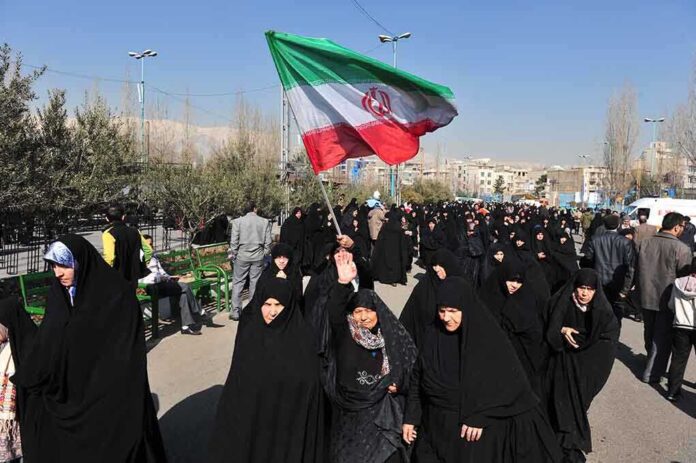
Iranian protesters chant “Neither Gaza nor Lebanon, my life for Iran,” turning guns on their own regime while rejecting foreign wars that drain the nation’s blood and treasure.
Story Snapshot
- Protests exploded December 28, 2025, in Tehran’s Grand Bazaar over economic collapse, spreading to 110 cities by January 6, 2026.
- Security forces killed 16-32, arrested nearly 1,000, using live fire, tear gas, and hospital raids against unarmed crowds.
- Chants demand Khamenei’s ouster, prioritizing Iran over regime proxies in Gaza and Lebanon.
- Bazaar merchants and women lead strikes, signaling elite fractures and regime vulnerability.
- Nationwide shutdowns fail to halt uprising, with clashes escalating to Molotovs and rifle fire from protesters.
Protests Ignite in Tehran’s Grand Bazaar
Merchants shut down Tehran’s Grand Bazaar on December 28, 2025, protesting rampant inflation and shortages crippling daily life. Strikes rapidly spread to Isfahan, Shiraz, and Mashhad by December 30. Security forces deployed tear gas and live ammunition in Hamadan and Tehran, marking the violent response from the start. Economic despair fueled initial outrage, but chants soon turned political.
Regime loyalists faced immediate pushback as demonstrators rejected foreign entanglements. Slogans like “Neither Gaza nor Lebanon, my life for Iran” echoed through streets, highlighting frustration with resources funneled to proxies abroad. This nationalist fervor distinguished these protests from past unrest, aligning with conservative values of sovereignty and self-reliance over endless external conflicts.
By December 31, authorities ordered nationwide shutdowns under the pretext of severe weather, affecting 21 provinces. Protesters ignored closures, holding rallies in Kermanshah and Isfahan. “Death to the dictator” chants targeted Supreme Leader Khamenei directly. The bazaar’s traditional support for the regime cracked, as gold and currency traders joined strikes, eroding a key pillar of power.
Escalation Nationwide with Brutal Crackdown
January 2 saw protests erupt in over 10 cities, with funerals turning into anti-regime rallies. Cumulative deaths reached 16 by January 3, as clashes intensified across 24 provinces. Protesters hurled Molotov cocktails and fired rifles in response to security forces’ live rounds. Hospital raids in Ilam province arrested the wounded, including minors, totaling nearly 1,000 detentions.
Critical Threats analysis confirms 179 protests since January 2, signaling regime suppression failures. Khamenei’s January 4 speech shifted tactics from restraint to coercion, prompting escalated violence. Women emerged prominently, leading sit-ins at the Grand Bazaar on January 6, now a “war zone” amid tear gas dispersals. Chants proclaimed “This year is the year of sacrifice, Seyed Ali will be overthrown.”
HRANA and NCRI reports document 32 confirmed deaths by January 6, with unrest spanning 110 cities. Social media bypassed regime information controls, accelerating spread despite decentralized organization. This evolution from economic strikes to calls for overthrow mirrors historical patterns but gains traction through nationalist rejection of foreign policy misadventures.
Regime Vulnerabilities Exposed
Bazaari merchants wield economic leverage historically backing the regime, but current strikes signal deepening elite dissent. Winter energy shortages provided cover for shutdowns, yet fruit and vegetable distribution halted, paralyzing trade. IRGC resources strain under domestic demands and foreign commitments, like Iraqi militias noted January 2.
Protesters’ focus on Iran-first priorities resonates with common sense: nations thrive by securing their people before distant battlefields. Facts align with conservative principles of limited government intervention abroad when home suffers. Regime blames external meddling, but U.S. State Department statements express mere concern without interference, underscoring protesters’ organic resolve.
Long-term, bazaar involvement and women’s roles threaten destabilization. Past uprisings like 2022’s Mahsa Amini protests saw 500 deaths; 2019 fuel riots claimed 1,500. Today’s unrest, entering day 10 on January 6, shows no abatement, with analysts noting coercion risks further escalation. Iran’s 50-year protest cycle repeats, but nationalist chants forge a sharper edge.
Sources:
Iran has been shaken by a series of protests over the past 50 years. Here’s a look at them