
Twelve police officers injured while shielding a peaceful rosary rally from a surging counter-protest — that is the headline and the warning.
Story Snapshot
- Police say the rosary rally was peaceful until departure; tension spiked as groups converged.
- Officers formed a human chain and used pepper spray to prevent direct clashes.
- Twelve officers were injured; several investigations were opened after the incident.
- Police reported about 200 coercive actions to hold the line between groups.
Peaceful Prayer, Then A Sudden Turn At The Exit
Göttingen’s registered “public rosary” proceeded as a lawful assembly and, by police account, stayed peaceful until it ended. Trouble began when the prayer group tried to leave the square and a counter-protest pushed toward them. Officers stepped in to keep both sides apart and guide attendees toward safety. This turning point matters. Street tensions often rise not during speeches but in the crush of exit routes, where small choices and tight spaces quickly spark conflict.
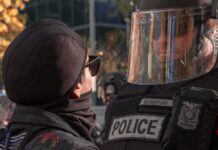
Police reported that counter-protesters tried to move toward the pro-life group and that officers formed a chain to block contact. That tactic sits squarely within German crowd management doctrine, which expects police to facilitate peaceful assembly and to separate hostile groups when danger appears. The line held, but it did not hold without force. Officers used pepper spray and physical measures. By the end, twelve officers were injured, and ambulances treated people on scene.
What The Police Say They Faced On The Line
Police described pressure and force used against officers during the confrontation and said they had to respond with coercive actions to stabilize the corridor. A local radio report put the scale at about 200 uses of force, which signals a prolonged, intense effort rather than a quick scuffle. That same reporting says investigators believe the counter-protest aimed to block the groups from meeting, and violence against police occurred in that push. These are specific claims that call for evidence, but they align with the visible police choices on scene.
A pro-life advocacy account echoed the police description of a peaceful rally and a sudden surge at departure. It said only the forceful police intervention prevented direct assaults on attendees. Advocacy framing always deserves caution. The core facts that matter here do not rest on advocacy alone. Independent news outlets also reported the same police statements on the chain, the pepper spray, and the injury count. Those are the backbone facts. The debate is not whether force happened, but which side initiated it and why it escalated so fast.
Rights, Responsibilities, And The Narrow Ledge Between Them
German law protects peaceful assembly, including counter-protest, and gives police the job of keeping space for both, then using force last. That balance is hard to keep in close quarters. Constitutional guidance and public order practice both point to separation as the key move when danger grows. The Federal Constitutional Court has upheld penalties for those who use violence or serious disruptions to thwart a lawful assembly, which sets a clear red line when protest turns into coercion.
Common sense and conservative values meet at that same red line. Pray, chant, argue, and hold signs — that is speech. Rush a group to shut them up — that is force. The reports say officers absorbed that force and kept the groups apart. Twelve injured officers is not a talking point; it is a cost paid by public servants so others could leave in one piece. Investigations now aim to match actions to laws. That is how a free society handles heated streets — not by excusing violence, but by naming it and proving it.
What To Watch Next
Three outcomes will tell the rest of the story. First, the charging decisions tied to this incident will show whether police claims stand in court, where facts face cross-examination. Second, any release of body-worn camera or fixed-camera footage could settle doubts about the first push and the scale of resistance. Third, injury records for officers and civilians could clarify what caused harm — blows, pressure, or chemical agents — and how severe it was. Until then, the guardrails are clear: peaceful assembly stays protected, organized intimidation does not.
Sources:
lifesitenews.com, politischeverfolgung.de, tagesschau.de
© integritytimes.com 2026. All rights reserved.