
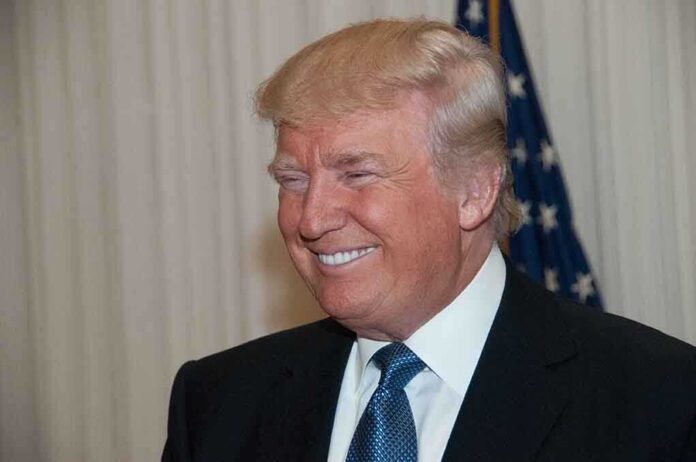
Seven nations have nominated Donald Trump for the Nobel Peace Prize, triggering fiery debate over whether true peacemaking or global political gamesmanship now determines one of the world’s most prestigious awards.
Story Snapshot
- Trump nominated for the Nobel Peace Prize by seven countries, citing his role in brokering international peace deals.
- Global media coverage highlights both praise for Trump’s diplomacy and controversy over the motivations behind the nominations.
- The Nobel Committee keeps nominees confidential, fueling speculation and debate over political influence and legitimacy.
- The laureate will be announced October 10, with Trump’s candidacy spotlighting the tension between genuine achievement and politicization.
Trump’s Multi-Nation Nobel Nominations: Unprecedented Recognition or Political Theater?
In August 2025, seven countries—Armenia, Azerbaijan, Cambodia, Gabon, Israel, Pakistan, and Rwanda—formally nominated President Donald Trump for the Nobel Peace Prize. These nations credit Trump with brokering ceasefires and peace agreements in high-conflict regions, from Nagorno-Karabakh to Central Africa. Such coordinated nominations from geopolitically diverse states are rare, and they have brought Trump’s diplomatic record into sharp international focus. Supporters say his direct engagement in resolving regional disputes sets a new standard for American leadership in global peace efforts.
The Israeli Prime Minister’s July nomination came shortly after Trump’s intervention in the tense standoff between Israel and Iran. Leaders from Armenia and Azerbaijan publicly praised Trump for mediating a peace deal over Nagorno-Karabakh, ending decades of violence. Similarly, Cambodian and Thai officials have acknowledged his role in resolving their ongoing border crisis. In Central Africa, Rwandan and Gabonese leaders attribute the recent halt in hostilities to Trump’s diplomatic outreach. These endorsements, made public by the nominators themselves, have elevated Trump’s profile ahead of the Nobel’s October announcement.
Behind Closed Doors: How the Nobel Peace Prize Process Fuels Controversy
The Nobel Peace Prize, established in 1901, has always operated under strict confidentiality, with the Norwegian Nobel Committee refusing to confirm or deny any nominee’s identity for 50 years. Despite this secrecy, public announcements by heads of state and government have thrust Trump’s candidacy into the media spotlight. The Committee is currently reviewing 338 nominations for the 2025 prize, but only nominators know their submissions are on the official list. This opacity has fueled widespread debate and speculation, echoing past controversies surrounding prior laureates such as Barack Obama and Abiy Ahmed. For many observers, the Nobel’s credibility hangs in the balance as high-profile nominations increasingly reflect geopolitical maneuvering.
Media reactions have intensified, with international outlets and commentators split over the legitimacy of Trump’s nominations. Some analysts argue that his “peace through strength” approach yielded concrete results, citing tangible ceasefires and diplomatic agreements. Others caution that publicized nominations may serve national interests more than genuine progress, warning that lasting peace depends on sustained local cooperation. Critics also point to the risk of the Nobel Peace Prize becoming a political tool rather than a true symbol of peacemaking, questioning whether the prize’s standards are shifting away from individual merit.
Impact on Conservative Values: Restoring American Leadership or Undermining Traditions?
For many American conservatives, Trump’s multi-nation Nobel Peace Prize nominations signal a long-overdue recognition of leadership rooted in strength, negotiation, and putting America first. Supporters argue that these diplomatic breakthroughs—achieved without caving to globalist agendas or radical leftist demands—reflect the kind of principled foreign policy that was sorely lacking under previous administrations. Trump’s efforts to resolve conflicts through direct engagement, rather than endless bureaucracy or appeasement, resonate with those who value traditional American influence and the assertion of constitutional principles on the world stage.
Yet, the controversy surrounding the nominations also underscores deep frustrations with perceived erosion of conservative values by international institutions. The Nobel Peace Prize, once seen as a hallmark of genuine achievement, now faces accusations of political bias and susceptibility to globalist influence. As the October 10 announcement approaches, Trump’s candidacy is a lightning rod for debates over what constitutes real peacemaking, the role of American strength abroad, and the integrity of the institutions that shape our world.
https://twitter.com/realDonaldTrump/status/1234567890123456789
Ultimately, the outcome will have ripple effects far beyond the awarding of a medal. It will shape perceptions of American leadership, influence diplomatic relationships, and fuel ongoing debates over whether conservative values are being restored—or further undermined—on the global stage.
Sources:
What Trump’s Nobel nominations say about the Peace Prize – The Hilltop Online
Donald Trump’s obsession with the Nobel Peace Prize – Le Monde
Nobel Peace Prize Nomination – Nobel Prize official site
Nominations for the Nobel Peace Prize 2025 – Nobel Peace Prize official press release
2025 Nobel Peace Prize – Wikipedia