Donald Trump vows to sue America’s biggest bank for allegedly shutting him out of financial services purely because of his politics, igniting a battle that could redefine banking freedom.
Story Snapshot
- Trump plans lawsuit against JPMorgan Chase within two weeks for closing Trump Organization accounts after January 6, 2021.
- Claims debanking stems from political discrimination, not business needs.
- Follows similar suit against Capital One and Trump’s 2024 executive order targeting debanking.
- JPMorgan denies political motives, cites compliance obligations.
- Case tests tensions between bank risk management and fair access to services.
Trump Announces Direct Legal Challenge to JPMorgan Chase
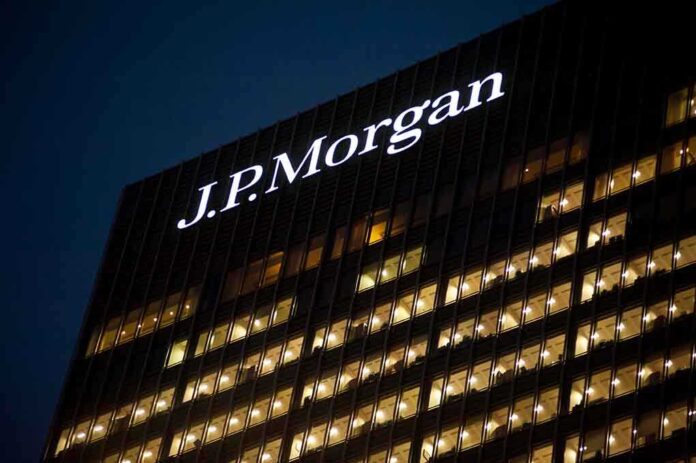
On January 17, 2026, President Donald Trump declared plans to sue JPMorgan Chase within two weeks. Trump Organization accounts closed in summer 2021, months after the January 6 Capitol events. Trump labels this debanking as politically motivated discrimination. JPMorgan Chase, the largest U.S. bank by assets, faces this unprecedented suit from the sitting president. The move escalates Trump’s campaign against financial institutions he accuses of bias.
Trump’s announcement came at the World Economic Forum, where he also criticized Bank of America. CEO Jamie Dimon publicly denied offering Trump the Federal Reserve chair position, which Trump dismissed. This lawsuit follows Trump’s March 2024 suit against Capital One, alleging similar political timing in account closures. Capital One contested those claims, insisting no political litmus test guides decisions.
Debanking Roots in Post-January 6 Scrutiny
JPMorgan Chase severed ties with Trump Organization in summer 2021. Banks reviewed relationships with Trump-linked entities after January 6. Regulators like the Office of the Comptroller of the Currency, FDIC, and Federal Reserve once factored reputational risk into evaluations. Trump’s August 2024 executive order deemed this practice unacceptable for conservative customers. Banks now eliminate such considerations under new guidelines.
Major banks adjusted policies swiftly. Citibank dropped firearms sales restrictions from the Parkland era. Banks removed DEI language from manuals amid Trump’s early executive orders. JPMorgan flagged the debanking order in its latest SEC filing, noting government inquiries into customer service policies. These shifts highlight regulatory pressure reshaping bank behavior.
Regulatory Shifts Favor Trump’s Position
Trump’s administration weakened the Consumer Financial Protection Bureau through cost-cutting. The CFPB suspended probes into JPMorgan and Citibank account freezes. Trump dropped a Biden-era case expanding examiner scrutiny for discrimination. Comptroller Jonathan Gould directs OCC examiners to verify banks dropped industry restrictions, like those on firearms. This realigns oversight away from reputational factors.
Banking groups support fair access but blame regulatory mazes for past closures. They argue obscure rules and supervisory discretion drove decisions, not politics. ProPublica notes JPMorgan freezes about one million accounts yearly, often for fraud, not ideology. Facts support banks’ compliance claims, aligning with conservative values of rule-following over politicized enforcement.
Stakeholders Clash Over Motivations
Trump seeks precedent proving debanking violates fair access. JPMorgan insists closures met legal duties, like anti-money laundering. Dimon denied political reasons. Bank of America echoes this, citing regulator influence. Industry groups warn of overreach but back equal treatment. Consumer law expert Luke Herrine critiques hasty CFPB dismantling, potentially hobbling enforcement.
Legal scholar Dru Stevenson views debanking as partisan myth, especially for firearms firms. Power tilts toward Trump via executive authority, but banks hold legal resources. Weakened CFPB creates enforcement gaps, favoring litigation over regulation. Conservative common sense demands banks prove non-political rationales, protecting businesses from elite bias.
Potential Fallout Reshapes Banking Landscape
Short-term, banks face litigation costs and policy reviews. Long-term, victory for Trump mandates explicit justifications for closures, curbing compliance flexibility. Conservative businesses gain better access. Customers see fewer protections against risky ties. The suit spotlights tensions between sanctions screening and service denial. Outcomes could consolidate industry power among litigious giants.