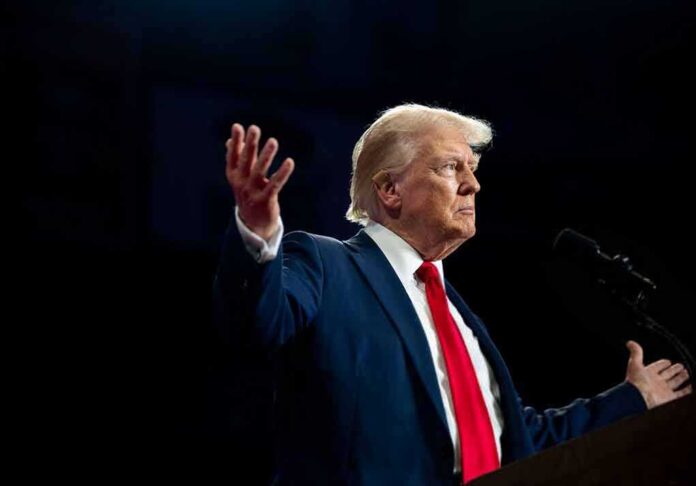
A $5 billion threat, a rare BBC apology, and the U.S. president set the stage for a media showdown that could reshape how global broadcasters handle political giants—or risk everything.
Story Snapshot
- Donald Trump threatens to sue the BBC for up to $5 billion over a Panorama documentary’s edited portrayal of his January 6 speech.
- The BBC admits to a misleading edit, apologizes publicly, but denies any legal basis for defamation.
- Leadership shakeup at the BBC signals crisis and sparks debate over editorial standards and political coverage.
- Legal experts cast doubt on Trump’s odds, but the case could chill international media and fuel transatlantic tensions.
Trump’s $5 Billion Threat: A Case of Media Power and Political Payback
Donald Trump’s decision to threaten a $1–5 billion lawsuit against the BBC is more than a headline—it’s a warning shot across the bow of international media. Trump claims the BBC’s Panorama documentary, aired before the 2024 U.S. election, stitched together his January 6, 2021 speech in a way that transformed his intent. The BBC’s public apology for the misleading edit is an extraordinary step, but officials stand firm, calling the defamation claim legally groundless. The magnitude of Trump’s demand and the BBC’s rare admission have forced both sides into a global spotlight, as media giants and political leaders brace for the fallout.
Trump’s threat lands just as the BBC reels from internal turbulence. The director general and the head of news have resigned, casualties of a scandal ignited by the Daily Telegraph’s publication of a leaked dossier from a BBC adviser. The dossier lambasted the Panorama episode and exposed broader editorial lapses, turning up the heat on a broadcaster already scrutinized for impartiality. Trump, never shy about using legal threats to battle unfriendly coverage, now leverages his global profile to challenge the BBC—an institution priding itself on public service and editorial rigor. The clash tests the limits of cross-border defamation, media ethics, and the resilience of both American and British institutions in the age of hyperpolarized news.
The BBC’s Apology, Editorial Crisis, and the Domino Effect
The BBC’s move to issue a public apology for the misleading edit marks a rare concession in its storied history. Unlike previous controversies, this one comes with visible consequences: top-level resignations and a public relations crisis that has both supporters and critics questioning the broadcaster’s judgment. The BBC insists it did not defame Trump, yet the apology admits to a breach of editorial standards that has embarrassed the institution during a critical political season. The timing—immediately after the 2024 U.S. election and in the shadow of the Capitol riot’s legacy—amplifies the stakes for both sides.
Editorial integrity is now under the microscope. Media watchdogs, politicians, and audiences on both sides of the Atlantic are demanding answers: How did an edited segment slip through the BBC’s safeguards? Is this a symptom of systemic bias or a one-off blunder? The resignation of the network’s top brass signals that accountability is being taken seriously, but also that the damage to trust may be far-reaching. For the BBC, the challenge now is to repair its reputation while avoiding further legal entanglement and public backlash.
Legal Realities and the Specter of Transatlantic Media Battles
Legal analysts agree: Trump’s chances of winning or enforcing a multibillion-dollar defamation claim against the BBC in the UK are vanishingly slim. British defamation law is stringent, especially for public figures, and cross-border enforcement adds layers of complexity. The BBC’s apology is not an admission of legal liability—just a recognition of editorial error. Nevertheless, the legal threat is not toothless. Even if unlikely to succeed in court, it creates a chilling effect, warning international broadcasters to tread carefully when editing or contextualizing statements by prominent political figures.
The episode is already influencing newsroom culture. Editors and producers now face heightened pressure to scrutinize every frame and phrase, fearing massive litigation or public disgrace. Trump’s supporters frame the lawsuit as a stand against media bias, while critics dismiss it as a political tactic. The BBC’s crisis and Trump’s boldness have put media accountability, transparency, and the future of investigative journalism under the harshest glare. The legal wrangling may never see a courtroom, but the debate it sparks will reverberate through newsrooms and boardrooms around the world.