
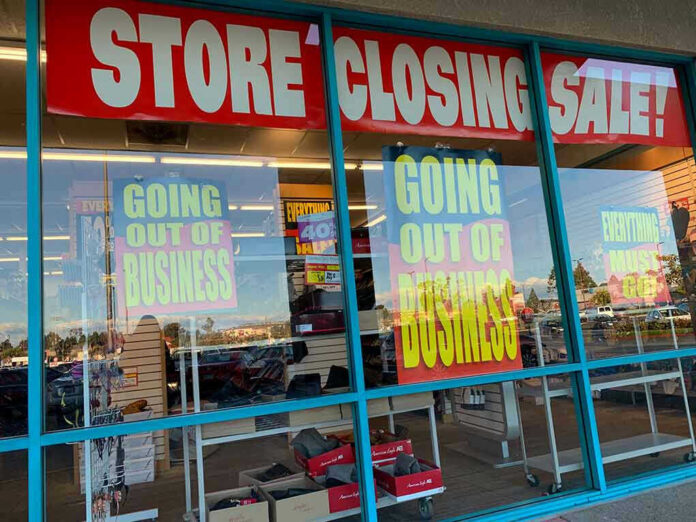
Bed Bath & Beyond has reopened in California just over a year after closing every single store nationwide in a bankruptcy liquidation that seemed to seal the retailer’s fate forever.
Story Snapshot
- Bed Bath & Beyond returns to California with new locations after complete 2023 shutdown
- Governor Gavin Newsom publicly celebrated the retailer’s comeback in official press release
- The reopening follows the chain’s second bankruptcy filing and nationwide liquidation
- California’s challenging retail environment makes the return particularly noteworthy
The Phoenix Rising From Retail Ashes
Bed Bath & Beyond filed its second bankruptcy in 2023, shuttering all 360-plus locations across the United States in what appeared to be the final chapter for the home goods giant. The liquidation joined a wave of retail casualties that swept through California and beyond during the post-COVID restructuring. Between 2020 and 2022, America witnessed over 20 percent of stores close permanently, with California absorbing roughly 1,200 closures in 2022 alone. The Golden State’s brutal retail landscape—characterized by San Francisco’s $60-per-square-foot average rents and ongoing theft concerns under Proposition 47—seemed an unlikely place for any comeback story.
Yet Governor Newsom’s office issued a press release praising the retailer’s return, signaling political recognition of what retail revivals mean for California’s battered commercial districts. The move represents more than nostalgia; it tests whether physical retail can survive against Amazon’s 50 percent market share dominance. Bed Bath & Beyond’s resurrection follows acquisition by new ownership willing to bet on hybrid models combining e-commerce with experiential shopping. The gamble mirrors strategies from other brands like Forever 21, which exited California in 2019 only to return partially in 2020 under new management.
California’s Retail Graveyard and Rare Resurrections
The list of iconic California retailers that closed permanently reads like an obituary section. Tower Records, founded in Sacramento, shuttered all U.S. stores in 2006 with only a brief 2010 pop-up before fading entirely. Linens ‘n Things liquidated completely in 2008 without revival. Pier 1 Imports closed everything in 2020 with no California return. These failures share common threads: crushing rent burdens, shifting consumer habits toward online shopping, and California’s uniquely challenging business climate including regulatory costs and organized retail theft that retailers claim costs billions annually.
RadioShack managed limited kiosk returns starting in 2017, while Johnny Rockets selectively reopened certain locations, but full-scale revivals remain exceptionally rare. Retail analysts warn that “zombie brands” fail roughly 70 percent of the time according to Deloitte research. The obstacles facing physical retail in California extend beyond economics into politics, with retailers increasingly lobbying for theft law reforms as a condition of reinvestment. Mall owners like Simon Property Group desperately need anchor tenants to drive foot traffic, creating incentives for landlords to offer favorable lease terms to returning brands.
The Economics Behind the Comeback
Bed Bath & Beyond’s return could generate between $10 million and $50 million in annual California sales tax revenue per store depending on location and performance. Each location typically employs 50 to 200 workers, addressing California’s need for retail jobs as the state recovers from pandemic-era losses. Urban neighborhoods like Los Angeles’ Melrose District benefit from the vibrancy that established retailers bring, reversing the downward spiral of vacant storefronts breeding more vacancies. Competitors including Zara and other home goods chains face renewed pressure as a recognized brand re-enters the market with name recognition intact.
The broader industry impact signals confidence in hybrid retail models that blend online convenience with in-store experiences. CBRE’s 2025 report documented a 15 percent vacancy drop in California malls, suggesting experiential retail may be filling voids left by pure e-commerce. NYU Professor Scott Galloway characterizes nostalgia retail as “fleeting dopamine” that cannot overcome structural advantages held by digital-first competitors, yet the 2025-2026 inflation easing has created breathing room for physical stores. Optimists at the International Council of Shopping Centers argue revivals meet genuine consumer demand, while Forrester Research skeptics maintain e-commerce will dominate long-term regardless of temporary physical retail enthusiasm.
Iconic store returns to California after shuttering all locations https://t.co/kIOjmkISee pic.twitter.com/a7Y3AUag7Y
— New York Post (@nypost) April 24, 2026
The Bed Bath & Beyond reopening ultimately tests whether brand loyalty and shopping experience can overcome California’s hostile retail economics. Investors backing the revival clearly believe the intellectual property value and consumer nostalgia justify the risk, even in a state where retail failure has become routine. Whether this represents genuine renaissance or temporary experiment will become clear as sales data emerges and the novelty factor wears off. For now, the return demonstrates that in retail, even the most final-seeming endings can sometimes be reversed when new money meets old memories in a state desperate for economic good news.
Sources:
Iconic store returns to California after shuttering all locations – New York Post