
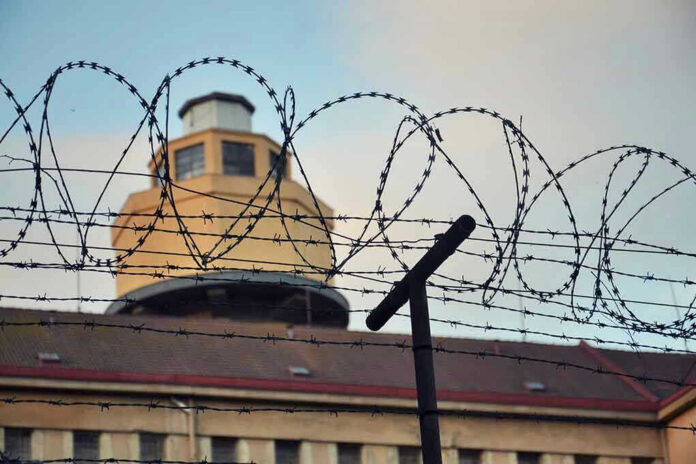
The Trump administration wants to transform America’s most iconic former prison from a $60 million annual tourist magnet into a fortress for the nation’s most dangerous criminals, and they’re asking Congress for $152 million just to get started.
Story Snapshot
- White House fiscal year 2027 budget requests $152 million to begin reopening Alcatraz as a federal maximum-security prison
- Total project costs estimated at $2 billion to convert the crumbling 1934-era facility into a state-of-the-art detention center
- Plan faces fierce opposition from San Francisco leaders and Nancy Pelosi, who calls it a wasteful political stunt
- Alcatraz currently generates approximately $60 million annually as a National Park Service tourist destination
- Congress holds final approval power over the controversial proposal first announced by President Trump in May 2025
From Tourist Trap to Maximum Security Fortress
The Rock closed its prison doors in 1963 for the same reasons that make this proposal eyebrow-raising today: astronomical operational costs. Water desalination, constant infrastructure repairs, and the expense of staffing an island facility drove federal officials to shutter what was then America’s toughest prison. Now, sixty-plus years later, the White House wants to reverse that decision with a facility described as substantially larger than the original. Attorney General Pam Bondi personally visited the island to assess the plan’s viability, signaling the administration’s serious commitment despite widespread skepticism.
The budget request offers no detailed spending breakdown for the $152 million first-year allocation, leaving questions about exactly how those taxpayer dollars would be deployed. What’s clear is this represents merely the down payment on a $2 billion vision, with some estimates suggesting refurbishment alone could exceed a quarter billion dollars. The Bureau of Prisons and Department of Justice remain silent on implementation specifics, while Congress debates whether to greenlight funding for a project many consider impractical at best.
Political Battle Lines Drawn Over The Bay
Speaker Emerita Nancy Pelosi didn’t mince words, branding the Alcatraz revival a “stupid notion” and declaring San Franciscans won’t tolerate what she views as a flagrant waste of federal money. San Francisco Mayor Daniel Lurie echoed this resistance back in July 2025, stating flatly that no realistic plan exists to transform the island into anything beyond its current tourist attraction status. The partisan divide mirrors broader criminal justice debates, with the Trump administration framing the project as essential infrastructure for housing “America’s most ruthless and violent offenders.”
The political calculus gets interesting when you consider the National Park Service’s current stewardship. That $60 million in annual tourism revenue doesn’t flow to federal coffers in the same direct way prison operations would, but shuttering public access to one of San Francisco’s signature landmarks carries its own costs. Local businesses dependent on Alcatraz tourism, ferry operators, and the broader Bay Area economy stand to lose significant revenue streams. The administration hasn’t addressed how it plans to compensate for or justify eliminating this economic engine.
History Suggests This Won’t Be Cheap
Alcatraz earned its fearsome reputation during its 29-year run as a federal penitentiary precisely because of its isolation and harsh conditions. That same isolation that kept Al Capone and Machine Gun Kelly contained now represents a logistical nightmare for modern corrections standards. Every supply delivery, staff rotation, emergency medical response, and maintenance crew visit requires boat transport across choppy bay waters. The 1963 closure decision recognized these realities when officials concluded the facility cost far more to operate than comparable mainland prisons.
Modern prison construction standards would require extensive seismic retrofitting for California earthquake codes, ADA compliance modifications, updated security technology infrastructure, and environmental systems that didn’t exist in the 1930s. The existing structures suffered decades of neglect after closure and additional deterioration from salt air exposure. Engineering assessments would likely reveal foundation issues, corroded utilities, and structural damage requiring more than cosmetic repairs. A state-of-the-art secure facility demands climate control, modern plumbing, communications networks, and security systems that would essentially gut and rebuild the entire complex.
Congressional Reality Check Looms
President Trump first floated this idea via Truth Social in May 2025, directing federal agencies to develop the proposal that evolved into this budget request. Congress now faces the ultimate decision on whether this vision advances beyond political messaging to actual appropriation. The proposal’s survival depends on convincing budget hawks that spending billions on an island prison makes fiscal sense compared to expanding existing mainland facilities or constructing new purpose-built detention centers.
The absence of Bureau of Prisons commentary or detailed implementation plans raises questions about whether career corrections professionals actually endorse this approach. Federal prison overcrowding represents a legitimate concern, but converting a deteriorating tourist attraction into maximum-security housing seems designed more for symbolic impact than operational efficiency. Common sense suggests that $2 billion could build multiple modern mainland facilities without the inherent complications of island operations. Whether Congress agrees with that assessment or backs the administration’s revival of The Rock remains the central question as budget negotiations unfold.
Sources:
Trump seeking $152 million from Congress to reopen Alcatraz as federal prison – ABC7 News