A sitting president threatening the very existence of a major news network over one pointed question about Jeffrey Epstein reveals a level of power play that could redefine the boundaries of American press freedom.
Story Snapshot
- Trump publicly threatens ABC News’ broadcast license after a reporter presses him on Epstein ties.
- The confrontation triggers nationwide debate about media intimidation and executive overreach.
- Epstein survivors and lawmakers accelerate calls for transparency and accountability.
- The incident exposes the fragile balance between democracy, press independence, and presidential power.
Trump’s Threat: Power, Press, and Precedent Collide
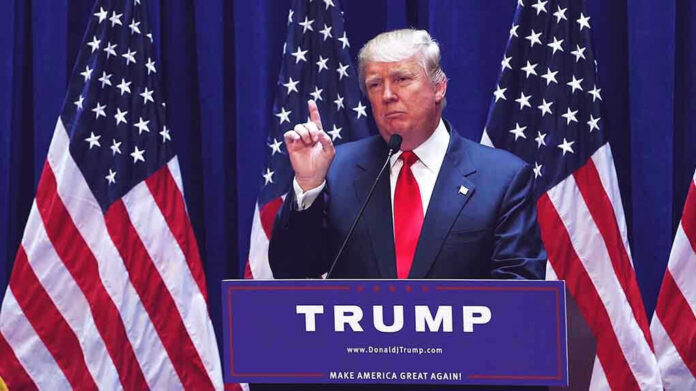
November 18, 2025, Oval Office. ABC News reporter Mary Bruce asks Donald Trump about his connections to Jeffrey Epstein, the infamous financier whose death and secret files haunt American politics. Trump’s response is swift and menacing: he threatens ABC News’ broadcast license. This wasn’t just a heated exchange. It was a direct challenge to one of the pillars of democracy—the freedom of the press. Trump’s tactic isn’t new, but its timing, amid the national controversy over Epstein files, shoves the issue into the spotlight. The stakes? The ability of journalists to question power without fear of reprisal.
Public reaction is immediate and polarized. Supporters argue Trump is fighting media bias. Critics warn he’s crossing constitutional lines, wielding regulatory threats to silence uncomfortable questions. The incident’s rapid spread on social media and news outlets ignites a fresh firestorm: is the president leveraging federal power to shield himself from scrutiny, or is this just another battle in his long war against the press?
The Epstein Files: Unveiling Power’s Hidden Ties
Jeffrey Epstein’s legacy is one of secrets, influence, and scandal. Arrested in 2019 for sex trafficking minors, Epstein’s connections to political and business elites—including Trump—have fueled demands for answers. His death, shrouded in conspiracy, only heightened public suspicion. As Congress pushes to release over 20,000 Epstein-related documents, the media intensifies its probe into who knew what, when. Survivors and advocacy groups demand justice, urging leaders to stop politicizing their trauma and focus on the facts.
Trump has repeatedly minimized his relationship with Epstein, dismissing questions as partisan attacks. Yet, calls for transparency are bipartisan, and survivors grow impatient with political games. The House Oversight Committee’s recent release of a trove of Epstein files marks a turning point, but the real battle is about accountability—and whether those in power can escape the consequences of association.
Media Freedom Under Threat: The Fallout and Ramifications
Presidential threats against media organizations are rare, but Trump’s move against ABC News escalates the risk for journalists pursuing sensitive stories. Industry experts warn that using regulatory power as a weapon against the press violates First Amendment protections and sets a dangerous precedent. Legal scholars highlight that while the FCC is insulated from direct presidential control, the mere threat can chill investigative reporting and erode public trust in democratic institutions.
Conservative commentators defend Trump’s frustration with perceived media bias, yet mainstream analysts see authoritarian overreach. The clash isn’t just about one interview, but about whether journalists can hold the powerful to account without fear of government retaliation. Survivor advocates call Trump’s behavior a “national embarrassment,” demanding leadership that prioritizes justice over self-preservation.
What Comes Next? Open Questions and Unfolding Drama
The House is moving forward with a vote to release all Epstein files, defying Trump’s efforts to sway lawmakers. Survivor groups intensify their public campaigns, while media organizations rally in defense of press freedom. The episode leaves open questions: Will legislative momentum force full disclosure, or will political maneuvering slow the process? Can journalists continue to probe uncomfortable truths without risking government reprisal? And will survivors finally see justice served without their stories becoming pawns in a political feud?
One thing is clear: the intersection of executive power, media independence, and the unresolved legacy of Epstein’s crimes is a crucible for American democracy. The nation watches, waiting for the next move—and the consequences that will shape public trust for years to come.