President Trump’s promised executive order to ban mail-in ballots and voting machines for the 2026 midterms signals an unprecedented federal push to restore election integrity, sparking fierce debate over states’ rights and transparency in America’s elections.
Story Highlights
- President Trump announces plan to eliminate mail-in ballots and voting machines for the 2026 midterms.
- The executive order, yet to be signed, would overhaul voting methods nationwide and faces likely legal challenges.
- State officials and advocacy groups prepare pushback, citing constitutional limits and potential voter impact.
- Debate intensifies over federal authority versus state sovereignty in election administration.
Trump’s Executive Order Announcement Signals New Election Integrity Battle
On August 18, 2025, President Trump took to his social media platform to declare his intent to sign an executive order targeting mail-in ballots and voting machines. He framed the move as a national campaign to “bring HONESTY” back to American elections by returning to paper ballots. This announcement, coming more than a year ahead of the 2026 midterms, represents a direct response to long-standing conservative concerns over election security and transparency, especially after years of controversy surrounding pandemic-era voting changes.
Trump’s plan directly challenges voting methods that expanded during the pandemic, which many conservatives argue opened the door to fraud and inaccuracy. While states have traditionally held authority over election administration, Trump asserts a bold federal role, describing states as “agents” of the federal government for election matters. If implemented, the order would require all states to abandon mail-in ballots and electronic voting machines, a seismic shift from current decentralized practices. The announcement has already triggered immediate media scrutiny and political reaction, with widespread anticipation of legal battles to come.
States’ Rights and Constitutional Clashes Loom
The U.S. Constitution grants states the primary responsibility for conducting elections, making federal intervention a deeply contentious issue. Legal scholars and state officials from both parties have raised alarms about potential overreach, warning that any attempt by the executive branch to dictate ballot methods will face swift and significant court challenges. This tension echoes previous disputes from Trump’s first term, when similar efforts to scrutinize mail-in voting and voting technology were met with resistance from state governments and judicial rebuke. The question of federal versus state election authority is now front and center as the country heads into a new cycle of electoral reform debates.
While some Republican-led states have already tightened restrictions on mail-in voting and increased scrutiny of voting machines since 2020, Trump’s proposed executive order would force a nationwide standard. This approach appeals to many conservatives who view decentralized rules as a loophole for fraud but raises concerns among others about the erosion of state sovereignty—a foundational principle for advocates of limited government. The likely constitutional clash underscores how deeply the issue of election integrity has polarized the nation, with each side invoking core American values to defend its position.
Impact on Voters and Election Infrastructure
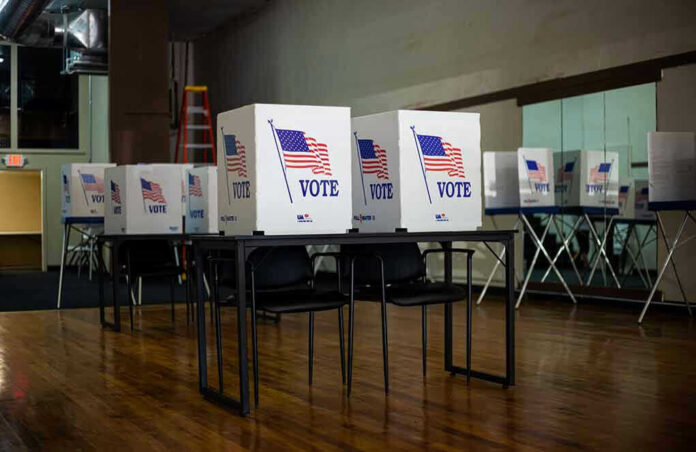
If enacted, Trump’s executive order could fundamentally alter how millions of Americans vote. Mail-in ballots have become essential for elderly, disabled, overseas, and military voters. Removing this option risks disenfranchising vulnerable populations or forcing them to navigate new, potentially burdensome procedures. The elimination of voting machines would also disrupt local election offices, requiring rapid procurement of paper ballots and manual tabulation systems—an expensive and logistically complex transition. Vendors and contractors in the election technology sector face existential threats, while legal and consulting industries are poised for a surge in election-related litigation.
Trump says he’ll sign order targetting mail-in ballots, voting machines ahead of 2026 midterms https://t.co/j9nfR9C9sF
— Breaking News (@jooilong) August 18, 2025
Short-term, the announcement is expected to fuel political polarization and public confusion. Voters and officials alike are bracing for a wave of legal challenges, conflicting guidance, and heightened scrutiny over election processes. Longer term, if Trump’s plan succeeds, it could reshape the landscape of American democracy: reducing reliance on technology, elevating federal authority in state-run elections, and setting a precedent for future executive action. Critics warn that such changes risk undermining public trust, especially if viewed as partisan or exclusionary. Supporters counter that only bold action can safeguard the integrity of the vote.
Expert Opinions and Verification Challenges
Election security experts and bipartisan commissions have consistently found no evidence of widespread fraud in mail-in or machine voting, a fact repeatedly cited by critics of Trump’s claims. Legal analysts caution that the U.S. Constitution’s assignment of election administration to the states makes broad federal mandates legally vulnerable. Nevertheless, Trump’s supporters argue that extraordinary measures are justified to restore confidence after years of contested outcomes and eroded public trust. As of now, no text of the executive order has been released, and all sides are preparing for what may become one of the defining legal and political battles of the 2026 midterm cycle.
Sources:
ABC News, “Trump says he will lead ‘movement’ to end mail-in voting,” August 18, 2025.
Le Monde, “Trump takes aim at mail-in ballots ahead of 2026 midterms,” August 18, 2025.