Transportation Secretary Sean Duffy announced flight reductions at Newark Liberty International Airport amid a third system outage in two weeks, which left thousands of passengers stranded and highlighted a nationwide infrastructure crisis.
Key Insights
- Newark Liberty Airport experienced its third air traffic control system outage in under two weeks, causing widespread delays and cancellations.
- Transportation Secretary Sean Duffy plans to temporarily reduce flights at Newark while implementing infrastructure improvements.
- The FAA faces critical shortages of air traffic controllers and relies on outdated equipment so obsolete that replacement parts are sometimes sourced from eBay, Duffy says.
- New measures include building a direct communication line between Newark and Philadelphia TRACON to improve airspace control efficiency.
- Duffy proposes extending the air traffic controller retirement age from 56 to 61 and offering 20% retention bonuses to address staffing shortages.
Newark’s Mounting Airport Crisis
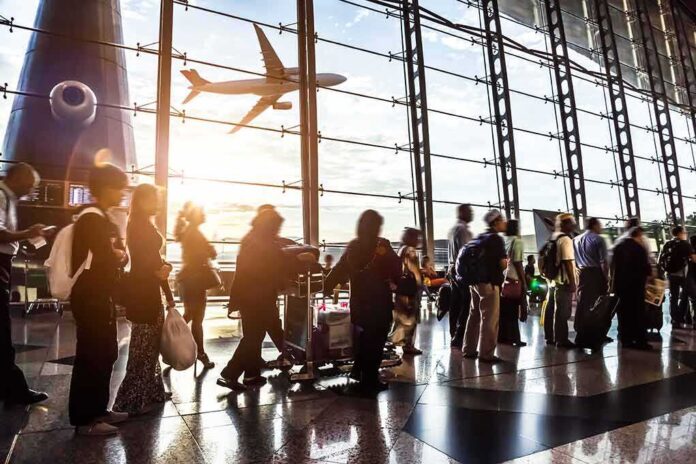
Newark Liberty International Airport is facing a perfect storm of infrastructure failures and staffing shortages that have created cascading travel disruptions across the Northeast. The airport recently experienced its third major equipment outage in less than two weeks, triggering a 45-minute ground stop that resulted in more than 250 flight delays and at least 80 cancellations. The latest failure involved a backup air traffic control system that temporarily went offline, requiring controllers to implement emergency protocols to maintain safety operations. Thousands of travelers found themselves stranded, with many forced to stay overnight as airlines scrambled to rebook passengers on already crowded flights.
The recurring technical failures have exposed deeper structural problems within the nation’s air traffic control system. According to reports, the most recent outages were attributed to telecommunications issues affecting both radar and communications systems. These technical failures are particularly concerning given Newark’s status as one of the busiest airports in the nation, serving as a critical hub for both domestic and international travel. While officials maintain that flight safety has not been compromised, the regular disruptions have raised serious questions about the reliability of America’s aviation infrastructure.
Newark Liberty Airport suffers third system outage in less than 2 weeks, impacting hundreds of flights https://t.co/cNDGVHPpXD
— CBS News (@CBSNews) May 12, 2025
Duffy’s Response Plan
In response to the crisis, Transportation Secretary Sean Duffy has announced plans to temporarily reduce the number of flights at Newark over the coming weeks. The reduction aims to ease pressure on the overwhelmed air traffic control systems while longer-term solutions are implemented. Duffy has scheduled meetings with all airlines serving Newark to coordinate the temporary capacity reductions.
“We’re going to have this reduced capacity at Newark. I’m convening a meeting of all the airlines that serve Newark, get them to agree on how they’re gonna reduce the capacity,” Duffy said.
A key infrastructure improvement already underway involves establishing a direct communication line between Newark and the Philadelphia Terminal Radar Approach Control (TRACON), which manages the New York airspace. Currently, communications must pass through an additional control center before reaching Philadelphia, creating unnecessary delays and complexity. This streamlined approach aims to improve coordination and reduce the likelihood of future system failures. Senate Minority Leader Chuck Schumer has emphasized that the FAA must prioritize fixing Newark’s issues to prevent similar problems from emerging at other airports nationwide.
America’s Aging Aviation Infrastructure
Secretary Duffy said that much of the nation’s air traffic control equipment is so outdated that replacement parts often need to be sourced from eBay. This admission highlights decades of underinvestment in critical aviation systems. The antiquated equipment poses not only logistical challenges but also potential safety concerns, though officials insist that redundancies in the system maintain flight safety. The telecommunications failures at Newark exemplify how vulnerable critical infrastructure has become due to aging technology.
Compounding the infrastructure issues is a severe shortage of air traffic controllers. The pandemic interrupted training programs, creating a staffing deficit that has been difficult to overcome. Current regulations require controllers to retire at age 56, further limiting the workforce. To address these shortages, Duffy has proposed extending the retirement age to 61 and offering a 20% upfront bonus as an incentive for experienced controllers to delay retirement. These measures aim to maintain essential expertise while new controllers complete their extensive training requirements.
Sources
- Newark Liberty Airport suffers third system outage in less than 2 weeks, impacting hundreds of flights
- US plans to reduce flights at Newark Airport as air traffic control problems mount