
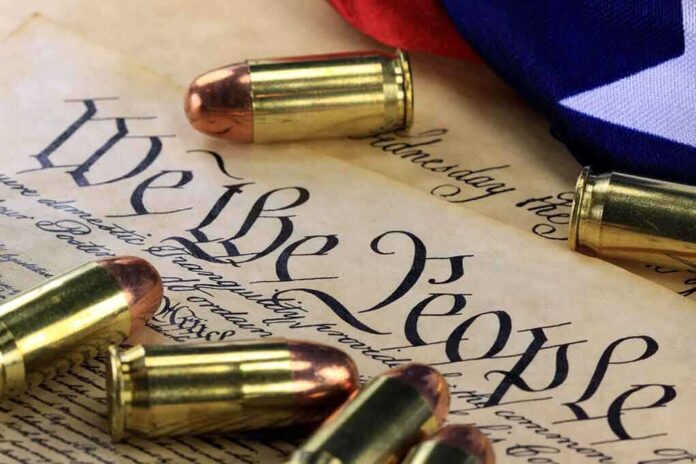
A Virginia sheriff’s decision to end concealed carry permit fees marks a major victory for Second Amendment advocates—and a direct challenge to bureaucratic barriers that have long frustrated law-abiding gun owners.
Story Snapshot
- Wythe County Sheriff Anthony R. Cline has eliminated the $35 concealed carry permit fee, citing constitutional rights.
- The move positions local law enforcement as a bulwark against state overreach and administrative obstacles to gun ownership.
- Advocates argue this action protects Second Amendment freedoms, while critics claim it could undermine regulatory oversight.
- The decision may inspire similar actions in other counties, fueling the debate over gun rights and government authority in Virginia.
Sheriff Cline’s Stand: Ending Permit Fees to Defend Constitutional Rights
On August 5, 2025, Wythe County Sheriff Anthony R. Cline announced his office would no longer collect the $35 fee previously required for concealed carry permit applications. Sheriff Cline justified this by declaring that citizens should not have to pay to exercise rights enshrined in the Constitution, specifically referencing the Second Amendment. His action is notable for being unilateral—taken without state legislation—and signals a renewed pushback against policies many conservatives view as financial roadblocks to lawful gun ownership.
This policy shift comes amid a broader national debate over the proper limits of gun regulation and the role of local officials in defending constitutional liberties. Virginia law permits localities to charge up to $35 for permit processing, originally intended to cover background checks and administrative costs. However, critics argue that any fee imposes an undue burden on law-abiding citizens, effectively turning a constitutional right into a privilege for those able or willing to pay. Sheriff Cline’s stance resonates deeply in southwestern Virginia, a region with a strong tradition of supporting individual gun rights.
Local Autonomy vs. State Policy: Growing Tensions and Political Implications
The sheriff’s decision underscores the growing power struggle between local autonomy and state-level regulatory frameworks. Although the Virginia state government sets the legal structure for concealed carry, it allows local discretion over fee collection. Sheriff Cline’s move may increase tension with Richmond policymakers, especially if other counties follow suit. This action not only appeals to rural voters frustrated by state interference but also emboldens officials in other regions to push back against what they perceive as unnecessary or unconstitutional regulation.
There is precedent for this type of local resistance: numerous Virginia counties have previously adopted “Second Amendment sanctuary” resolutions in response to statewide gun control efforts. By waiving concealed carry fees, Wythe County sets a practical example that may inspire similar moves elsewhere, potentially forcing a broader debate on the legitimacy and scope of local authority in protecting gun rights. For many conservative residents, the issue is about more than just money—it is about preserving foundational liberties against creeping government overreach.
Impact on Residents, Law Enforcement, and the Broader Gun Rights Movement
The immediate impact is clear: Wythe County residents applying for concealed carry permits now save $35 per application, effectively removing one financial barrier to lawful gun ownership. This could lead to an uptick in permit applications, as reduced costs make the process more accessible. For the sheriff’s office, however, the loss of fee revenue may strain administrative budgets or require adjustments in how background checks and processing are funded. Supporters argue that the constitutional principle outweighs fiscal concerns, while critics warn that removing fees could challenge the office’s ability to maintain thorough vetting procedures.
In the broader context, Sheriff Cline’s action is celebrated by gun rights advocates as a principled stand against what they see as “pay-to-play” restrictions on the Second Amendment. Legal scholars note that while modest administrative fees are generally permissible, any charge that effectively deters exercise of a constitutional right could face legal challenge. The move is largely symbolic on the financial side, given the relatively small fee, but its political significance is substantial. It reinforces the role of elected sheriffs as defenders of constitutional values and could shape local and state election debates for years to come.
Sources:
Virginia Sheriff Ends Fee Collection for Concealed Carry Permits
Virginia Court of Appeals Unpublished Opinion (2025)
Virginia Politics – Ground News