One narrow waterway thousands of miles away can quietly add dollars to every American fill-up before your evening news finishes its first segment.
Quick Take
- Oil prices jumped more than 10% as the US-Iran war disrupted shipping through the Strait of Hormuz, a chokepoint for roughly one-fifth of global crude.
- President Trump publicly projected confidence in the military campaign, citing control of Iranian skies and about 2,000 targets hit in five days.
- The White House signaled an economic counterpunch, with State, Energy, and Treasury officials coordinating a mitigation program to limit price shock.
- Markets reacted less to speeches and more to tankers: halted vessel traffic and unverified strike claims kept risk premiums embedded in prices.
The market trades on chokepoints, not press briefings
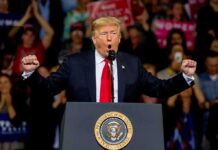
President Donald Trump said the US military effort against Iran was “doing very well,” pointing to air dominance and a rapid strike tempo in the war’s opening days. Oil traders heard the words, then looked at the Strait of Hormuz. When ship traffic slows or stops there, futures don’t wait for a victory lap. They reprice risk immediately, because physical barrels and insurance rates move on fear faster than on facts.
That’s why the headline number mattered: crude extended gains beyond 10% as the conflict disrupted flows. In normal times, a few dollars on a barrel looks like a chart squiggle. In wartime around Hormuz, that squiggle becomes a tax on everything delivered by truck, flown by jet, or manufactured with petrochemicals. The public argument turns political fast, but the cause-and-effect starts with logistics and maritime confidence.
How a “five-day” battlefield update becomes a 30-day household bill
Markets got a sequence of signals in quick succession. Protests inside Iran in mid-January started pushing prices up. February brought steadier pricing in the mid- to upper-$60s per barrel while Trump signaled US naval deployment to the Gulf, an early clue that supply routes could become collateral. By March 2, oil settled sharply higher and Trump projected the war could run four to five weeks, possibly longer.
On that same March 2 window, reports pointed to vessel traffic halting in the Strait of Hormuz. That detail, not the rhetoric, carries the most weight for prices because it threatens the steady drumbeat of tanker schedules that refineries depend on. By March 5, the fifth day of the war, Iranian state media claimed a strike on a US oil tanker in the northern Persian Gulf. Even unverified, that kind of claim widens the “war risk” spread.
Trump’s energy message meets the one enemy it can’t bulldoze: time
Trump leaned on a familiar argument: American production strength can buffer the blow. The US entered this crisis producing roughly 13.6 million barrels per day, and the administration highlighted a production gain since inauguration. That matters, and conservatives should appreciate the strategic value of domestic output. Energy independence isn’t a slogan; it’s national resilience. Still, shale can’t teleport immediate barrels into a panicked seaborne market overnight.
Time is the constraint. Wells, pipelines, refinery runs, and export logistics respond in weeks and months, not hours. When tankers hesitate, insurers reprice, and traders anticipate shortages, the first wave of damage hits consumers long before extra US production can blunt it. The common-sense takeaway: domestic production is a powerful foundation, but it doesn’t eliminate the global “chokepoint premium” when Hormuz traffic looks unsafe.
The White House mitigation plan: practical tool, political minefield
Secretary of State Marco Rubio announced a plan to mitigate the impact of disruptions, naming Energy Secretary Chris Wright and Treasury Secretary Scott Bessent as leads. In practice, that points toward the usual toolkit: coordinating allies, nudging supply chains, calming markets with credible messaging, and potentially tapping the Strategic Petroleum Reserve. Those tools can help, but they work best when the market believes the disruption is containable and temporary.
The political minefield is obvious: voters hate high fuel prices, and Washington gets blamed regardless of the cause. Conservatives typically prefer market solutions and domestic expansion over constant emergency interventions. That instinct is right. Yet a short-term shock from a war-linked shipping halt is exactly the scenario where temporary stabilization can prevent panic and broader inflation. The line to walk is narrow: stabilize without distorting incentives or pretending government can repeal geography.
Why this Hormuz moment feels different than past spikes
Energy markets have lived through Middle East scares before: the 2019 Abqaiq attack, the Soleimani strike aftermath, and the Russia-Ukraine war’s ripples. Those episodes spiked prices, then cooled as the world adjusted. This conflict carries a different weight because it involves active US combat operations alongside Israel and an explicit focus on a chokepoint that underpins global crude movement. That combination makes the risk premium stickier.
Analysts warned that triple-digit oil becomes plausible when there’s “no clear end” in sight. That isn’t a partisan scare line; it’s how markets behave when duration becomes unknowable. Iran’s own production capacity also hangs in the balance, with the possibility of a sustained outage. If the war stretches or broadens, markets will keep pricing a longer disruption window, and consumers will feel it through gasoline, freight, and food.
What to watch next if you care about prices more than pundits
Watch shipping, not slogans. The clearest leading indicators are vessel transits through Hormuz, credible reports on tanker incidents, and whether insurers and charter rates start forcing ships to reroute or pause. Track whether the administration’s mitigation program signals concrete measures or stays at the framework stage. Pay attention to how China, a top importer, responds; conservation and alternate sourcing decisions can shift global balances quickly.
The price of the benchmark US oil contract soars more than 10 percent on fears of extended disruption to crude supplies after President Donald #Trump demanded #Iran's “unconditional surrender.”https://t.co/oZ4yVPOuNx
— Al Arabiya English (@AlArabiya_Eng) March 6, 2026
Expect domestic politics to intensify as pump prices rise, because energy affordability is a kitchen-table issue for the middle class and retirees on fixed incomes. Common sense says Americans should demand two things at once: effective prosecution of national security objectives and a serious, pro-production energy posture that reduces vulnerability to foreign leverage. The war update may sound upbeat, but markets won’t relax until ships move reliably again.
Sources:
Trump says war with Iran to last four to five weeks as oil market weighs impacts