
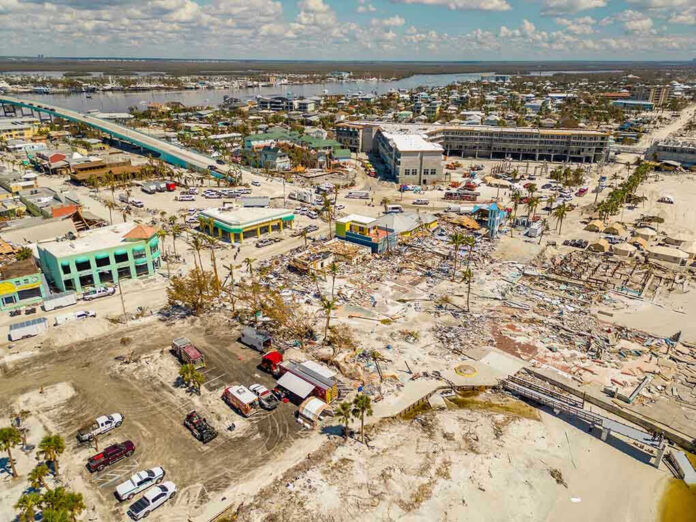
As Hurricane Melissa carved its path across Jamaica, it did more than flatten homes—it shredded the illusion that the Caribbean can weather storms the way it always has, forcing the world to confront what “unprecedented devastation” really means.
Story Snapshot
- Hurricane Melissa hit Jamaica in October 2025 as one of the strongest Atlantic hurricanes ever recorded
- Massive loss of life, displacement, and destruction left the island reeling, with damages estimated at 40% of Jamaica’s GDP
- UN officials and scientists directly link the hurricane’s intensity to climate change and record ocean temperatures
- Relief efforts are underway, but the path to recovery is fraught with economic, social, and political challenges
Unprecedented Destruction and Human Toll
Hurricane Melissa slammed into Jamaica on October 28, 2025, with sustained winds reaching 185 mph, matching the strongest landfalling Atlantic hurricane in recorded history. The storm’s arrival was not just another chapter in the island’s long relationship with hurricanes—it was the beginning of a humanitarian crisis. Early reports tallied at least 49 deaths across the region, though that number fluctuates as search and rescue teams dig through debris and reach isolated communities. For thousands, the hurricane’s fury was a grim equalizer: homes—both shacks and mansions—crumbled, roads disappeared under floodwaters, and power lines dangled like marionette strings. More than three million people across the Caribbean faced life-threatening peril; in Jamaica alone, nearly 240 communities were cut off, with survivors stranded on rooftops or seeking shelter in overcrowded emergency centers.
Jamaican Prime Minister Andrew Holness described the aftermath as “total devastation.” United Nations officials echoed this, calling the situation unprecedented and making urgent appeals for international assistance. The devastation extended beyond shattered buildings: critical infrastructure—bridges, hospitals, water systems—suffered catastrophic damage. Preliminary estimates put the cost at nearly 40% of Jamaica’s GDP, a staggering blow that will ripple through every sector of island life.
Compounded Vulnerabilities: Why Melissa Hit So Hard
Jamaica was not just unlucky. The hurricane struck a nation already battered by a relentless sequence of disasters. Hurricane Oscar in 2024 had left deep scars, and the island had barely begun to recover when a year-long drought and energy shortages began to fray the social fabric. Many communities were still rebuilding from earthquakes earlier in 2025, leaving infrastructure weakened and populations vulnerable. When Melissa’s monstrous eye made landfall, it exploited every crack left by recent hardships. Floodwaters invaded neighborhoods where drainage systems were still under repair, and storm surges crushed the remnants of sea walls weakened by prior storms. The result: even the most resilient communities found themselves overwhelmed by the scale and speed of the destruction.
Displacement was immediate and immense. Thousands found themselves homeless overnight. Shelters overflowed, and aid workers faced logistical nightmares reaching remote villages now accessible only by boat or helicopter. In the days following landfall, the focus shifted from survival to recovery—but in a country where economic and social wounds never fully healed from prior disasters, the question was not just how to rebuild, but whether it was even possible to “build back better.”
Climate Change as Catalyst: The Science of Intensifying Disasters
Scientists and UN officials were quick to point to the root causes behind Hurricane Melissa’s sheer power. Meteorologists identified anomalously warm Atlantic waters as the chief fuel for the storm’s rapid intensification, a phenomenon repeatedly linked to global climate change. Analyses released in the immediate aftermath concluded that such extreme hurricanes are now four times more likely than they were just a few decades ago. These findings were not just academic; they signaled a new normal for the Caribbean, where the boundaries between “record-breaking” and “routine” are vanishing.
Calls for climate adaptation and disaster preparedness grew louder. UN representatives argued that the world’s wealthiest nations must invest in resilient infrastructure and early warning systems for vulnerable island states. The debate over international climate finance reignited, with critics arguing that promises of support have not matched the escalating scale of the threat. For Jamaicans, these conversations are neither abstract nor distant—they shape the speed and effectiveness of the aid they receive and the future security of their communities.
Relief, Recovery, and the Road Ahead
In the days after Hurricane Melissa, emergency teams fanned out across Jamaica and neighboring islands. The priorities were urgent: search and rescue, restoring basic utilities, and ensuring that displaced families had food, water, and shelter. International aid began to arrive, but the scale of the destruction meant that response efforts were stretched thin. The road to recovery is daunting. Agriculture, a mainstay of Jamaica’s economy, suffered crippling losses as fields were inundated and livestock perished. The tourism sector—already fragile after years of pandemic-related downturns and prior disasters—faces another existential test as hotels, beaches, and cultural sites were devastated.
Political and social ramifications are already emerging. The Jamaican government, while leading the response, must navigate a complex web of international support and domestic expectations. The UN and NGOs play pivotal roles, but the ultimate burden of reconstruction falls on local shoulders. The pain of Hurricane Melissa will linger long after the headlines fade, manifesting in economic hardship, delayed development, and, for many, a profound sense of vulnerability in the face of a changing climate.