
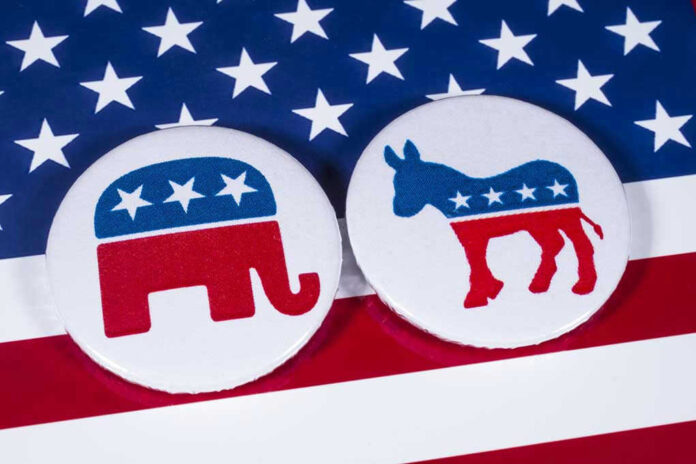
One small Texas race just exposed the ugliest truth about modern politics: some candidates treat party labels like disposable costumes, and donors like the props who paid for them.
Story Snapshot
- A little-known Texas candidate raised money as a Democrat, then quietly resurfaced as a Republican.
- Democratic donors now say they feel duped, accusing the candidate of rank opportunism and hypocrisy.
- Texas’s long history of party switching collides with today’s hyper-polarized, donor-driven politics.
- The uproar offers a rare, unfiltered look at what party “loyalty” really means in an age of online outrage.
How a low-profile Texas race turned into a grassroots scandal
A local or state-level Texas candidate spent 2022 through 2024 raising money and building credibility as a Democrat, tapping progressive donors and activists who believed they were backing a reliable ally. Fundraising appeals leaned on Democratic issues, Democratic networks, and Democratic goodwill. Then, heading into the 2025 cycle, the candidate reappeared with a new jersey: filing as a Republican and campaigning as a conservative in the same GOP-leaning political landscape that Democrats had been paying them to challenge.
The turn sparked immediate fury in Texas political circles, but not because party switching is rare. Texas has decades of politicians crossing the aisle. The outrage came from the sequence: raise cash as a Democrat, speak the language, use the infrastructure, then flip to the GOP without returning a penny. Screenshots of past fundraising pleas began circulating on X, attached to a single word that crystallized donor anger: “scumbag.” To many activists, this was not a conversion story; it looked like a bait-and-switch.
Why this party switch hit a nerve in modern Texas politics
Texas was once defined by conservative Democrats gradually drifting to the GOP as the parties realigned. Those moves unfolded over years and often tracked clear ideological shifts. Today’s environment is different. Campaigns now run on small-dollar, highly ideological donors who expect real alignment on abortion, voting rules, and cultural issues. When someone uses blue branding and progressive messaging to raise money, then runs as a Republican, those donors see something more than evolution; they see a violation of basic trust that underpins representative government itself.
Texas’s open primary system adds fuel to this fire. The rules make it easy to flip parties on paper, but technology makes it impossible to erase history. Campaign finance records, archived emails, and old posts can be pulled up in seconds, which is exactly what happened here. Texas Democrats have watched higher-profile figures navigate divisions over strategy and ideology, from donor debates around James Talarico’s courting of big money to differing approaches in high-stakes Senate races, and those episodes already primed activists to scrutinize loyalty and money far more aggressively.
'Scumbag': Texas candidate skewered for running as Republican after fundraising off Dems https://t.co/8tYq0VAZev
— Matthew Chapman (@fawfulfan) December 10, 2025
Donor expectations, conservative values, and the ethics of the flip
Ethically, this case hinges on a blunt question: what does a political donation buy? Most Americans with conservative instincts would answer that it should not buy a vote, but it should buy honesty. If you tell Democratic donors you share their goals, take their money, then ask Republican voters to trust you as a champion of conservative priorities, both sides have reason to question your word. Even if Texas law allows such a flip, the pattern collides with common-sense standards of integrity that transcend party lines.
Some conservatives argue that party switching reflects growth, not grift. They see a candidate who realized the GOP better fits their convictions and finally came home. That defense carries weight when the ideological migration unfolds in public, with clear stands on core issues. It carries less weight when the record shows a quick pivot after donors helped build name recognition. From a right-of-center, accountability-focused perspective, the candidate’s refusal to refund or address those Democratic contributions undermines any claim of principle and makes the “opportunist” label far harder to dismiss.
What this backlash means for future candidates and Texas campaigns
The short-term impact is obvious: this candidate’s reputation now carries a scarlet letter for independents and activists on both sides. Democrats see a turncoat. Many Republicans see someone who will say anything to win. That is political kryptonite in an era when authenticity real or carefully staged often matters more than policy detail. The story also warns ambitious local politicians that in 2025 Texas, you cannot treat party labels as temporary branding without expecting your receipts to go viral.
Longer term, expect donors and parties to respond. Democratic groups will likely tighten vetting, digging deeper into candidates’ past affiliations and insisting on clearer commitments before they invest. Republican leaders will quietly ask whether embracing high-risk defectors is worth the baggage. Consultants will spend more time war-gaming “switch scenarios” and less time assuming that a smooth rebrand can outrun public memory. In a state where billionaires, small donors, and national strategists already battle over the direction of both parties, cases like this add another layer of mistrust.
Sources:
Politico: James Talarico, Miriam Adelson and billionaire donations
Washington Times: 2 Democrats, 2 strategies in Texas Senate battle
San Antonio Observer: Jasmine Crockett scrambles Democrats as she weighs Texas Senate run
Texas Tribune: Texas Tribune Festival panel on U.S. Senate Democrats, Colin Allred, James Talarico
AOL: Top Democrat in contested Senate race