
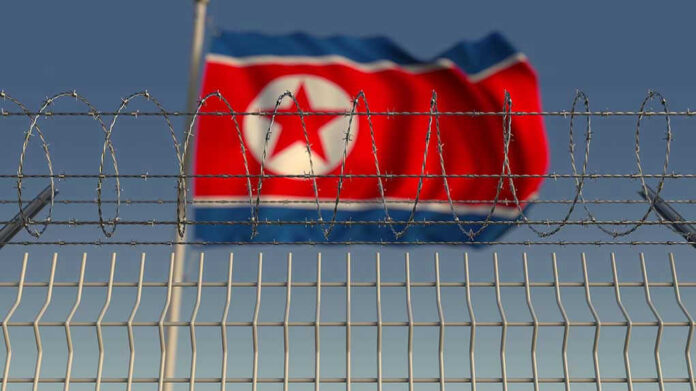
South Korea’s decision to remove anti-North Korean loudspeakers from the border signals a dramatic shift in inter-Korean policy and has the world watching for North Korea’s next move.
Story Highlights
- South Korea has begun dismantling all anti-North Korean loudspeakers along the border as of August 4, 2025.
- The move comes under newly elected President Lee Jae Myung’s liberal administration, aiming to reduce tensions with Pyongyang.
- North Korea’s official response has been muted, with only dismissive remarks from Kim Yo Jong.
- Experts warn the gesture, while symbolic, may not be enough to prompt a substantive response from the North.
South Korea Dismantles Loudspeakers to Reboot Dialogue
On August 4, 2025, South Korea’s military began the removal of anti-North Korean loudspeakers along the Demilitarized Zone (DMZ), marking the first time such equipment has been taken down since the conservative government reactivated them in 2024. President Lee Jae Myung, elected in June 2025, ordered the move as a keystone of his administration’s promise to de-escalate border tensions and restore dialogue with North Korea. The policy reversal is both symbolic and practical, directly responding to years of psychological warfare and diplomatic stalemate between the two nations.
The broadcasts, which included South Korean news, anti-North propaganda, and K-pop music, have long been a flashpoint in the divided peninsula’s uneasy standoff. The Ministry of Defense announced that the dismantling would be completed within the week, a timeline confirmed by international outlets and South Korean officials.[1][2][3] The North Korean regime, which has historically condemned such broadcasts as acts of aggression, has so far limited its response to dismissive statements, with Kim Yo Jong, a senior official, publicly questioning the sincerity of Seoul’s overtures.
Historical Roots of Psychological Warfare on the Korean Peninsula
The roots of the loudspeaker standoff reach back to the armistice of 1953, when both Koreas began using loudspeakers as tools of psychological influence. Content has ranged from military propaganda to the latest pop hits, with each side hoping to sway soldiers and civilians across the border. After several periods of silence—most notably in 2018, during a failed rapprochement—the broadcasts resumed in June 2024 as a retaliatory measure by the prior conservative government. This action followed North Korean provocations involving propaganda balloons. President Lee’s election in June 2025 brought a renewed commitment to engagement, halting the broadcasts and setting the stage for the current dismantling effort.
The DMZ remains one of the most heavily fortified borders in the world, and these broadcasts have frequently been a catalyst for broader crises. Previous cycles of escalation have coincided with missile launches, military drills, and high-stakes summits, making the current move a rare gesture of goodwill in a tense environment.
Stakeholders and the Calculus of Risk
Key players in this policy shift include President Lee Jae Myung, who has staked his administration’s credibility on engagement and dialogue, and the South Korean Ministry of Defense, which must balance security with political directives. North Korea’s leadership, led by Kim Jong Un and his sister Kim Yo Jong, remains wary of outside information undermining regime control. The removal is intended as a confidence-building measure, but experts caution that North Korea’s muted response is consistent with its historical skepticism toward symbolic gestures from the South.
Defense Ministry spokesperson Lee Kyung-ho described the removal as “a practical measure aimed at helping ease tensions with the North, provided that such actions do not compromise the military’s state of readiness.” While the move has been welcomed by some as a step toward renewed talks, others argue it risks undermining deterrence if not matched by substantive concessions from Pyongyang.
Short- and Long-Term Implications for the Korean Peninsula
The immediate effect of the loudspeaker removal is expected to be a reduction in border tensions and a signal of South Korea’s willingness to return to talks. However, North Korea’s minimal response underscores the challenge of translating gestures into meaningful diplomacy. Local residents, border communities, and military personnel are directly affected by the cessation of broadcasts, which have long been a source of both anxiety and information.
Analysts describe the move as largely symbolic but necessary for signaling intent. A Seoul-based security expert noted, “It’s a low-cost, reversible gesture that tests North Korea’s willingness to engage.”[2] Yet, academic voices caution that North Korea is unlikely to reciprocate without more concrete steps from Seoul. Unless accompanied by broader policy shifts, such as economic cooperation or security assurances, the gesture may have limited impact beyond improving the atmosphere for dialogue.
Sources:
Le Monde: “South Korea says it will remove loudspeakers on border with North”
Euronews: “South Korea removes propaganda speakers to ease tensions with North”
DW: “South Korea removes loudspeakers on border with North”