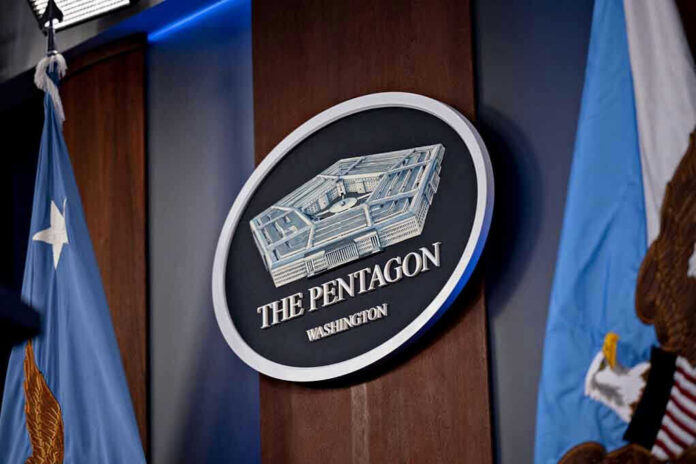
The Pentagon says the nation will be able to watch a military firing squad carry out an execution.
Story Snapshot
- Defense Secretary Pete Hegseth said the execution will be public and viewable online.
- Pentagon officials confirmed it will be livestreamed, with details to follow.
- The case is Nidal Malik Hasan, convicted for the 2009 Fort Hood attack; execution is set for Dec. 3 at Fort Hood.
- Reporters call the plan unprecedented in modern U.S. practice and rare in military justice.
What Was Decided And Why It Matters
Defense Secretary Pete Hegseth said the public will be able to watch the execution, framing it as accountability and consequence. He stated, “We’ll make sure that people are able to watch it, that it’s public,” and added that people need to understand there are serious consequences for these acts. Pentagon officials later confirmed a livestream would occur, though they did not release hosting or access details yet. That leaves logistics open but sets a clear public intent.
The execution involves Nidal Malik Hasan, the former Army psychiatrist who killed 13 people and wounded 32 at Fort Hood in 2009. He was convicted by a military court and received the death sentence. Reporting places the execution at Fort Hood on December 3, making this a scheduled, not hypothetical, event inside a defined legal process. Coverage from major outlets labels the coming stream as unprecedented in the American context.
What Is Known And What Is Not
Officials confirmed the livestream plan and tied it to transparency and public access. They have not released the platform, feed rules, or whether an archive will exist. Reporters note the military justice system rarely opens executions to the broad public, which makes this plan stand out. The lack of a published directive or legal memo leaves the authority chain unclear in public view, but the Pentagon’s on-record statements anchor the basic facts.
The decision will likely test long-standing norms about how the United States handles capital punishment. No recent practice offers a one-to-one model for a public broadcast of an execution. Prior attempts to televise executions in the civilian system met resistance in courts and agencies. Journalists characterize this plan as a break from decades of controlled viewing rooms and limited press access. That shift drives both interest and alarm.
The Arguments Taking Shape
Supporters of the stream point to deterrence, candor, and the public’s right to see justice carried out. They argue that an open view prevents myth-making and shows the state does not hide its gravest act. Some legal scholars also say more visibility could improve understanding of capital punishment’s full process and costs. This claim aligns with a basic conservative idea: government power should face daylight, especially when it ends a life.
Critics warn about spectacle and dignity. A historian of military justice said there are no compelling reasons to make this execution public. Rights advocates call the plan cruel, arguing that turning a state killing into a show harms society and dehumanizes everyone involved. Others raise questions about who can watch, how young viewers are protected, and whether the broadcast normalizes violence or desensitizes the public. Those are serious issues that planners must answer before the feed goes live.
How To Judge The Decision Through A Common-Sense Lens
Three tests fit here. First, lawfulness: a clear, written authorization and legal review should exist and be disclosed. The Pentagon’s statements establish intent, but the public deserves the rulebook, not just a press line. Second, order and dignity: the stream should follow strict standards that bar gore, guard victim privacy, and prevent chaos. Third, age control and access: a firm plan must keep children out and stop rehosted clips from gaming the rules. Those steps match conservative expectations for serious, sober state action.
🚨 PETE HEGSETH SAYS FORT HOOD SHOOTER’S EXECUTION WILL BE LIVESTREAMED
U.S. Defense Secretary Pete Hegseth has announced that the planned execution of former Army Major Nidal Malik Hasan will be made public, with Pentagon officials confirming that it will be livestreamed. Hasan… pic.twitter.com/dBvJIB3mTZ
— Mighty News (@Mighty__News) October 9, 2026
If done with rigor, the stream could mark a high-water line for transparency in rare, ultimate punishments. If done loosely, it could look like performance and invite backlash at home and abroad. The difference will come down to details: platform choice, delay buffers, captioning, camera limits, and a public record of who approved what and why. The Pentagon set the destination. Now it must build the road with rules sturdy enough to bear the weight.
Sources:
nbcnews.com, pbs.org, bbc.com, washingtonpost.com, afp.com, independent.co.uk, spiegel.de
© integritytimes.com 2026. All rights reserved.