
A New Jersey mom delivered a healthy baby on the side of the Turnpike while her husband and a rookie state trooper clamped the umbilical cord with an iPhone charger.
Story Snapshot
- Kristen and Alex Fast’s baby boy, Archer, was born at mile marker 113.3 on the New Jersey Turnpike in Secaucus.
- Alex and State Trooper Freddie Guacamaya used an iPhone cable to clamp the umbilical cord until medics arrived.
- Both mom and baby were taken to the hospital and are healthy and thriving.
- The birth highlights how everyday families and first responders handle sudden roadside deliveries in real life.
A race to the hospital that stopped at mile marker 113.3
Kristen and Alex Fast were not planning to make history that Thursday afternoon. Kristen went into labor around 12:20 p.m. at home in Jersey City, and the plan was simple: drive to Hackensack University Medical Center and have a normal hospital birth. Labor did not care about the plan. As Alex drove onto the eastern spur of the New Jersey Turnpike in Secaucus, the contractions sped up and Kristen told him the baby was coming fast.
The couple’s doula stayed on the phone and told Alex to pull over and call 911. Alex stopped at mile marker 113.3, a spot that now appears on their son’s birth certificate as his official birthplace. On the side of one of the busiest highways in the country, in broad daylight, their car suddenly turned into a delivery room. For many parents, the Turnpike is a stressful commute; for the Fasts, it became the place where their son’s life began.
A rookie trooper, a panicked dad, and an iPhone cord
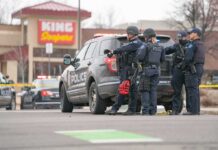
New Jersey State Police received a call about a woman in labor on the Turnpike and sent Trooper Freddie Guacamaya to milepost 113.3. He arrived around 12:41 p.m., just minutes before Archer’s birth, and found Kristen already in active labor. This was Guacamaya’s first time delivering a baby, but there was no time to hesitate. He put on gloves, worked with Alex, and helped guide Archer William Fast into the world at about 12:45 p.m.
Then came a problem most people never think about: the umbilical cord needed to be clamped, and they had no medical tools. Alex later explained that he remembered the instructions from the doula and medics: clamp the cord right away with any kind of string you can find. He looked around the front of the car and grabbed the only thing available—a spare iPhone charging cable. The new dad and the trooper used that cable to clamp the cord and keep Archer safe until emergency medical services arrived.
From highway shoulder to hospital room
A truck driver pulled over and offered towels, turning a strange scene into a small community effort on the shoulder of I-95. Emergency medical services soon reached the family, checked Archer and Kristen, and moved them to an ambulance. They were transported to Hackensack University Medical Center, while Trooper Guacamaya drove the family’s car behind them so they would have it at the hospital later that day. What started as a scared phone call ended with mother and baby in a proper hospital room.
Doctors examined Archer and confirmed what his parents now repeat with relief and pride: he is healthy and thriving. Kristen later said, “Archer’s healthy. He’s thriving. He’s a Jersey boy through and through. I don’t think you get more Jersey than being born on the New Jersey Turnpike.” For a child whose birth certificate lists “New Jersey Turnpike I-95, mile marker 113” as his birthplace, that line fits. Archer’s first pediatric appointment came only days later, and reports say both mom and baby continue to do well.
Roadside births and the rise of out-of-hospital deliveries
Stories like this feel wild, but they are not entirely unique. In the United States, about 1 in 85 babies are now born outside hospitals. Most of those births happen at home or in birth centers, often by choice, but a small slice are like Archer’s—unplanned deliveries in cars, parking lots, and on highway shoulders when labor moves faster than the drive. State police and first responders across the country report these sudden roadside births every year, and most end well when help arrives quickly.
Many parents still prefer hospitals, especially for the safety net of doctors and equipment. At the same time, experts have warned for years that American childbirth is sometimes too medical, with more inductions and surgeries than needed. For conservatives who value both family responsibility and limited but strong government, Archer’s birth hits a sweet spot. The family took action, the trooper stepped up, and the system backed them without smothering them in red tape or delay.
Common sense, quick thinking, and a very Jersey birth certificate
People may debate the growing trend of out-of-hospital births, but almost everyone agrees on basic common sense in emergencies: get help fast, stay as calm as possible, and use what you have until professionals arrive. Alex’s choice to clamp the cord with an iPhone charger is not a textbook method, yet it shows how parents think on their feet when seconds matter. The facts speak for themselves: the improvised cord clamp did its job, and Archer is healthy.
Trooper Guacamaya has stayed in touch with the family and plans to visit Archer, the Turnpike baby he helped deliver. That ongoing bond between a young family and a state trooper captures something many Americans quietly believe: the best government workers are not distant rule enforcers, but neighbors who show up when life gets real. On that July afternoon, at mile marker 113.3, an ordinary highway became proof that courage, quick thinking, and a cheap phone cable can turn a crisis into a story the whole family will proudly tell for the rest of their lives.
Sources:
nypost.com, people.com, nj.com, abc7ny.com, facebook.com, journalofethics.ama-assn.org
© integritytimes.com 2026. All rights reserved.