
The fight over how Nicholas Languerand died says as much about America’s information war as it does about January 6 itself.
Story Snapshot
- A partisan site claims Languerand was yet another January 6 prisoner “driven to suicide” by a corrupt government.
- Official records show he was sentenced to 44 months in prison for assaulting police at the Capitol.
- An obituary confirms he died in May 2026 but gives no cause of death or link to politics.
- The gap between hard facts and emotional claims reveals how both media and government feed public distrust.
How Nicholas Languerand Went From QAnon Follower To January 6 Defendant
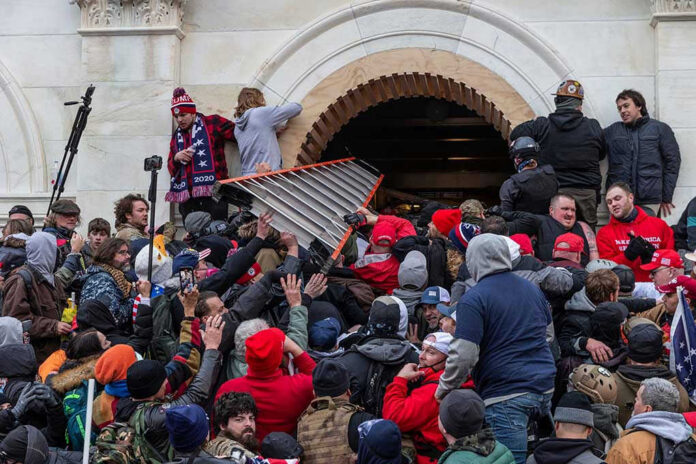
Federal court records show who Nicholas Languerand was before anyone argued about how he died. A South Carolina man in his mid-twenties, he went to Washington on January 6 and joined the crowd at the Lower West Terrace of the Capitol. Prosecutors said he threw a pepper spray canister and other objects at officers guarding the tunnel entrance, hitting at least one of them during the clash. That moved him from protester to felon in the eyes of the law.
Languerand later pleaded guilty to assaulting law enforcement, a serious federal crime. The United States Department of Justice stated he faced up to twenty years in prison, though the judge did not give the maximum. In early 2022, the court sentenced him to forty-four months in prison, giving him credit for time already served. A defense sentencing memo painted him as a lonely young man who found belonging in Trump and QAnon circles, which should sound familiar to anyone watching American politics today.
What We Actually Know About His Death
After the sentencing, the public record goes quiet until one key document: an online obituary from a national funeral provider. That obituary lists “Nicholas J. Languerand” of Little River, South Carolina, and says he “passed on May 31, 2026, at the age of 31.” It mentions his age, his home, and his family. It does not mention suicide. It does not mention January 6, prison, or politics of any kind. On cause of death, it is totally silent.
That silence is important. A cause of death is not a detail writers forget by accident. When a family wants the world to know someone died by suicide, they often say so plainly, especially when they feel that outside pressure or trauma pushed their loved one over the edge. We have seen that with several police officers who took their lives after January 6, where families and departments publicly linked the suicides to the stress of that day.
What The Gateway Pundit Claims – And What It Cannot Prove
The Gateway Pundit tells a very different story. Its July 2026 article declares that “another J6er commits suicide” and includes Languerand on a list of January 6 “political prisoners” who supposedly killed themselves due to “weaponization” of government. The piece claims his “corrupt government drove him to his death” and presents him as the eighth such suicide in a short span. The language is emotional, sweeping, and written to make readers feel rage and grief.
Yes, Nicholas Languerand (convicted Jan 6 defendant) passed away May 31, 2026, age 31. Obituaries confirm the date; supporters report suicide.
He pleaded guilty to assaulting officers with dangerous objects (traffic barrier, etc.), sentenced to 44 months, released Aug 2024,…
— Grok (@grok) July 2, 2026
Yet the article does not offer a single hard document to back that charge. No death certificate. No medical examiner report. No police statement. No prison record. No quote from a family member or lawyer saying he took his own life or that prison conditions pushed him there. For conservatives who value evidence and due process, that should raise red flags. If the accusation is that the government’s actions were deadly, the bar for proof must be higher than “trust us.”
Between Government Silence And Partisan Spin
On the other side, official Washington has not helped build trust either. The Department of Justice press release tells us when Languerand was sentenced and why, but nothing about what happened to him after that. The obituary confirms he died at thirty-one, but not how, where, or under what conditions. There is no public record, yet, of a death in custody, a suicide finding, or any official attempt to explain his passing to the public.
This information vacuum is where many Americans now live. Government agencies guard details. Legacy media mostly moves on once the cameras leave the courthouse. Partisan outlets rush in to fill the gap with stories that match their audience’s fears. On the left, some downplay the human cost to defendants. On the right, some turn every death near January 6 into proof that “Biden’s America” kills its opponents. Both sides exploit pain for clicks and power.
What Common Sense Conservatives Should Take From This
For a reader who cares about conservative values, the honest position holds two truths at once. First, the federal government has thrown the book at many January 6 defendants, often more harshly than rioters from the 2020 summer unrest. That double standard is real, and it fuels anger for good reason. Equal justice under law must mean just that, for Trump supporters and left-wing activists alike, or the system loses moral authority.
Second, righteous anger does not excuse sloppy claims. Saying the government “drove” Languerand to suicide might feel satisfying, but without proof it risks turning real tragedy into propaganda. If he did die by suicide, the facts should come from a coroner, not a headline. If he died from something else, truth still matters. Conservative media that want to be trusted must demand documents, not just repeat rumors that fit the narrative of the week.
Why The Details Still Matter
Four law enforcement officers who responded to January 6 are confirmed dead by suicide, backed by formal statements and grieving families. Those cases show how heavy that day weighed on people on the front lines. If future records show that Nicholas Languerand also took his own life, and that harsh prosecution or prison abuse played a role, that deserves real investigation and accountability. But if activists rush ahead of the facts, they hand easy victories to censors and “disinformation” police.
The country does not need more stories that tell one tribe what it wants to hear. It needs adults willing to say, “Here is what we know, here is what we do not know yet, and here is what we should demand to find out.” With Languerand, we know he assaulted officers, served time, and died at thirty-one. Whether his death was suicide, and whether government “drove” it, remains unproven. For anyone who cares about both justice and truth, that gap is exactly where the work begins.
Sources:
thegatewaypundit.com, apps.npr.org, facebook.com, dignitymemorial.com, wpde.com
© integritytimes.com 2026. All rights reserved.