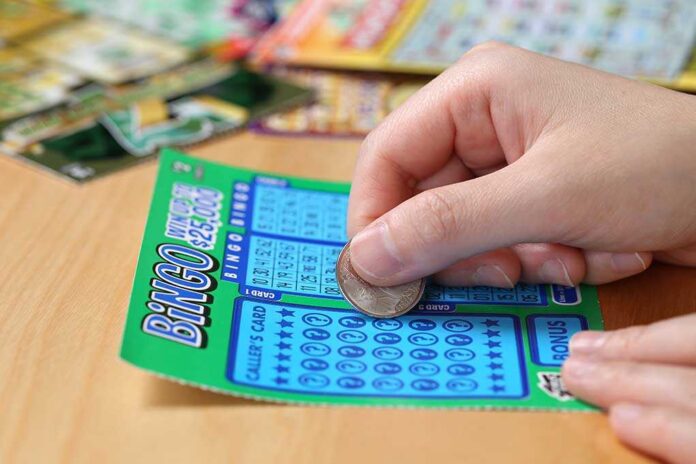
As the Powerball jackpot rockets to $950 million—its sixth-largest ever—Americans are swept up in a surge that exposes both record consumer spending and deeper questions about personal responsibility, government priorities, and the impact on vulnerable communities.
Story Snapshot
- Powerball jackpot has grown to $950 million after nearly three months without a grand prize winner, fueling unprecedented ticket sales.
- Retailers and digital lottery platforms are seeing windfall profits and increased foot traffic, especially among low-income Americans.
- State governments benefit from surging tax revenues, but experts warn of long-term social risks and volatility as lottery fever peaks.
- The lottery boom spotlights concerns over fiscal priorities, gambling normalization, and the sustainability of funding essential services through chance.
Historic Powerball Surge: Unprecedented Growth and National Attention
Since May 31, 2025, the Powerball lottery has experienced an extraordinary streak, with 38 consecutive drawings lacking a grand prize winner. This sequence has propelled the jackpot from $643 million in early August to an estimated $950 million by August 28. The phenomenon, widely referred to as the “Power(ball) surge,” has catalyzed a 40% year-over-year increase in ticket sales, driving record-breaking retail traffic and digital lottery participation. The scale and duration of this streak set it apart from previous surges and have made it a national talking point, especially as Americans grapple with economic uncertainty and shifting consumer behavior.
Retailers such as 7-Eleven and Wawa have been among the biggest beneficiaries, reporting a 12–18% uptick in ancillary sales like snacks and beverages near lottery terminals. Digital lottery platforms, notably Jackpocket, have seized on the momentum, with 60% of players now preferring online ticket purchases. State governments are also reaping rewards, enjoying a significant boost in tax revenue from both ticket sales and winnings. Despite the excitement, this boom has intensified scrutiny of the lottery’s broader economic and social impact, as the growth in digital access and speculative spending reshapes traditional patterns of play.
Stakeholders, Risks, and Behavioral Shifts
The Powerball surge involves a diverse group of stakeholders: the Powerball Product Group oversees operations, state lotteries manage local sales and payouts, retailers and digital platforms drive consumer engagement, and state governments collect increased revenues. Players, especially from low-income communities, are drawn by the prospect of life-changing wealth but often face heightened financial risk. Experts warn that the normalization of speculative gambling can exacerbate inequality and divert essential household spending to lottery tickets. While some see the surge as a short-term economic stimulus, others highlight its potential for destabilizing longer-term consumer habits and increasing reliance on chance-based funding for public programs.
Industry analysts describe the “jackpot economy” as both a barometer of consumer optimism and a source of volatility. Behavioral economists draw clear parallels between lottery participation and speculative investing, with lower-income Americans disproportionately represented among frequent players. The rapid expansion of digital lottery platforms is disrupting traditional retail models and amplifying the reach of gambling opportunities. Retail analysts advise caution, noting that past surges have been followed by sharp declines in sales, sometimes falling up to 15% once the jackpot is claimed, underscoring the cyclical and unpredictable nature of lottery-driven spending.
Economic, Social, and Political Ramifications
The current Powerball boom delivers immediate economic benefits—more revenue for retailers, online platforms, and state governments. However, it also raises fundamental questions about the wisdom of funding public services through gambling. Short-term gains are offset by social risks: increased risk-taking behavior, potential for exacerbated inequality, and volatility in funding for critical programs. Policymakers face mounting pressure to address the consequences of relying on lotteries as a fiscal solution, especially as digital access expands and consumer behavior continues to shift. The sustainability of these windfalls is uncertain, with experts and advocates debating whether the lottery’s societal costs outweigh its temporary economic boosts.
Powerball jackpot soars to $950M — 6th largest in game’s history — as drought nears 3 months https://t.co/OJCEJvoMDS
— Jeffrey A. Setaro (@jasetaro) August 28, 2025
As Americans await the next drawing on August 30, 2025, the ongoing Powerball surge stands as a stark reminder of the complex interplay between government funding, personal responsibility, and the risks inherent in speculative pursuits. The magnitude of this lottery fever will likely influence debates over fiscal management, digital gambling regulation, and the role of chance in the American economy for months to come.
Sources:
Powerball lottery jackpot soars to $700 million as 40% ticket sales surge
Rising Powerball jackpot: Unintended economic impact
US news: Nearly $1 billion up for grabs as Powerball jackpot hits estimated $950 million
US news: $800 million and rising—Powerball jackpot soars to new high
Powerball statistics and history