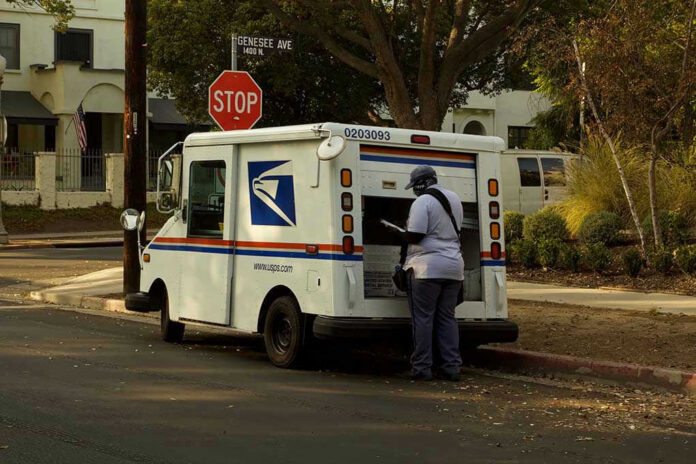
The Supreme Court just handed the Postal Service a shield against lawsuits for deliberately sabotaging your mail, leaving ordinary Americans powerless against government misconduct.
Story Snapshot
- 5-4 ruling in USPS v. Konan grants immunity for intentional mail nondelivery under FTCA postal exception.
- Justice Thomas’s majority opinion prioritizes textual interpretation over accountability for deliberate acts.
- Justice Sotomayor’s dissent warns of absurd results, shielding malice without congressional intent.
- Businesses like newspapers and pharmacies face heightened risks, pushing reliance on private carriers.
- Critics call for congressional reform to restore redress for victims.
Case Origin in Texas
Lebene Konan in Euless, Texas, accused a USPS worker of intentionally withholding mail from her tenants. This deliberate nondelivery sparked the lawsuit. Lower courts rejected USPS immunity claims, allowing the tort suit to proceed. USPS appealed, arguing the Federal Tort Claims Act’s postal exception covers all delivery failures. The Supreme Court took the case after oral arguments in October 2025.
Supreme Court Ruling Details
Justice Clarence Thomas authored the 5-4 majority opinion on February 24, 2026. The Court held that 28 U.S.C. § 2680(b) bars suits arising from mail loss or miscarriage, regardless of intent. Chief Justice Roberts, Justices Alito, Kavanaugh, and Barrett joined. The decision reversed lower courts, remanding for dismissal. USPS scale—112 billion pieces to 165 million addresses by 600,000 workers—justified broad protection.
Justice Sonia Sotomayor dissented, joined by Justices Kagan, Gorsuch, and Jackson. She argued the statute targets negligent transmission, not intentional torts. Congress waived sovereign immunity via FTCA in 1946 but carved out postal matters. Extending to malice defies common sense and textual limits, per dissent. This split highlights tensions in statutory reading.
Stakeholder Motivations and Power
USPS defends immunity to curb litigation amid rising costs, like stamps nearing $3. Konan sought redress for business harm. Majority justices read “miscarriage” cause-agnostically, prioritizing efficiency. Dissenters preserved FTCA’s intentional tort boundaries. Businesses, from freight to newspapers, demand accountability. Power tilts to federal agency; individuals hit immunity walls.
The Postal Service's recent Supreme Court win is bad news for government accountability https://t.co/LpLX0qnwmG
— Christine Tate (@christineatate) February 27, 2026
National Newspaper Association expressed disappointment, noting risks to publications. Cato Institute decried a “double lock” on accountability. FreightWaves called it a wake-up for diversification, a fire alarm for pharma relying on mail-order drugs. Legal analysts confirm immunity now blankets any failure, even deliberate.
Impacts on Americans and Economy
Individuals lose recourse for withheld checks, legal notices, or medications. Businesses shift to FedEx or UPS, hiking costs. Pharma faces cold chain risks without suits. Social trust erodes in USPS for essentials. Politically, reform debates ignite; Congress could amend FTCA. Long-term, precedent chills oversight of government malfeasance.
Conservative values demand accountability—government serves people, not vice versa. Facts align: deliberate acts demand consequences, not blanket shields. Dissent’s textualism resonates with originalism, rejecting judicial expansion of immunity. Common sense rejects protecting sabotage at citizen expense.
Sources:
Tucson Sentinel: Postal SCOTUS report
Faegre Drinker: Supreme Court Decides United States Postal Service v. Konan
Reason.com: The Postal Service’s Recent Supreme Court Win Is Bad News for Government Accountability
FreightWaves Substack: Feb 26: The Supreme Court Just Gave USPS a Free Pass
SCOTUSblog: Court holds that U.S. Postal Service can’t be sued over intentionally misdelivered mail
NNA: NNA is disappointed with Supreme Court decision in USPS v. Konan
Cato: Cato expert: Supreme Court ruling tightens double lock on government accountability
Supreme Court: Official Opinion in 24-351